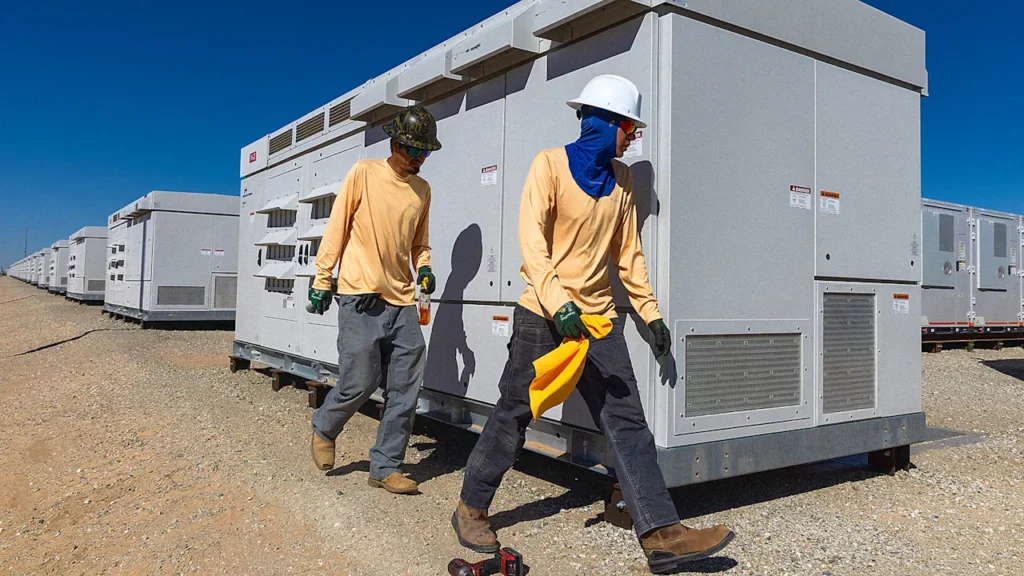
A few days ago, the electric grid in California hit a new milestone: At 7pm on March 29, batteries provided 12.3 gigawatts of power—roughly as much as six Hoover Dams, or around 43% of the total demand on the grid.
Nearly all of that battery storage was built in the last five years. “Until 2020 or 2021, battery storage was still quite expensive, but we’ve seen huge price drops over the last few years,” says Nicolas Fulghum, senior energy and climate data analyst at Ember, a global energy think tank. When it’s paired with solar power, it can “bring some of that excess generation in the middle of the day to where it’s really needed, which is during the peak demand in the evening and morning,” he says.
The cost of batteries has dropped 99% over the last three decades. Over the last few years alone, the cost fell by about a third. The cost of solar panels has also fallen by more than 90%. By 2024, new solar projects were an average of 41% cheaper than fossil fuel alternatives.
By using batteries to make use of extra solar power in the middle of the day in the evening, California’s grid, called CAISO, can rely less both on energy imported from other states as well as “peaker” gas plants that are used to meet peak demand. Those gas plants “are usually quite expensive,” says Fulghum. “And batteries can reduce the impact of those high power prices during that time, especially when you have a heat wave like we had a few weeks ago. That’s where they’re most effective at keeping prices down.” Gas electricity generation in the state is responsible for around 30 to 40 million metric tons of CO2 emissions a year. Around half of the peaker plants are in low-income communities of color, where the air pollution contributes to health problems like asthma.
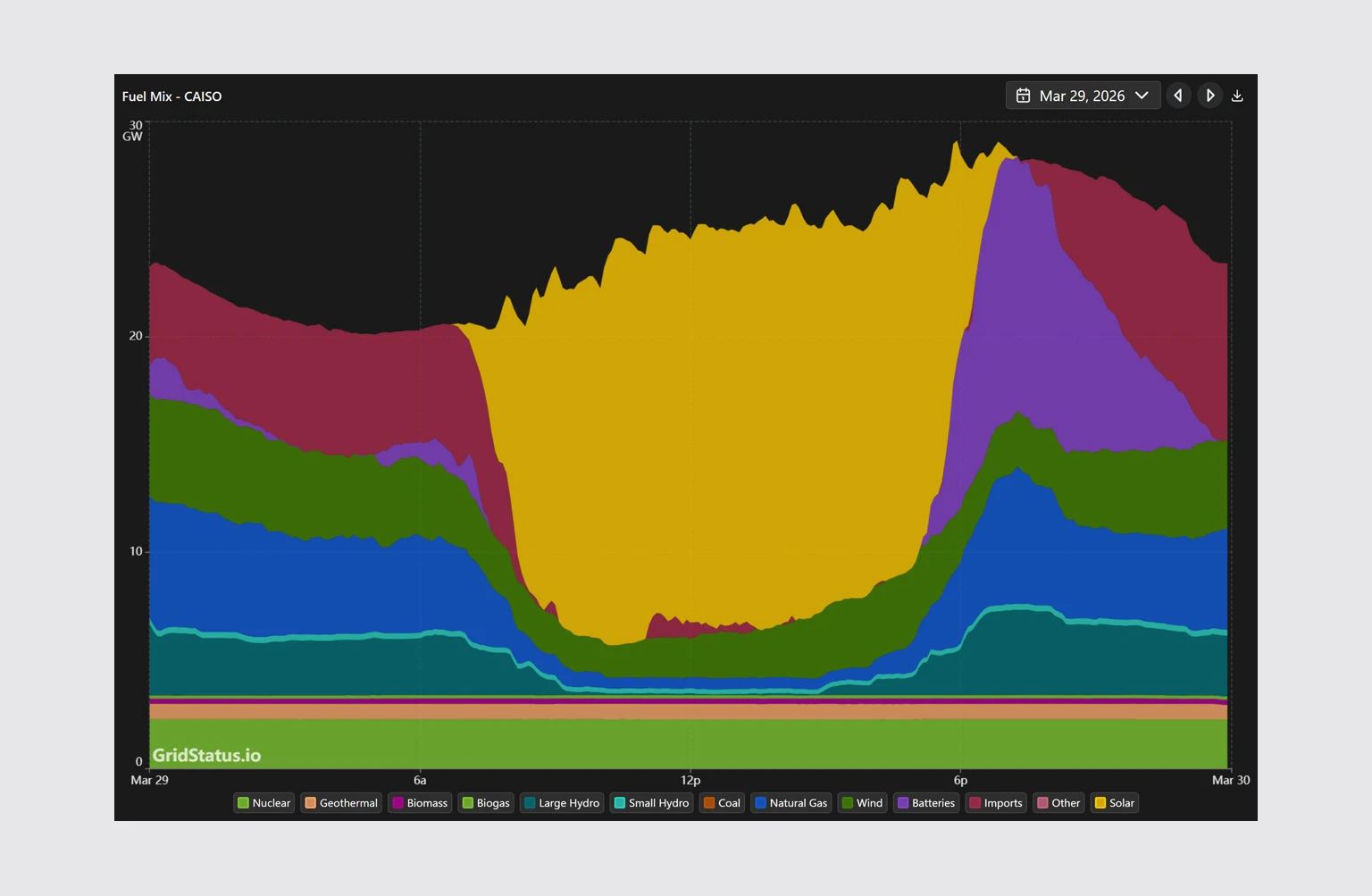
California has always been a leader in solar power, and had actually installed so much solar that it began to strain the grid. But that’s changed now. “Because California can move so much of that midday solar generation, it means that there’s a lot less wasted solar in the middle of the day,” says Fulghum. “But it also means that now it’s opened up the opportunity to actually increase solar generation again—build more solar, and move it to ‘shoulder’ hours. That’s what’s going to reduce gas generation in the short and long term.”
Virtual power plants— using home batteries, EV batteries, or managing demand with tech like smart thermostats—are also helping shrink the need to use fossil fuels to generate electricity. Other technology, like advanced geothermal power, can also help provide clean power for the grid around the clock. But that will take time to build, and batteries can help immediately.
At the moment that the California grid broke a battery record on March 29, around 20% of the grid’s output was coming from gas. But the share of power coming from fossil fuels will continue to drop. (Already, the use of gas has declined by 20% over the last few years.) California’s grid now has 17 gigawatts of battery storage; the state is aiming for more than 50 gigawatts.
“There’s a huge, huge additional amount that’s still going to come online over the next few years,” says Fulghum, “especially as costs are going to continue to drop.”