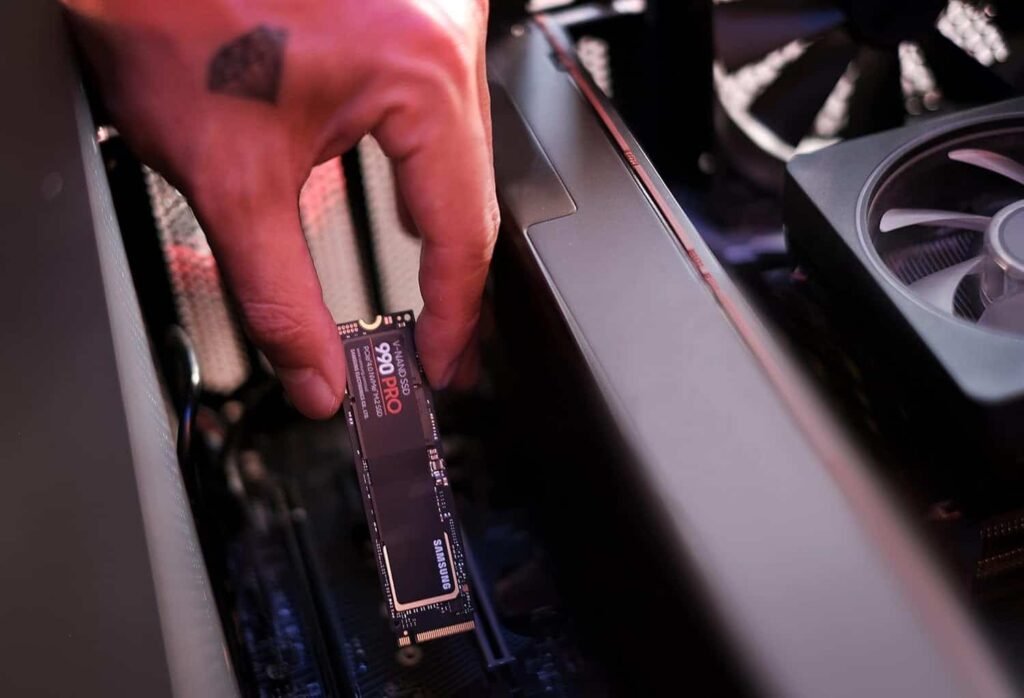

The Samsung 990 Pro was one of the top SSDs when it was the new kid on the block, and even at its normal price tag getting a fake one would be a disheartening event for any consumer. Unfortunately, it appears that it’s getting harder and harder to tell when SSDs such as the Samsung 990 Pro are fake. While it’s likely this is impacting more than just the Samsung 990 Pro, the 990 Pro is the one that’s being focused on at present.
Naturally, this is an issue because the fakes are so good, that it’s not exactly easy to spot the inconsistencies. Even more pressing is the amount that consumers have to pay for these SSDs now. A 4TB Samsung 990 Pro is now $999.999 on Samsung’s own website. This is after a $100 discount that Samsung is adding. Keep in mind, this is also an SSD that’s nearly three years old, and at launch it was $344.99. The 9100 is even more expensive at $1,099.99, down from Samsung’s price of $1,359.99.
The RAM and storage shortage has hit the market exceedingly hard, and this is proof. With this kind of pricing, the last thing you want is to end up with a fake storage drive.


There are a few ways to tell that a Samsung 990 Pro SSD may be fake
The process may be different for other drives, but the Samsung 990 Pro has one seemingly surefire way to spot these fakes: The Samsung Magician software. You can install this onto your PC and it’s used for managing the drive in a number of ways. You can also use it to monitor drive health and a few other things. As an added bonus, it can also tell you if your Samsung 990 Pro is genuine. Samsung’s own software will know if the storage drive actually came from Samsung.
Without a tool like Samsung Magician software, the average consumer may not know to look for specific details that denote a fake drive. As pointed out by Akiba PC Hotline! (via Tom’s Hardware), a fake Samsung 990 Pro, while a lot more sophisticated, has a few telling details. For one, the SSD controller being the wrong model. The fake in the images uses a Maxio MAP1602. Samsung’s official 990 Pro uses a Pascal controller.
Other minor details are also easy to spot if you’ve seen the actual drive before. For example, the text above and below the white and red “990 Pro” on the one side is a slightly different color. On the real drive, it’s a slightly off-white, almost very light gray color. On the fake drive, it’s bright white. Additionally, the fake doesn’t use LPDDR4 DRAM because the Maxio MAP1602 doesn’t have DRAM, and the NAND is different from the one that the authentic Samsung model uses. In short, be careful about where you’re getting your SSDs and make sure you have a plan to test them out considerably upon receiving one in the even you need to return it due to being fake.
The post Fake Samsung 990 Pro SSDs have become way more convincing appeared first on Android Headlines.