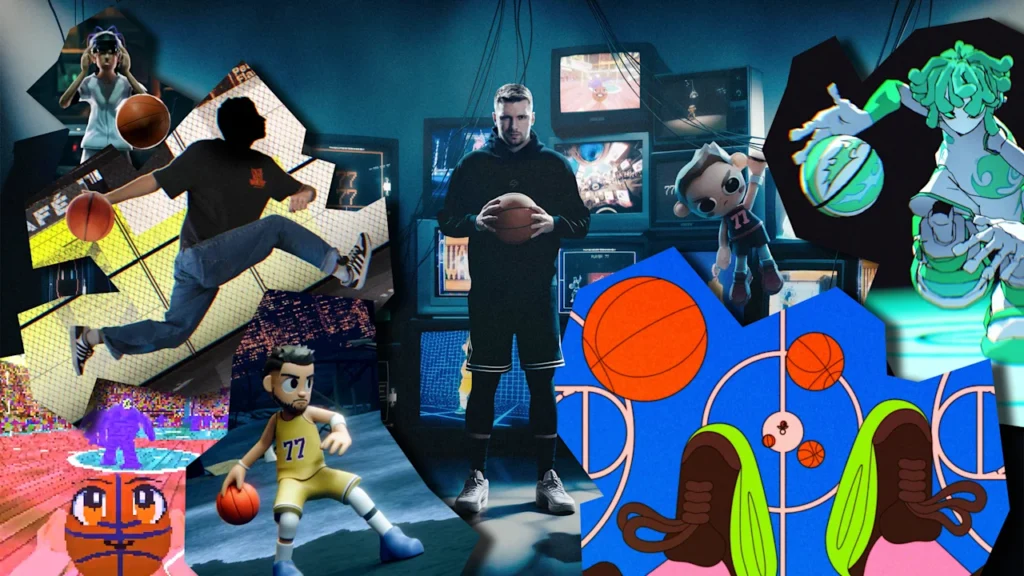
As I walked into a Sunset Boulevard venue this past February, Luka Dončić’s face greeted me, flashing across a wall of old-school televisions. The TV screens flickered between a surreal reel of images: Dončić’s mug, a NTSC rainbow effect, a Valentine sweetheart candy image with the words “too small,” and a graphic with the words “Lil Luka’s Heartbreak Factory: Level 1.”
For the uninitiated, this scene probably makes no sense. But for superfans of Dončić, star player of the Los Angeles Lakers, the messages are like a secret code to a new kind of fandom.
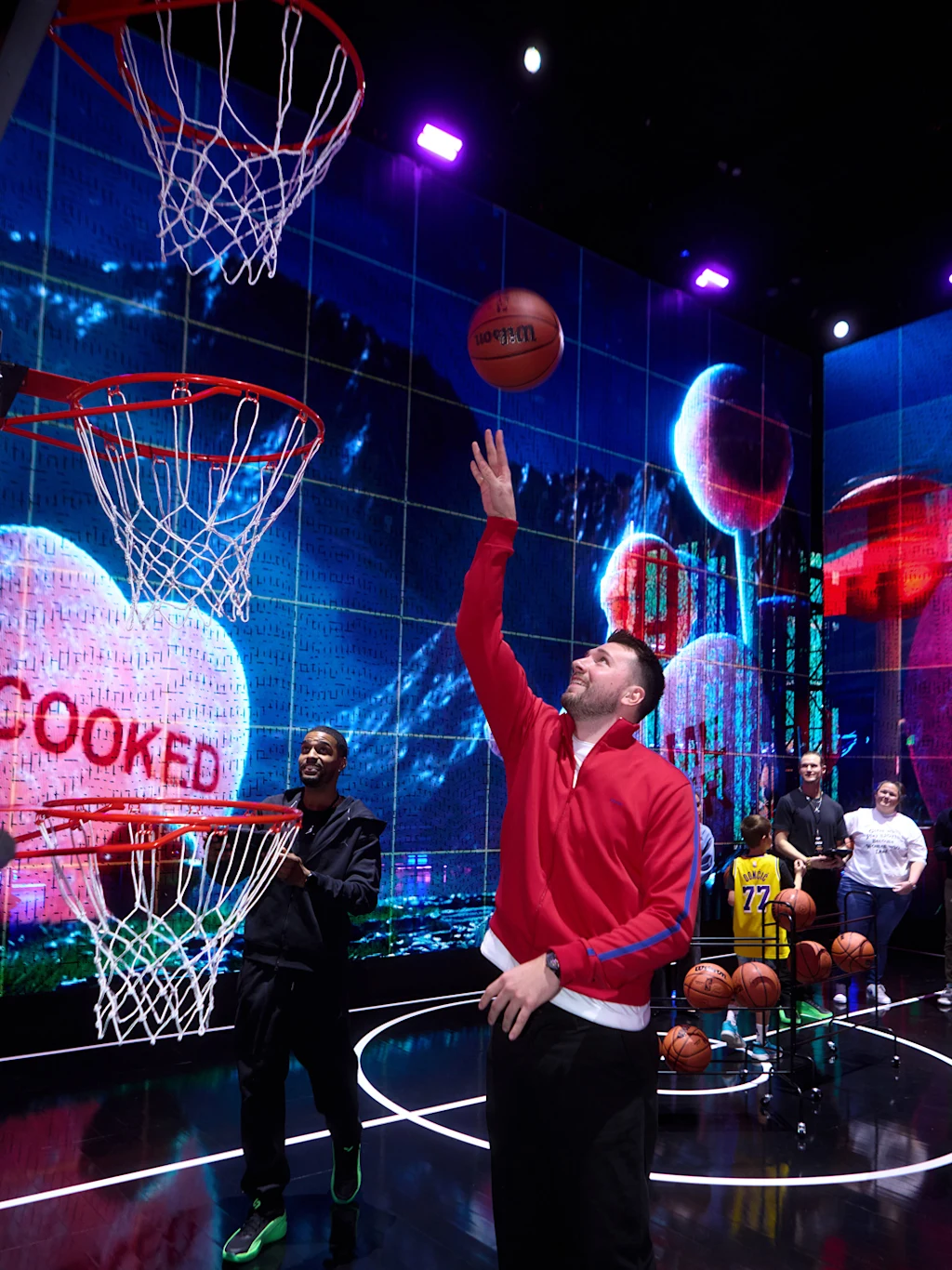
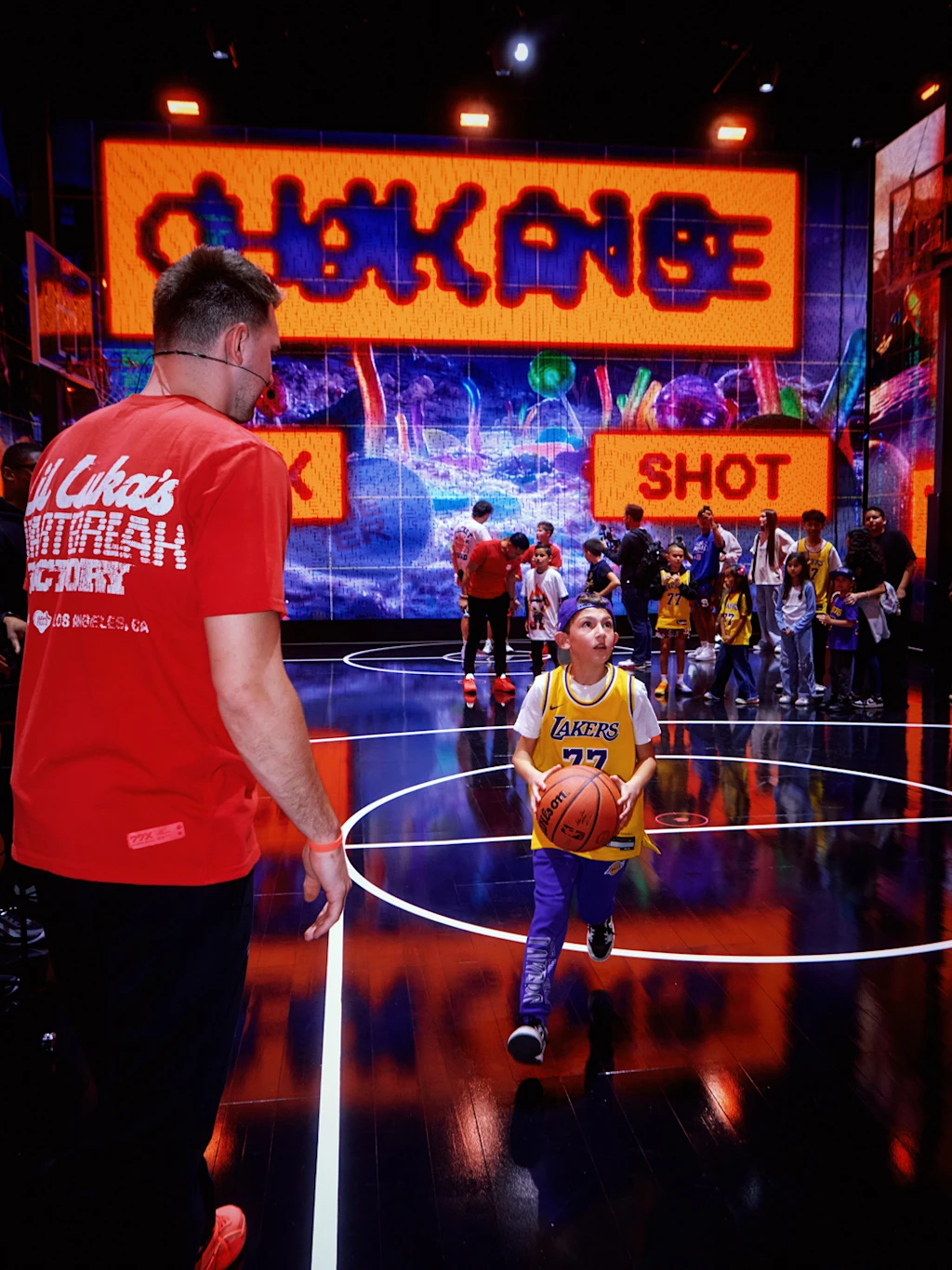
In February, Dončić celebrated the launch of his new direct-to-fans media company, 77X, by transforming a venue into his own personal brand playground. Dončić’s team built out a space around his personal aesthetic—think: old school video games—that featured a basketball court, candy shop, flower stand, photo booth, and a gift shop adorned with “Lil’ Luka,” Dončić’s alter ego.
This three-day activation was Dončić’s first proof of concept for 77X, which he is using to push his NBA brand beyond merchandise drops and brand sponsors. For Dončić, 77X is an opportunity to create a completely self-owned platform that can serve as a universe for his fandom by merging content, commerce, and community under his own banner.
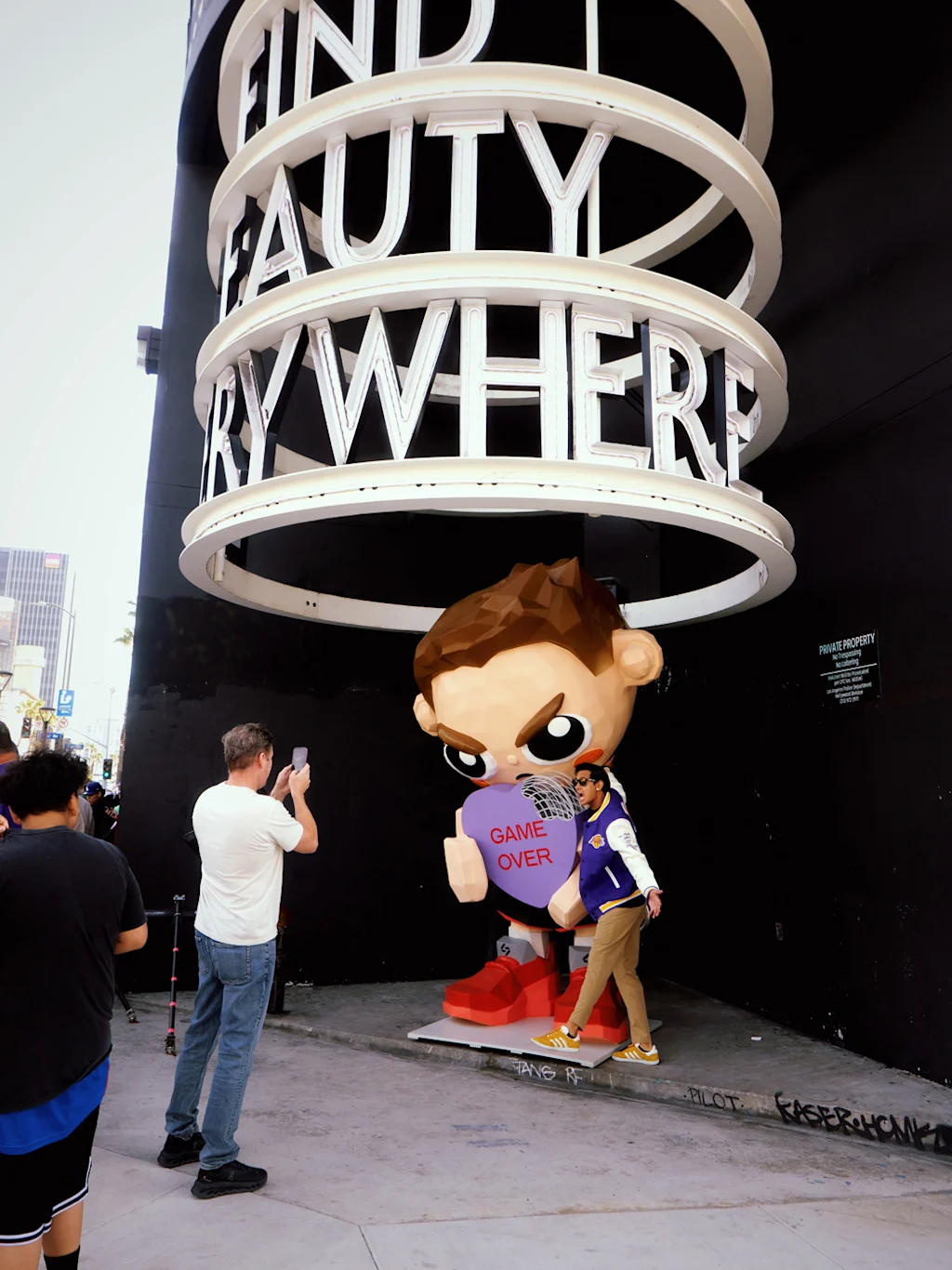
“I want to feel like I connect with the fans, bring them out here so they can help me build this and show them what I like so they get to know me better,” Dončić tells Fast Company.
In this current moment across basketball, elite athletes are renegotiating their standing with leagues and brand sponsors. Boston Celtics star Jaylen Brown launched 741, his independent sneaker brand, and Golden State Warriors star Steph Curry ended his 13-year relationship with Under Armour to operate his Curry brand independently. These athletes know that the future of fandom is direct connection that can’t be mediated through third-party brand deals.
“The traditional athlete model is super fragmented,” says Lara Beth Seager, chief brand officer and business manager for Dončić and 77X CEO.
Traditionally, content, merchandise, collectibles, and community are split across different stakeholders. Since most of these pillars are controlled by leagues, brand partners, social platforms or retail partners, athletes typically don’t own the relationship with their fan base.
In partnership with Shopify, 77X offers a central place for Dončić’s fandom.
“[In this] new world of . . . people loving athletes more than they love the teams and the franchises, which was the traditional model, Luka has really found a way for him to get closer to the fans and for them to participate more fully in his life,” says Jessica Williams, head of global brand marketing and partnerships at Shopify.
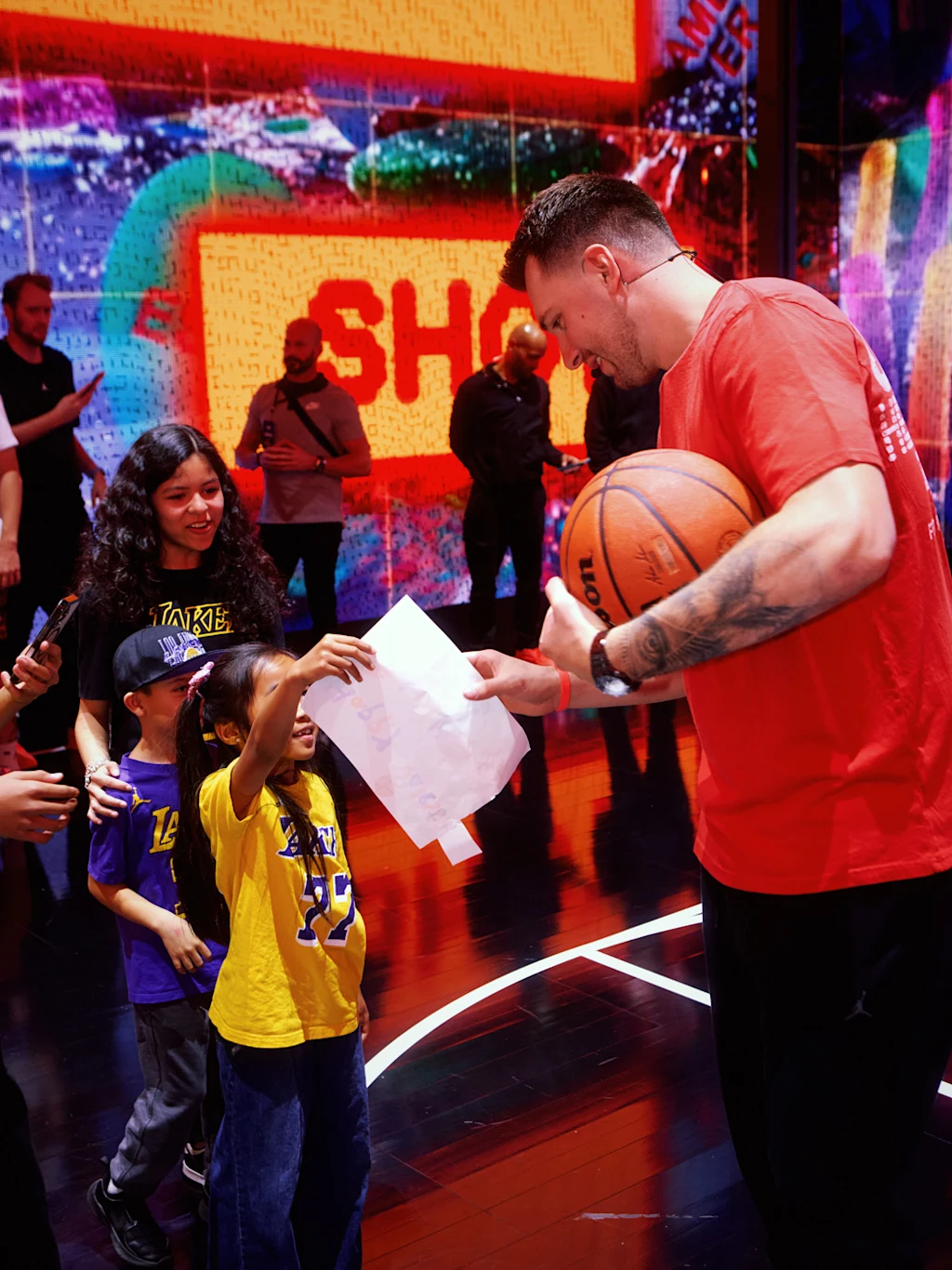
This phenomenon is reflective of how Dončić’s youngest fans, who are between 13 and 25 years old, want to engage.
“Fans today don’t just want to be passive,” says Seager. “They want to be active, they want to consume, and they want to live inside worlds.”
“Fans today don’t just want to be passive,” says Seager. “They want to be active, they want to consume, and they want to live inside worlds.”
Designing a New Type of NBA Athlete Brand
In order for fandoms to live inside a world, a world must first exist. Creating 77X’s visual identity was a collaboration among Dončić, Seager, 77X President and Chief Creative Officer Chris Eyerman, and their team.
“With Luka’s brand, we wanted to create a universe that reflected his actual personality and interests,” says Eyerman. “We wanted him to own everything we built, and we wanted fans to have a real aesthetic identity they could be part of.”
Designing Dončić’s aesthetic identity required understanding who he is beyond his basketball career. Outside of his sport, Dončić is an avid gamer and is particularly fond of Overwatch, a team-based action game set in the future, among other video games. This passion for gaming served as the basis for designing 77X’s brand identity.
The result is an aesthetic that mixes retro gaming with a playful, specific tone. Eyerman describes the identity as a “Slovenian late night animated broadcast, all built around Luka, gaming, and basketball.”
A visit to 77x.world invites fans to sign up for a digital membership called Fan Pass. That’s their entry point into exclusive Dončić content, giveaways, signed memorabilia, and the 77X shop with branded merchandise ranging from t-shirts and hoodies to keychains available for purchase.
“Gamified for us is a brand philosophy, just as much as it is any visual thing,” says Eyerman. “The way we think about toys, trading cards, blind box collectibles, live experiences, it’s all designed with the same logic. We want 77X to feel like the next great collectibles company as much as it feels like an athlete brand.”
In traditional athlete models, the product drops from the athlete and brand were the heart of the relationship. But Dončić wants to build a reciprocal and collaborative relationship with fans. Research shows that more than 70% of professional athletes engage with their fans in online communities. Socially savvy brands understand that co-created content with fans performs better. For 77X, merch and product drops are just the starting point.
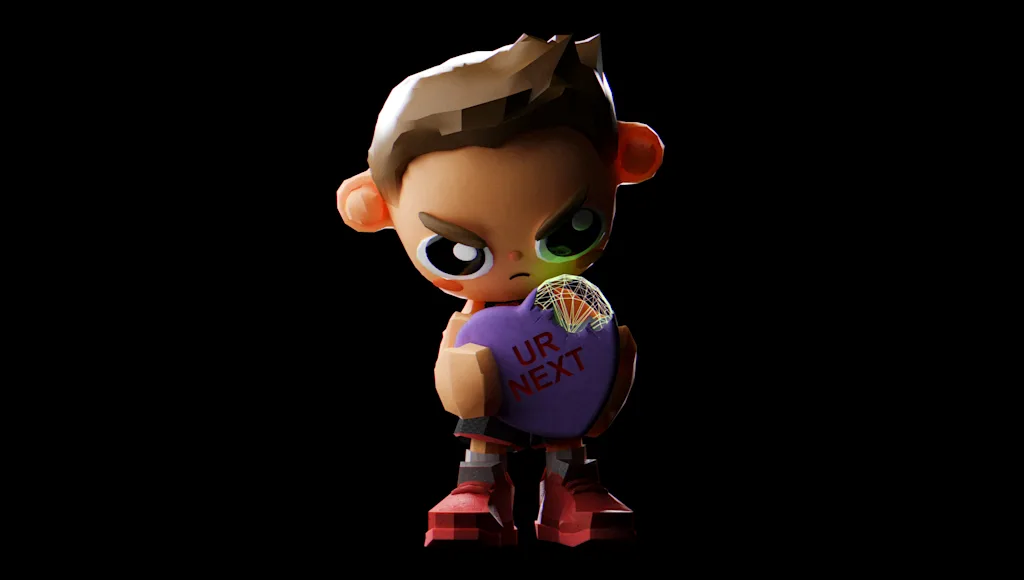
Through Fan Pass, fans will have the opportunity to earn rewards through participating in Dončić ’s world, whether that’s through attending a game, leaving a comment, voting in a poll, or buying merchandise. Each time a fan checks in with Fan Pass, they earn reward points. These points unlock different opportunities like collaborating on product drops and contributing to designs with the 77X team. Every action fans take on the platform from what they click, purchase, or vote on informs what the 77X produces next.
“Because the world has such a specific tone, creators and fans can easily make things inside it,” says Eyerman. “We’ve had animators, indie game designers, illustrators, content creators, and fans all contributing to the world, which is exactly what we designed for.”
Bringing 77X’s Design to Life
The Heartbreak Factory activation laid the foundation for how the team is going to conceptualize 77X events going forward. It established a creative playbook, or lore bible, and will be a point of proof for how 77X will handle inter-brand relationships, which appear to be a still valuable part of Dončić’s plan.
For the February event, Dončić and the team invited his existing brand partners like the Nike Jordan Brand and Gatorade into the 77X universe. This invitation changes the nature of Dončić’s relationship with these brands.
“An athlete basically rents their image to a brand when you sign an endorsement deal,” Seager explains. “The brand owns the relationship with the fans and the consumers. This way we can invite brands like . . . the Jordan brand . . . into this universe. You’ll see ‘Lil Luka,’ has the Jordan Luka Fives on him. They’re now activated inside Luka’s world. [It’s] the same with Gatorade, an important partner. So rather than Luka renting his image on the outside with brand partnerships and stepping into the traditional brand partnerships, we’re doing the reverse.”
All these elements, Fan Pass, brands, commerce, live events, are designed to scale together. So far, the 77X team is encouraged by the results of their first pop-up, which marked the first test of Fan Pass in a live environment.
For now, the 77X team says more live events are planned, each is theme-driven and designed to extend the world they’ve built across digital and physical spaces. For Dončić, that’s the point.”
“This is something that hasn’t been seen before,” Dončić says. “This [event] is the first [one] we’re going to do. . . . The things in here are the things I like, the things I want to create. . . . This is a big start for us.”