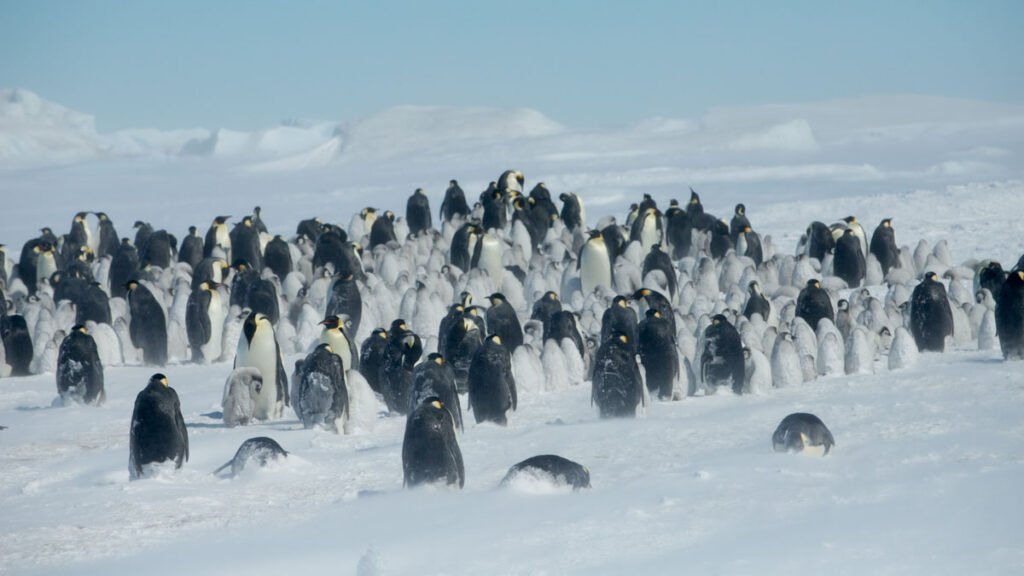
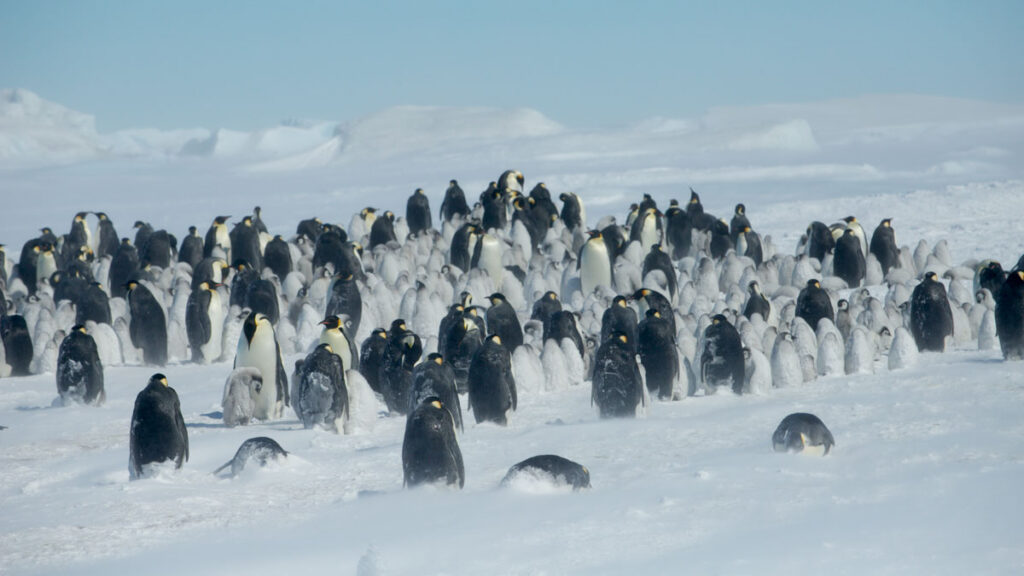
Peter Fretwell, a remote sensing scientist at the British Antarctic Survey, found the molting penguins by mistake.
Emperor penguins molt once a year, shedding all their feathers in small groups on sea ice during the Antarctic summer, but scientists know little about exactly where and how this process occurs. Fretwell had been meaning to study penguin breeding colonies. He was scanning through Sentinel-2 satellite images of the Antarctic coastline, looking for colonies of breeding penguins, when he noticed brown patches on the sea ice that he hadn’t seen before.
He soon realized he was accidentally looking at images from the summer, when penguins aren’t breeding. “I’m a very curious sort of person,” Fretwell said, so rather than just switching to the months he was originally interested in studying, he dug deeper.
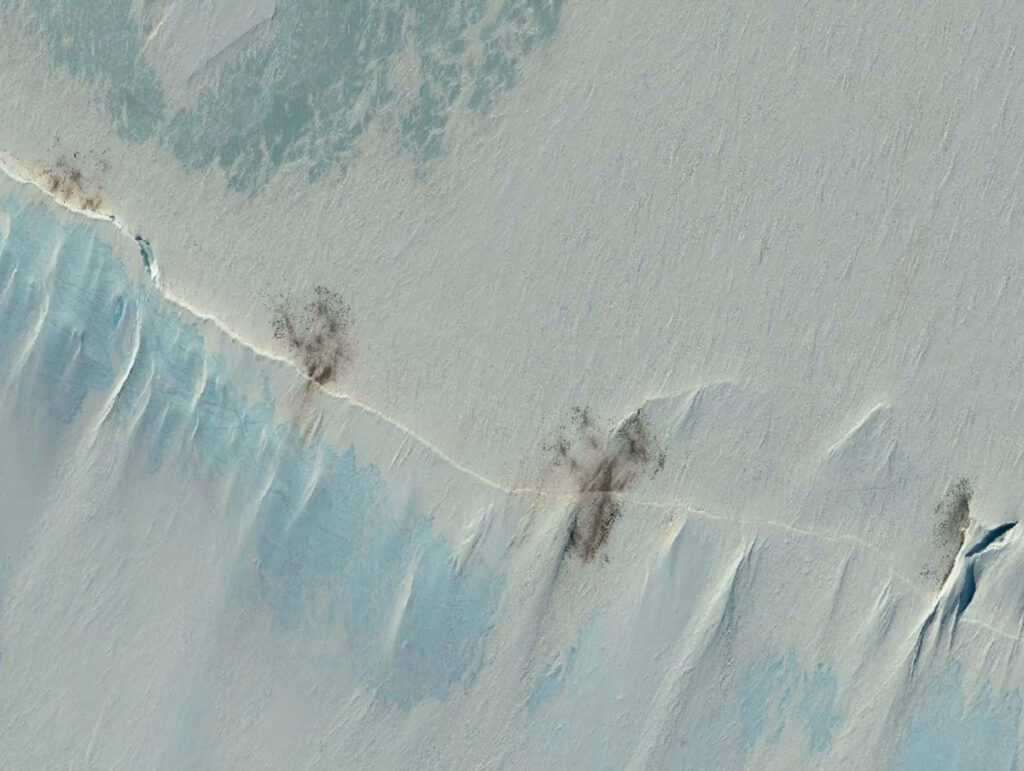
In a new study published in Communications Earth and Environment, Fretwell demonstrates that the brown spots on the snow seem to reveal where emperor penguins are riding out their annual molt. He also shows how fluctuations in sea ice are affecting this stage of the penguins’ life cycle.
Birds of a Feather
Previous understandings of where penguins go to shed their feathers were based on scattered, anecdotal reports and tracking studies. But molting is an incredibly vulnerable time for penguins, as they are no longer able to forage in the ocean and can lose half of their body weight. So scientists have long wondered about what determines success and how climate change might affect this process.
After noticing brown patches in Sentinel-2 satellite images, Fretwell used WorldView-2 VHR (very high resolution) images to determine that the patches were made by penguins. Although he’s not certain, he believes that the brown spots are feathers littering the snow, possibly mixed with guano and algae.
The number of penguin groups collapsed from a peak of 247 in 2023 down to just 25 in 2025. Where those penguins went and whether they survived are still unknown.
Armed with this new method to find molting penguins, Fretwell measured the number and size of molting groups over 7 years in a 200-kilometer stretch of coastline in West Antarctica. He found hundreds of molting groups each year, but in low–sea ice years, the groups became larger and more tightly clustered as penguins crowded onto shrinking patches of stable ice.
An alarming trend emerged after consecutive years of ice breaking up too early in 2022, 2023, and 2024. The number of groups collapsed from a peak of 247 in 2023 down to just 25 in 2025. Where those penguins went and whether they survived are still unknown.
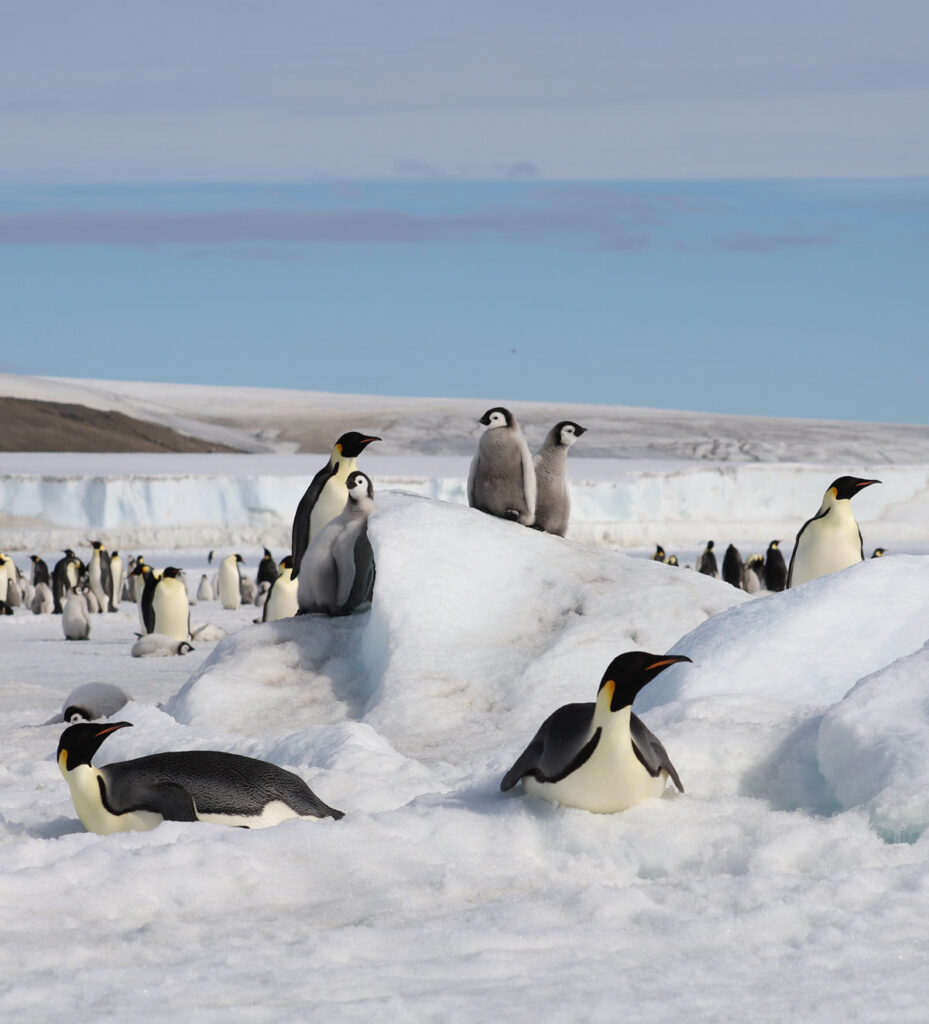
Michelle LaRue, a wildlife ecologist at the University of Canterbury, shares Fretwell’s concern about sea ice melting during the molt but said that as sea ice shifts, the penguins could be finding new places to molt. “It’s important to remember that this is a small piece of coastline in the study,” she said. “There are a lot of places penguins could go.”
“If the ice breaks up and they go into the water, then there’s a good chance that a fair number of them will perish.”
Fretwell said he is waiting for data from other researchers working at the breeding sites to determine whether the populations have, in fact, dropped or whether those penguins went to other parts of the coast. Although the new study analyzes data only up to early 2025, he has also been counting molting groups from this year. Though the number of molting groups isn’t back in the hundreds, he said more penguins are present than in 2025.
What concerns Fretwell is that in 3 of the past 4 years, the fast ice, or short-lived ice anchored to land or more permanent ice, that penguins depend on broke up before the molt was complete. This breakup could mean danger for the penguins. “If the ice breaks up and they go into the water, then there’s a good chance that a fair number of them will perish,” Fretwell said.
—Andrew Chapman (@andrewgchapman.bsky.social), Science Writer
Citation: Chapman, A. (2026), Shrinking sea ice is ruffling emperor penguins’ feathers, Eos, 107, https://doi.org/10.1029/2026EO260098. Published on 24 March 2026.
Text © 2026. The authors. CC BY-NC-ND 3.0
Except where otherwise noted, images are subject to copyright. Any reuse without express permission from the copyright owner is prohibited.