Think of your favorite movie. Maybe you love it for the plot, or the nostalgia you get from watching it again and again. Now think of that same movie, but all the actors have been shuffled: An American who can’t quite master a British accent, a 35-year-old playing a high schooler, a dramatic actor whose jokes fall flat.
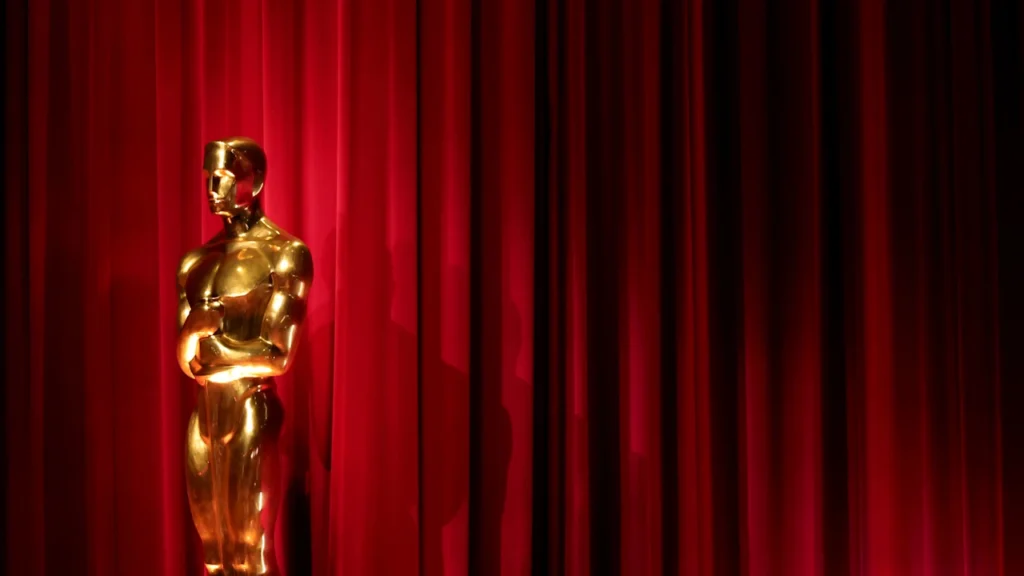
The people who make sure that doesn’t happen often go unrecognized, but now the Academy of Motion Picture Arts and Sciences has something to say about it. The inaugural Best Casting Oscar will be awarded at the 98th Academy Awards on March 15.
It’s the first new Oscars category in more than two decades. (In 2002, Shrek was the first to win the then-recently debuted Best Animated Feature award.) And it’s a long time coming; there has been a casting branch of the Academy since 2013.
But even with the introduction of an Oscar to recognize achievement at (arguably) the highest level of the film industry, those outside the industry might not understand what casting directors do or what good casting looks like.
Fast Company talked to a few industry professionals to break down what happens behind closed doors in the casting process—and why this new award is a win for unsung heroes across industries in the workforce.
Casting the part
Think of a film like its own little company that exists for the length of production: The director is at the head, but the casting director is one of the first people brought on to a project after that—making them vital to the film, even if they rarely make it to set.
“Casting is really an integral part of the filmmaking process,” Meredith Shea, the Academy’s chief membership, impact, and industry officer, says. “Casting directors collaborate with the directors and producers right after they receive the script from a writer, so they really set the tone for the start of a film.”
A great casting decision can make a movie a classic—think Heath Ledger’s Joker or Sigourney Weaver in Alien—but a bad one can tank it. A film’s success can be won or lost before the director ever shouts “Action!”
When Naya Hemphill was in college, she wanted to be a director. She got into casting for student films as a way to be close to the preproduction process, but realized she enjoyed casting. “It’s always exciting to discover how talent and script can fuse together,” says Hemphill, who is now a casting intern with Blumhouse Productions. That fusion—or lack thereof—might be what people are referring to when they talk about good versus bad casting.
“If a film or television show is really well cast, you kind of don’t notice it,” says casting director Paul Schnee. He’s worked on 2015’s Spotlight with Mark Ruffalo, and with Meryl Streep and Julia Roberts for 2013’s August: Osage County.
Still, some Oscar voters—and many moviegoers—might not understand exactly what goes into casting for a film, despite it being such a crucial piece of the project’s success.
That’s why casting directors may be viewed as one of the many underappreciated, invisible members of a film crew—a sentiment possibly underscored by the fact it’s taken this long to roll out a casting Oscar.
Casting is “something that we do in private,” Schnee says, “and so it’s structurally a different kind of creative input.”
It took three failed attempts to create the casting director-specific branch of the Academy. Once the branch was officially formed, the idea “was that eventually we get our category to have,” Schnee says. The branch governors and former casting director David Rubin, who served as Academy president from 2019 to 2022, were instrumental in finally securing the award.
Behind closed doors
The casting process works like this: Actors audition in person or, more often now, send in self-tape auditions. There are callbacks if necessary, and the process repeats until the casting director finds the person for the role.
Casting takes place before the rest of production, behind closed doors, making it a more nebulous role to a layperson. It’s easy to understand what other crew members do because their impact is visible through elements like makeup or costumes.
“If you were interviewing a costume designer, for example, he or she could show you some sketches about the evolution of their design,” Schnee says. “Because we’re dealing with human beings, I can’t show you auditions of people who didn’t get the job.”
The process also takes a lot of collaboration, often in different locations: Oslo-based casting director Yngvill Kolset Haga worked with New York-based casting director Avy Kaufman on Sentimental Value, which is up for nine Oscars this year. “You work towards the same direction even if you’re not in the same room,” Haga says.
And they often aren’t in the same room. Because casting directors work in preproduction, they sometimes don’t see what happens on set—any changes during filming or editing might be complete surprises at the premiere. “I was so delighted to see the magic that everyone did,” Kaufman says about seeing Sentimental Value after production wrapped.
Given that, the new casting Oscar is a great example of how unsung heroes on teams need to be recognized for their contributions, too.
Adam Goodman, clinical professor at Northwestern University’s McCormick School of Engineering & Applied Science, also directs the University’s Center for Leadership. He works with executive teams in industry on leadership and teamwork. He says that in teams, there are “roles that are perceived to be back in the background, but in fact without [them], the team fails.”
Appreciating unrecognized team members is crucial to the success of an organization, with surveys suggesting they’d work even harder if they knew they would be recognized. Expressing gratitude for their contributions is an effective management tactic. And in the case of the new casting Oscar, it’s been a long time coming.
“It’s long overdue. Ninety-eight years of Oscars, and here we are . . . but better late than never,” Erica A. Hart, a member of the Casting Society’s board of directors, told CBC News. “Some of the people up above don’t see us as a craft, let alone a craft that is [deserving] of the Oscar.”
The “cherry on top”
Long-term improvement to industry culture involves thinking critically about the importance of leadership and teamwork, Goodman says. Part of this involves not underestimating certain team members.
“When you go back and look at what helps that team perform really well, it turns out that even though the project manager may not have made material contributions to the final work product, without their participation and engagement—and, frankly, orchestration—the team never would have hit the milestones that it needed to hit,” he says.
Haga is hopeful the conversations about casting that started this year with the award’s introduction continue to bring attention to the work. Kaufman has worked with people she says are receptive to her input and others who take credit for it. She calls the recognition the “cherry on top.”
“I’m a mother, so I need to make sure my kids know you don’t do something just to [be recognized]; you do it because it’s the best thing to do,” Kaufman says.
But “with the Oscar now accepting casting directors in a different way, I’ll be curious to know how our lives change now that we’re being recognized,” she adds. “So, we can call you in a year and tell you how it’s looking.”
The Oscars aren’t done adding new categories for recognition, either: in 2028, at the 100th annual ceremony, a Best Stunt Design award will debut. Inside the industry, perception on casting directors has shifted over the years, but having an award might just help nonindustry people understand the level of work it takes to cast a film.
“My grandma, for example, is paying more attention to it now. That could be a combination of because I’m working in it and also because there’s an Oscar for it now,” casting intern Hemphill says. “But I do think that it will bring more attention to casting in general.”