One day, it will have to be told how the Antideutsch movement — ostensibly born as an anti-fascist rejection of German nationalism in the late 1980s — became an engine of Islamophobia and genocide denial, and thereby cleared the way, however heroic its self-image, for the insidious return of fascist policies.
It took the American critic Clement Greenberg 20 years to retroactively describe the 1930s anti-Stalinist Trotskyism as having evolved, by the 1950s, into a triumphalist liberalism disguised as “art for art’s sake.” Today, a similar dialectic unfolds.
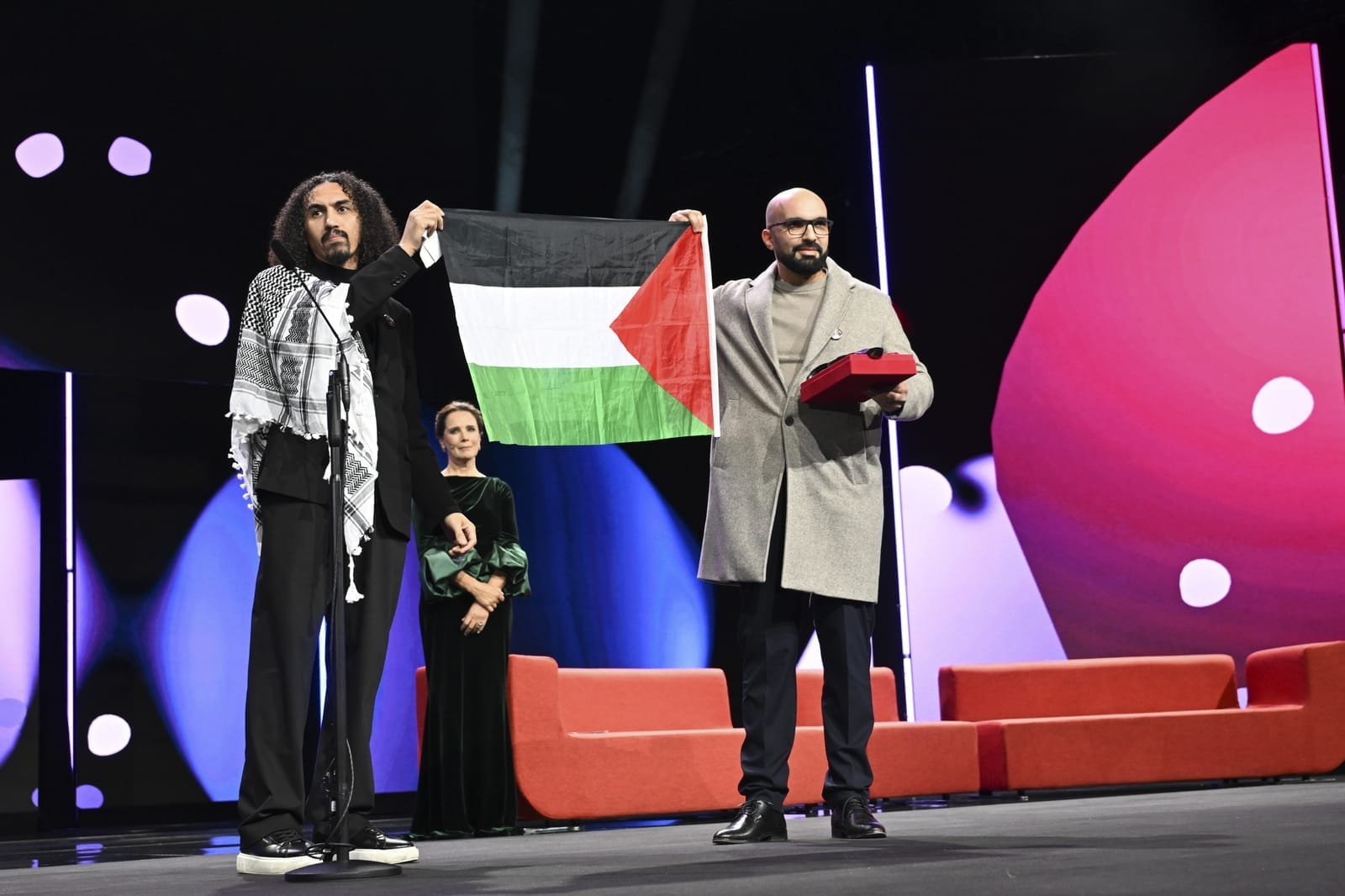
After two years of overwhelming global condemnation over Western support for the Israeli government’s genocide in Gaza, the strained performance of the German intelligentsia is no longer surprising. To give but one example, last month the Berlinale, which had previously staged demonstrations of solidarity with Ukraine and the people of Iran, was prompted to extend its solidarity to Palestinians. Wim Wenders, speaking as president of the jury, retorted that “film is the opposite of politics,” retreating into a pristine gallery of untainted aesthetics, not to protect art but to cordon Europe off from scrutiny.
What does remain surprising is the intensity and ferocity with which various discourses and spheres — once identified as leftist and critical of coercive power — have entered a rat race to create a political chokehold that ensures no accountability by draping the tattered banner of moral authority over state machinery.
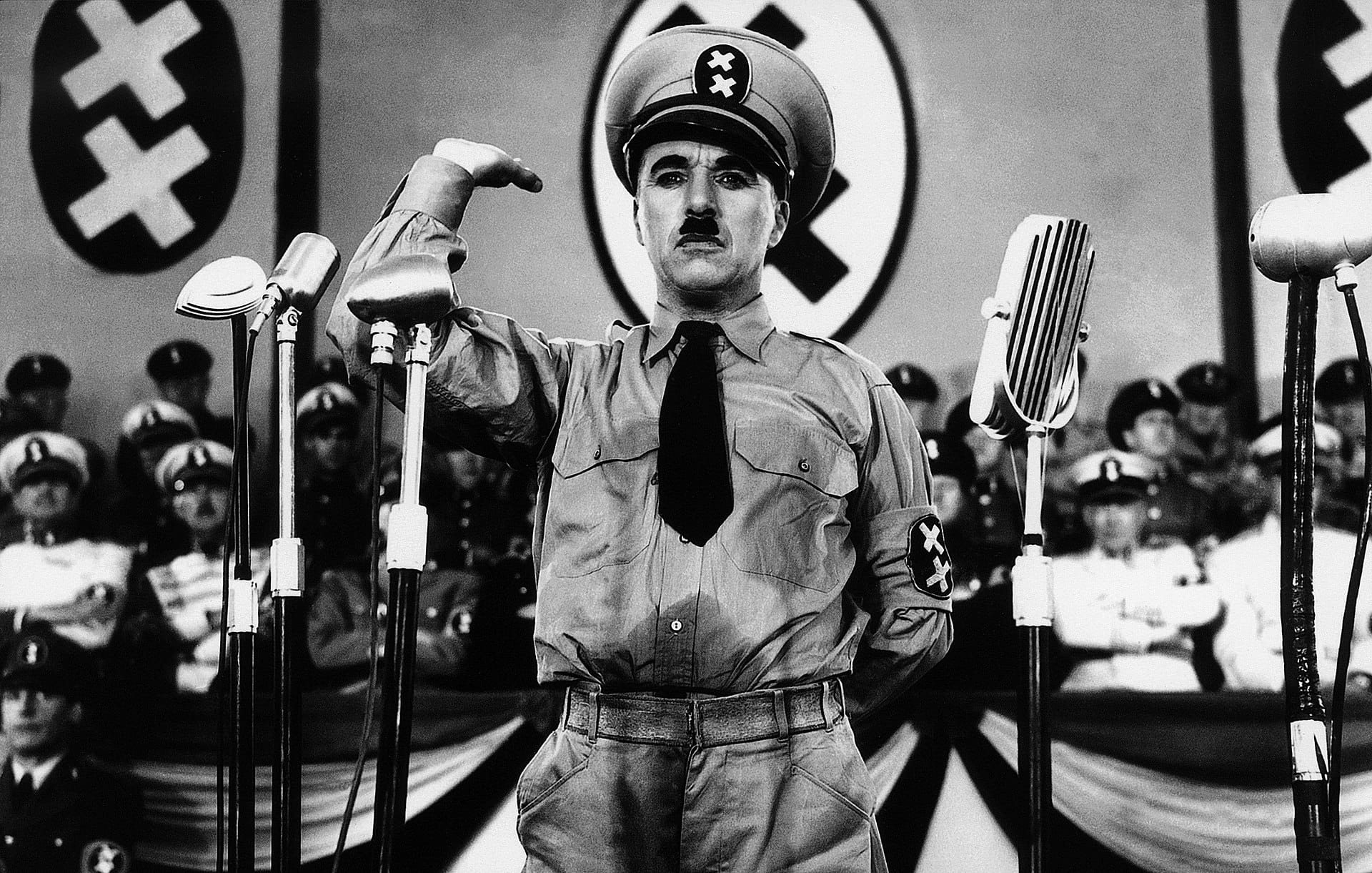
Unwavering in their support for Israel, even when it requires the dismantling of the postwar legal order that was forged in the crucible of Germany’s own historical atrocities, the tone and tenor of these voices recalls Charlie Chaplin’s last scene in The Great Dictator (1940). In the final act, Chaplin’s character, a poor tramp who had been mistaken for Hitler and forced to play the part, assumes the podium to deliver his speech as “the great dictator.” He advocates for humanism and universal emancipation, directly opposing the real Führer’s racially segregationist ideology. However, his voice slowly acquires a steely, feverish tone, gradually turning into its own mode of command and control.
The September 2025 edition of the Berlin-based platform and journal OnCurating, bearing the wordy and pseudo-psychotherapeutic title Let’s Talk About… Anti-Democratic, Anti-Queer, Misogynist, Antisemitic, Right-Wing Spaces and Their Counter-Movements, manifests the same Chaplinesque streak.
Mobilizing terms such as “anti-democratic” and “misogynistic,” as toy soldiers in a playset, the three editors, marketing strategist Michaela Conen, artist Daniel Laufer, and curator Dorothee Richter, seemingly set out to stage an epic battle of worldviews — one reminiscent of both conservative theories of civilizational clash and the decades-old rhetoric of the war on terror. As the editors contend in their introduction, this battle pits liberal and tolerant democracies against “authoritarian, patriarchal ideologies that are misogynistic, queerphobic, xenophobic and, last but not least, antisemitic.” Crucially, this last term — antisemitism — ultimately proves to be the central, formative battleground for the entire publication.
OnCurating does not acknowledge internal contradictions or the mounting evidence that democratic societies can accommodate right-wing movements. Nor does it reflect on the continued censorship of artists who express solidarity with Palestine or how the silencing of protests has escalated into outright state repression. In the United States, the Trump administration has invoked a seldom-used 1952 law to arrest, detain, and seek the deportation of pro-Palestine activists and international students. The threat of expulsion from university is a serious and documented tool of repression in Germany used to target students for their activism — and deter other students from protesting in the future. OnCurating also ignores the ongoing instrumentalization of women’s and LGBTQ+ rights as a tool to promote Islamophobic agendas. Nor does it acknowledge the role that gay figures like French author Renaud Camus, originator of the “Great Replacement Theory,” have played in the rise of the far right. Instead, “queer” and “feminist” identities are used to conjure antifascist positions and to mark unassimilable migrants as the carriers of an atavistic hatred of difference.
The edition’s argument rests on a specific historical chain that begins with German Nazism and the Holocaust, passes through the pro-Palestinian leftist movements of the 1970s, and culminates in the contemporary fight against Palestinian and Islamist fundamentalism. Within this framework, the ’70s left is presented not merely as antisemitic but as ideologically conjoined with the very history of Nazism itself.
In an interview conducted by Richter, former Green Party leader Jutta Ditfurth attempts to historicize the battle against what the editors name as “authoritarian, patriarchal ideologies” by drawing a direct line from the infamous 1941 meeting between Haj Amin al-Husseini, the Grand Mufti of Jerusalem, and Adolf Hitler to the cause of Palestinian liberation. The Palestinian movement for self-determination is dismissed as a cover for “existing feudal social structures, ethnic nationalism, hostility to democracy, reactionary religiosity, sexism, hostility to LGBTQ* people, antisemitism and the absence of universal human rights.” By extension, Ditfurth contends, “the supposedly pro-Palestinian ‘solidarity movement’” is not at all “concerned with a free, self-determined life for Palestinian people. It is still about the hatred of Jews.” Politics is rendered as pure affect. No land has been grabbed.
This inattention to material history recurs throughout the issue. In a conversation with University of Fine Arts Hamburg professor and curator Nora Sternfeld, philosopher Oliver Marchart asks Black Lives Matter activists if they are willing to “erase all memories of Churchill the anti-fascist, thus taking a side not only against Churchill, but also taking a side with the neo-Nazis, who would be the first to cheer when his statues are toppled.” Marchart believes we must be able to sustain the contradiction between Winston Churchill the colonialist and Winston Churchill the anti-fascist. But there is no contradiction: Churchill’s opposition to Hitler was fundamentally about thwarting a rival empire’s bid for hegemony, not an ideological crusade against fascism.
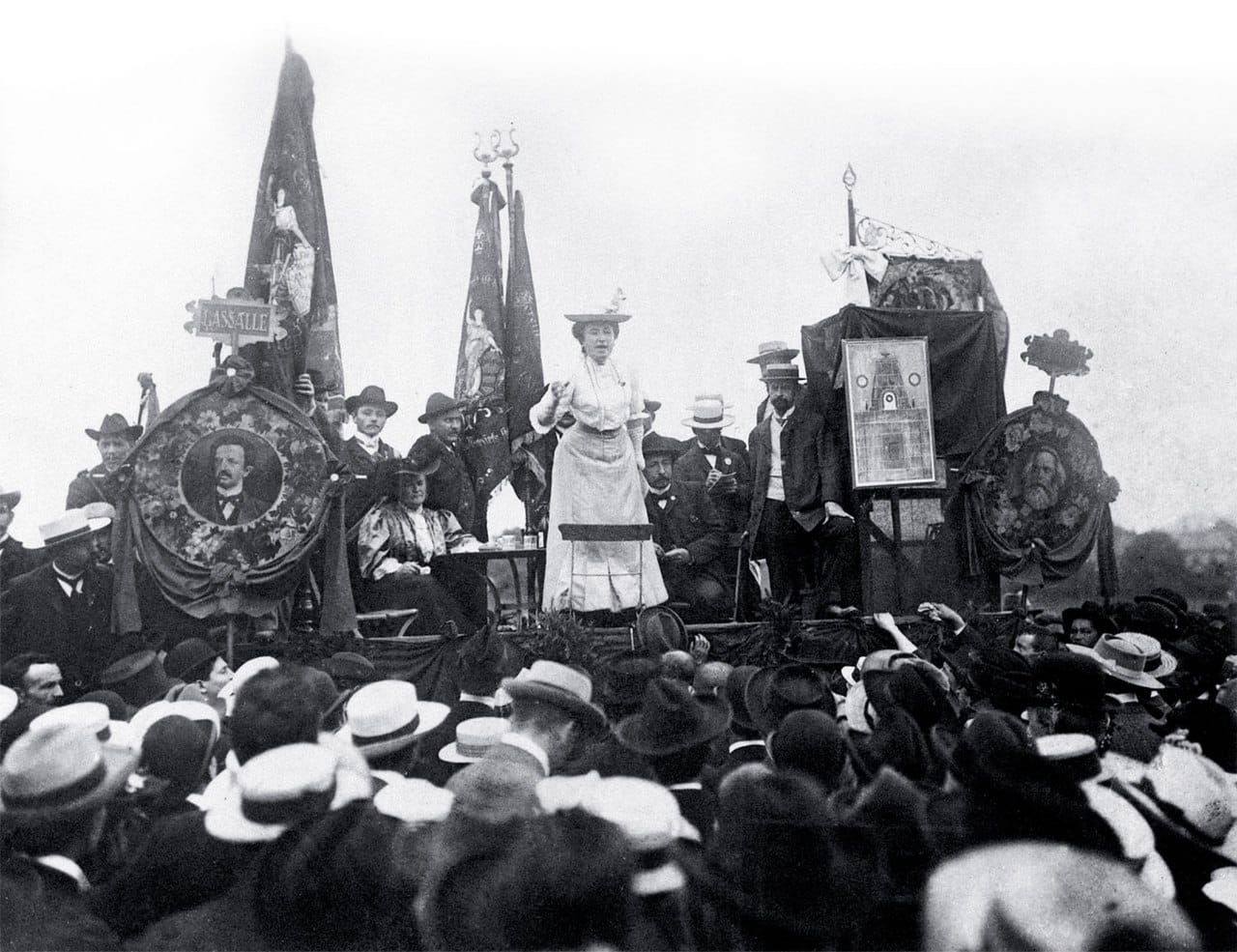
In the interview with German theorist Klaus Theweleit, Richter and curator Maria Sorensen remark that “Rosa Luxemburg and Karl Liebknecht, the co-founders of the German Communist Party, were tragically murdered by a Freikorps member in 1919,” as if it were a lone wolf attack, glossing over centrist complicity. It was Gustav Noske, a member of the ruling Social Democrat Party, who deployed the Freikorps and tacitly approved the extra-judicial killings. A whole division was involved, with Luxemburg repeatedly struck before being shot and thrown into the Landwehr canal. The discussion also mystifies perspectives on what violence is by focusing on the iconography of the laughing — read: sadist — killer, a framework drawn from Theweleit’s own 2015 book Das Lachen der Täter (The Laughter of the Killers). Curiously, the widely reported videos shared by the Israel Defense Forces since October 2023, mocking Palestinian pain, do not deserve a mention. Perhaps because, as Theweit suggests, “a democratic country with strong social support” cannot produce sadists in such large numbers.
Equally telling is how Richter shoehorns Hamas into several discussions. When Ditfurth elaborates on the racism of German aristocracy, she abruptly shifts topic to the Grand Mufti. The same heavy-handed approach is on display in the interview with curator Inke Arns, who, when urged to thematize the “new antisemitism,” promptly demurs.
Unceasingly invoked, “antisemitism” is a misnomer here because what the editors diagnose as a clash of values forms the kernel of the debate. They see it happening globally, but also unfolding in the interstices of German society: The barbarians, unable to engage with discourse in any civil manner, are no longer at the gates but have infiltrated the very fabric of the liberal polity.
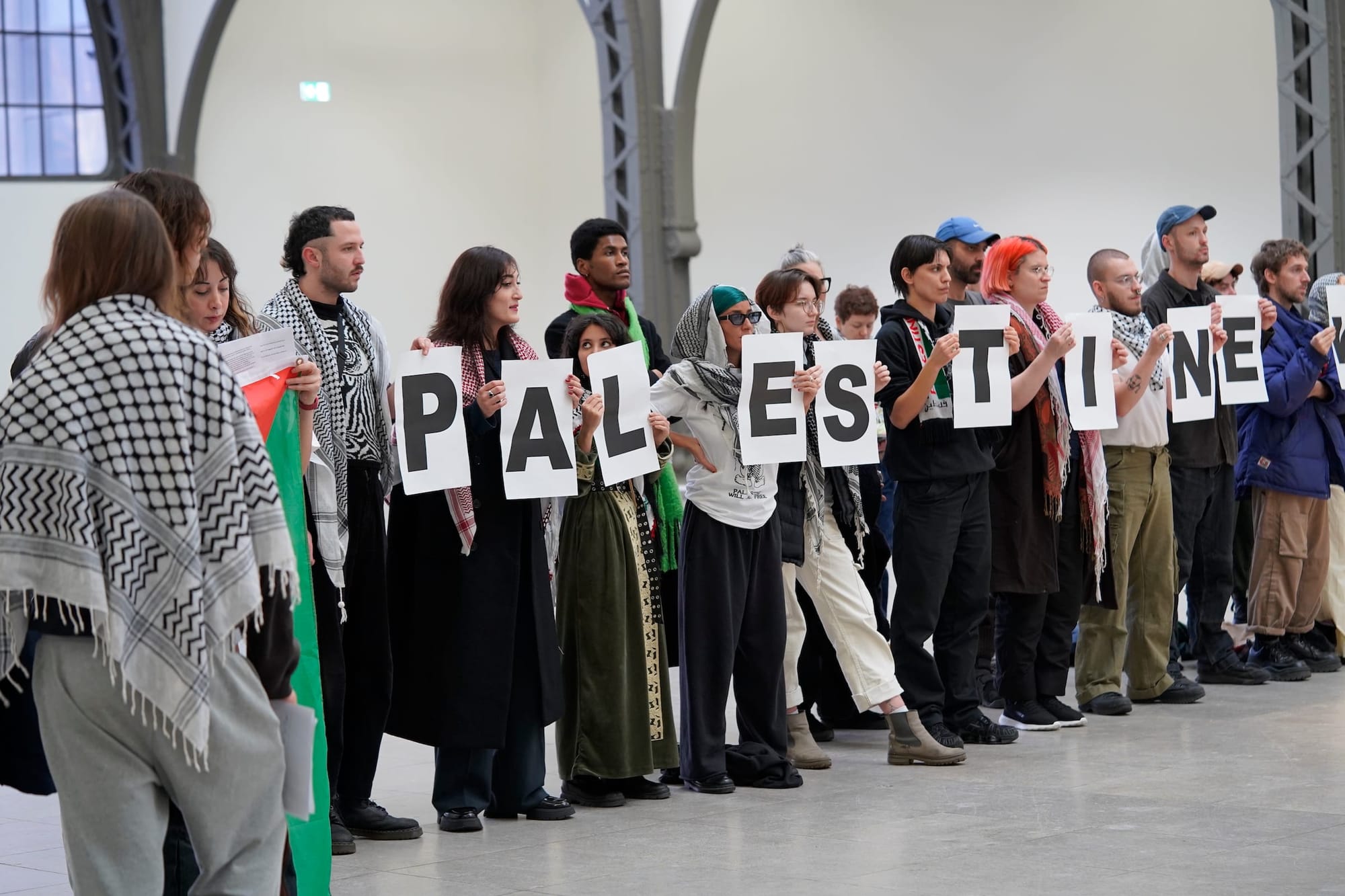
In support of their arguments, the editors cite incidents such as the disruption of a Hannah Arendt reading by Cuban artist Tania Bruguera at the Hamburger Bahnhof in February 2024, where a group protested the event “with shouting, spitting, and other violent interruptions.” But the initial “disruption” was an artist-sanctioned part of the performance. While activists later did interrupt another speaker, Mirjam Wenzel, the director of the Jewish Museum in Frankfurt, Bruguera denied violence was involved. The Hamburger Bahnhof’s decision to file criminal charges, however, revealed how the power to define a victim of antisemitism is politically assigned. In this case, the German press gets to call protesters, including Jewish ones, antisemitic for opposing the political views of Wenzel, a German Christian who identifies with Zionism. This is the rhetorical alchemy of German discourse in a nutshell: Everyone can be the victim of antisemitism because everyone — even the figurative grandchildren of the stormtroopers — can cloak themselves in a history of persecution. As contributor Ana Hoffner candidly summarizes, “If a mass movement tries to find out who the Jews are (because you never know exactly), then the correct identification is ultimately irrelevant. The language must change and not call them Jews, but Zionists.”
This is where a paradoxical logic emerges: If “the structures of antisemitism … affect everyone who speaks about them,” as Hoffner argues, anyone can be “the new enemy.” This “new enemy,” not necessarily Jewish, is now the main target for antisemitic hatred. Evacuated from the historical concreteness of pogroms and extermination camps, the Holocaust becomes fungible, a tragedy to be appropriated by all. The “irrationality and arbitrariness of antisemitism” now serves as a magical incantation — a spell that opens the doors to victimhood.
It is by no means a coincidence that this confusion between dissent and unprovoked racial hatred appears in a publication led by curators and art workers that identifies all symptoms of anti-democratic intolerance as antisemitic — again, read as Palestinian. This is the mechanism that allows one to sanctify prejudice, dressing racism and Islamophobia in the language of principles and appeals to so-called humanist ideals, like the fight against antisemitism, the movement for gender parity, or the struggle for queer safety.
Insisting on their own tolerance and inclusivity, the editors curate the exact type of diverse identities that can be tolerated and included: an “Arab-Israeli,” an anti-Hamas Palestinian, a queer Jewish migrant feminist author, a Black queer feminist Zionist, and an Israeli Bedouin, among European feminist curators and theorists. It’s a cherry-picked, schematic diversity that speaks in unison.
The Arab-Israeli voice is that of Ahmad Mansour, a Berlin-based psychologist whose organization “promotes the prevention of Muslim extremism and antisemitism,” according to its website. The center works toward developing an approach “that is capable of speaking very clearly about Israel-related antisemitism, Islamism, hostility to democracy, and patriarchal structures,” he explains in his interview with Richter. Mansour paints a rosy picture of the conditions of the Arab population in Israel. Richter contrasts this supposed gift of democratic citizenship with the lack of rights for Palestinian refugees in Lebanon. Mansour’s inclusion in this edition of OnCurating is predictable; he argues that immigrants must “integrate” by adapting to the “fundamental values” of German society and striving to become German. If they fail to do so, initiatives like Mansour’s are there to provide “re-education.”
Another legitimizing voice is Hamza Howidy, a Palestinian anti-Hamas activist whose story is recounted by journalist Ulrich Gutmair. Howidy has become a poster boy for placing full blame for Israel’s genocide in Gaza on Hamas. His views have made him a frequent guest on establishment media such as CNN and the German broadcaster ZDF, and earned him invitations to official events organized by the Bundestag. According to Gutmair, Howidy “considers the pro-Palestinian protests in the West to be hypocritical. These protests, he argues, reveal the intellectual dishonesty of a narrative that classifies all residents of the Gaza Strip as either accomplices or victims of Hamas violence, thereby dehumanizing them.”
By this logic, dehumanization is not inherent in indiscriminate attacks against an entire population — from newborns to the elderly — but instead in the expression of solidarity with their plight.
Other contributions argue that Holocaust scholar Michael Rothberg’s concept of multidirectional memory, a framework for thinking through the frictions between disparate histories of violence, is a “dangerous call for analogisation and identification.” Still others include arguments that identify anti-queer sexism with antisemitism, pro-Palestinian solidarity with neo-Nazism, the political utopia of green emancipation with the kibbutzim, Black liberation with Zionism.
Almost all contributions to OnCuration are united by a common thread: The simple-minded often align with the Palestinian cause, while those who embrace dialectical complexity tend to lean toward Israeli and “Western” positions. The rhetorical acrobatics of Sternfeld, Hoffner, and Marchart provide the foundational framework for this thesis.
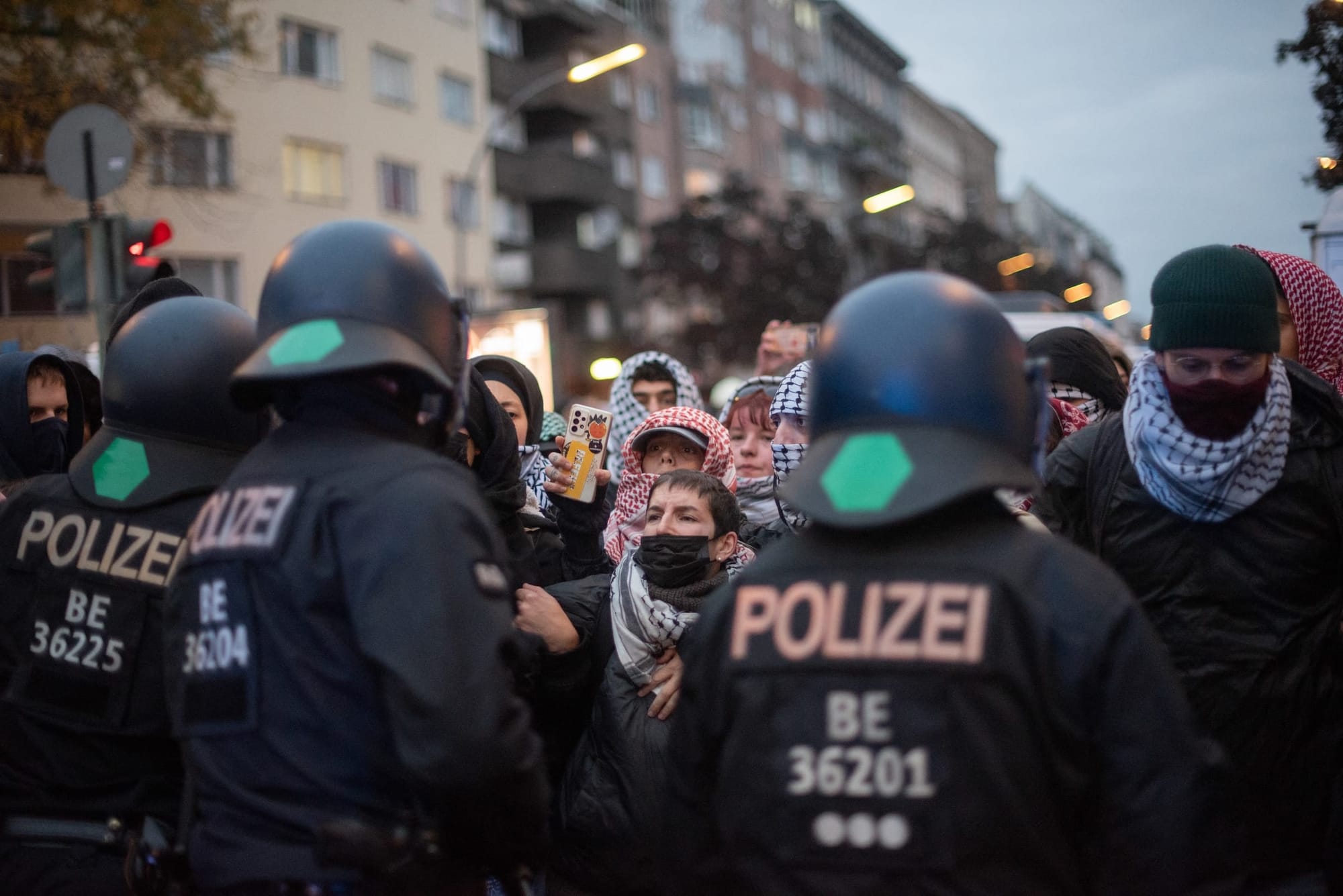
Here, liberal tolerance is fundamentally structured by the inability to grasp tangible oppression — the daily humiliations, economic barriers, physical violence — that structures the lives of marginalized people. As a result, the editors fail to understand racism as a social relation, a concrete force that organizes border regimes, not an ahistorical given or a moral signifier. This renders them unable to recognize that the very populations now targeted by the German state as the unassimilable “enemy within,” marked for exclusion from the body politic, are the same communities that OnCurating pathologizes, demeans, and dehumanizes — ultimately aligning the edition’s cultural criticism with the material practices of state violence and police brutality.
With terms like “contradiction,” “dialectic,” and “complexity” mobilized to lure us into unseeing the reality of genocide unfolding before our very eyes, Gaza becomes the unspeakable truth that must be buried for Western representations of freedom and civility to sustain their universal appeal.
Here lies the crushing weight of its contradiction. OnCurating advocates for universal emancipation, but in order to sustain its advocacy, it has to exclude Palestinians from the banquet of enlightened humanism. For the price of this liberal tolerance and inclusion is the categorical denial of the carnage inflicted on the Palestinian people in the long durée of their annihilation, from Nakba to Gaza. As a result, the editors’ efforts to combat antisemitism are less a commitment to Jewish life and more an attempt to enclose the struggle against antisemitism within the straitjacket of White, European hegemony.
Because, needless to say, the liberalism they fight for is dead. Ironically, it was not slain by patriarchal others, but bled out from self-inflicted wounds. Trump is now busy moving the corpse out of his way. And although the explicit aim of this special edition is to internationalize German parochialisms, they may soon find themselves alone at a table left with nothing but spoiled leftovers. The blinding light of abstract morality emanating from Staatsräson and enforced by cultural, academic, and law enforcement agencies has had the reverse effect: further provincializing Germany.
For what the special issue of OnCurating actually curates is little more than complicity in the ongoing litany of Western crimes in the name of democracy, inclusion, and feminism.