When Iraqi artist Ali Eyal was nine years old, his mother took him and his siblings to an amusement park in Baghdad. She ushered them onto the Ferris wheel and told them to take in the view of the city, urging them to burn that image into their minds. It would be the last time Eyal saw his homeland as a peaceful place. Days later, the United States launched airstrikes across the country. It was the 2003 invasion of Iraq, the beginning of a nearly nine-year war that would rewrite Eyal’s life.
“We were kids, and I didn’t understand that gesture from her,” Eyal said in an interview with Hyperallergic, “but now it’s resonating. Sometimes you need time to understand simple gestures. It takes years to detect them.”
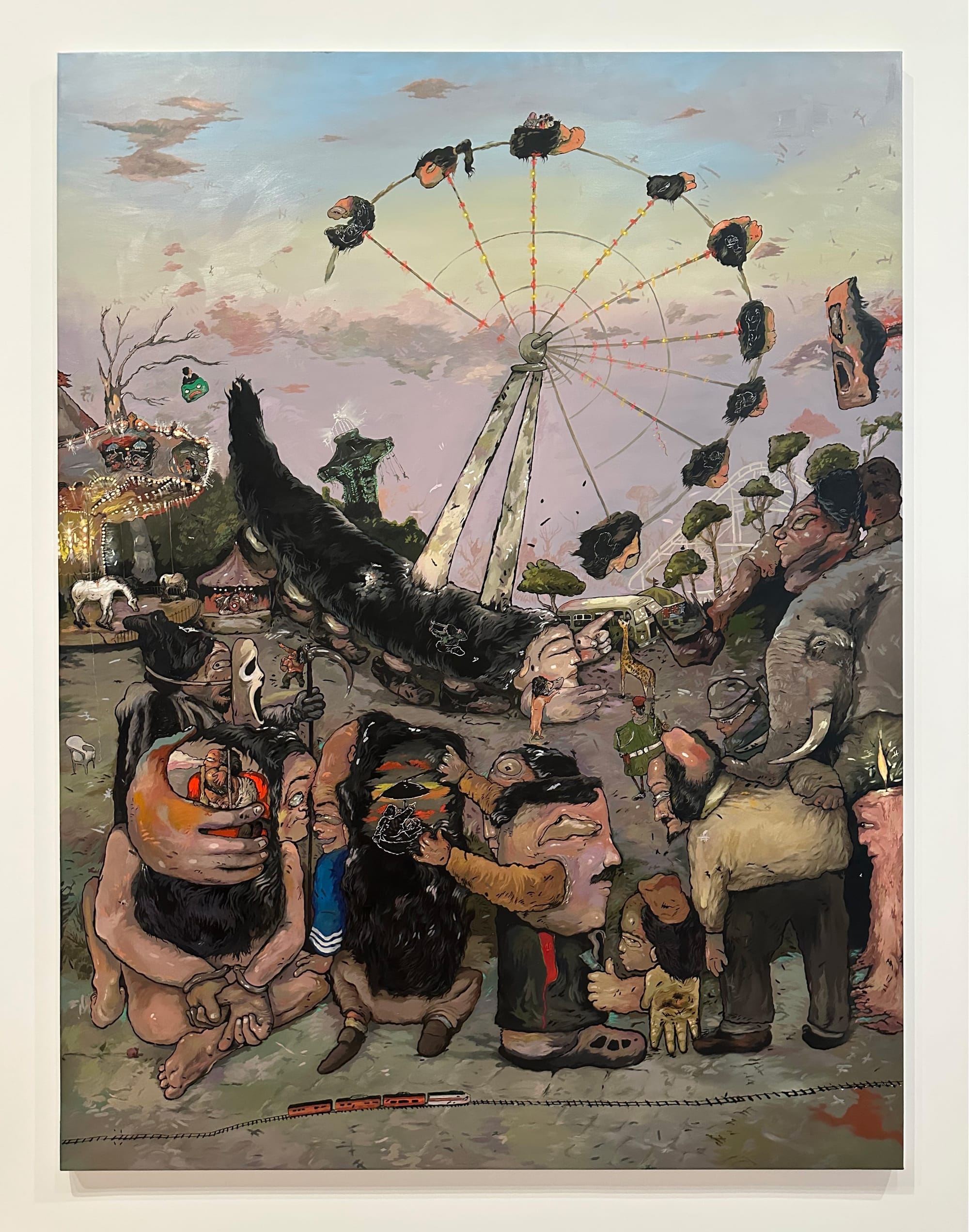
This memory is the basis for Eyal’s new oil painting, “Look Where I Took You” (2026), which debuts at the Whitney Biennial on Sunday. The scene reads as a nightmare, with dream logic darkening an innocent atmosphere. The Ferris wheel’s cars have been replaced by heads, seemingly impaled by steel spokes. An armed guard keeps an eye on the queue of grotesque fairgoers. To the left, a prankster haunts in a Ghostface mask, holding a grim reaper’s scythe — a stand-in for the American troops who slaughtered hundreds of thousands of Iraqis, by most estimates. In the foreground, Eyal himself, depicted as a child, processes the scene blankly, not yet understanding the horrors before him.
“Look Where I Took You” captures the essence of Eyal’s style. He works in painting, drawing, installation, and video to share the story of a life marked by trauma, grief, and childlike innocence. Eyal left Baghdad almost a decade ago — he studied at the Institute of Fine Arts in Baghdad, then worked in Lebanon and France, and moved to Los Angeles in 2022 when his spouse, interdisciplinary artist Samar Al Summary, began attending the University of California, Los Angeles. But he is still processing the war, and the impact it had on his family.
One core memory is the disappearance of his father. Eyal described him as a poor man who worked for the municipality, ostensibly not a threat. He recalls an Iraqi militia storming their house during the Arba’in pilgrimage, a holy walk that is the second-largest public gathering in the world. Eyal’s family had thought the militia was out to protect the pilgrims, but the men instead used the event as a cover, smashing their door and kidnapping his father.
“They had a list of names,” Eyal said. He helped his mother search for his father in forensic hospitals and American military bases, but they never found him.
“I was nine years old, and I felt like I lost that childhood,” Eyal said.
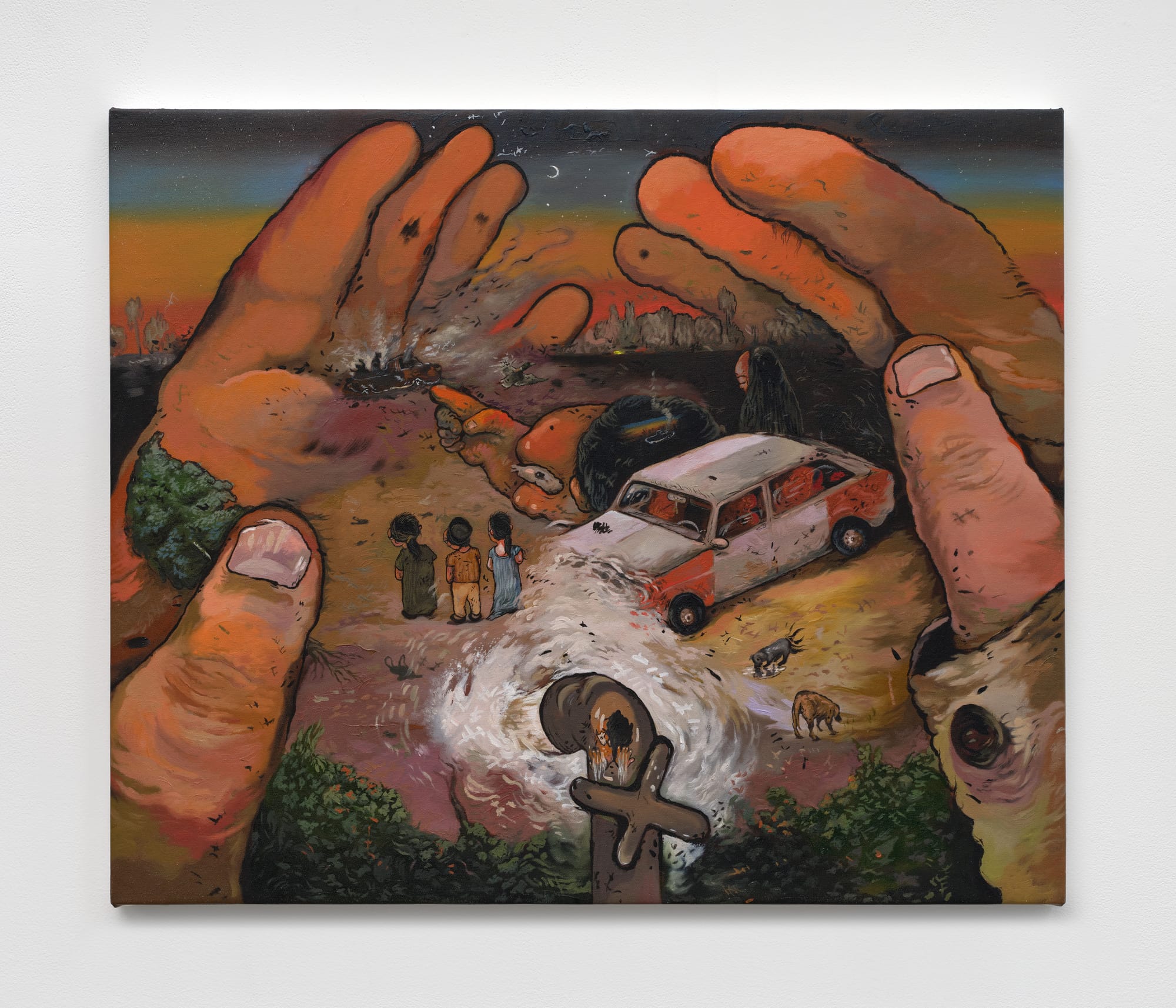
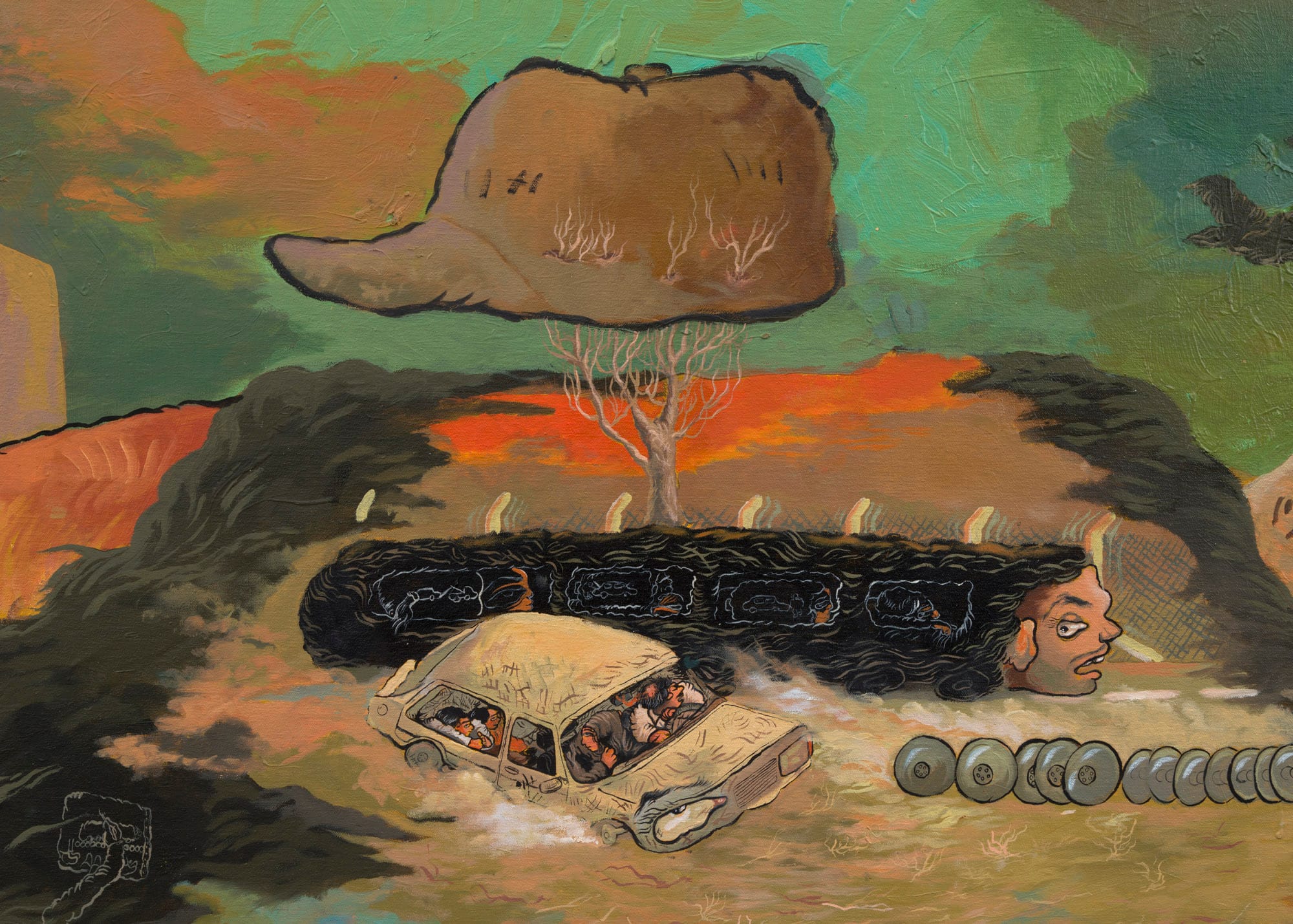
Eyal explores memories of his father and his disappearance in numerous works. “The road to an unknown hand” (2024) shows his family squeezed tightly into a sedan, swerving on a foggy road, with imprints of the tires’ rims trailing ahead, careening towards a crash. In “Please look where they took us” (2026), Eyal’s father, cartoonish and oversized, towering over the young boys, points at the charred remains of a car in the distance, two bodies still visible within. Each of these works foreshadows the fate of Eyal’s father’s vehicle, which was bombed, the culprits unknown.
Most of Eyal’s works are accompanied by text that shares a story from his childhood. He may talk about lying on the floor and watching ants for hours, or about the time his father grabbed a stone from a destroyed shrine, hoping it would ward off evil. The core memory is always true, but he often fictionalizes the margins. “And Look Where I Went” (2025), his Mohn Award-winning piece from the most recent edition of Made in L.A., imagines a hot dog vendor in New York City, forlorn because he left his family in Egypt. His memories dominate the right side of the canvas, where a person weeps, body bags loom, and water pours into an abyss. On the left-hand side, Eyal paints himself into the scene. He reaches out towards the tortured vendor, as if to comfort him.
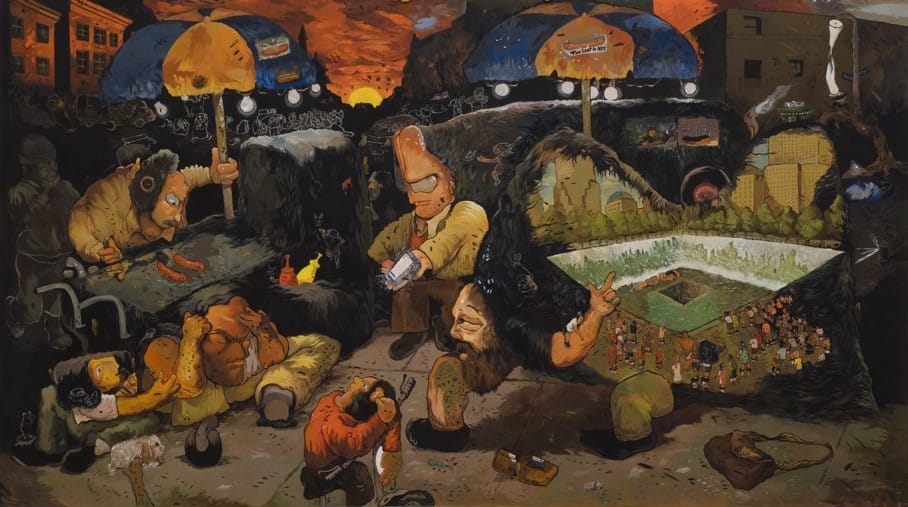
Eyal bends the truth partially due to PTSD, which has fractured his memory and left it fuzzy, but also because it helps him build empathy with his audience. His scenes offer onlookers a new way to understand the battleground — “fertilizing it with my own fiction with respect to the victims and people who survived,” as he puts it. This is his way of giving testimony.
Eyal does make a point to bring beauty into his work. These may originate from small, tender moments. “Could you please paint this?” (2025), for instance, includes a hand holding out a moldy orange. It belongs to his mother, who saw enchantment in the rotting fruit; she wanted her son to capture the orange and green hues of the peel.
But heaviness is inextricable from his art. Often, Eyal’s scenes are illuminated with gorgeous sunsets that bathe them in orange and yellow. These hues and what they represent, however, also carry a dark history. The US typically launched its heaviest attacks at sundown, and dusk still makes Eyal anxious. He is currently working on a monograph about sunsets as a way to ease his fear.
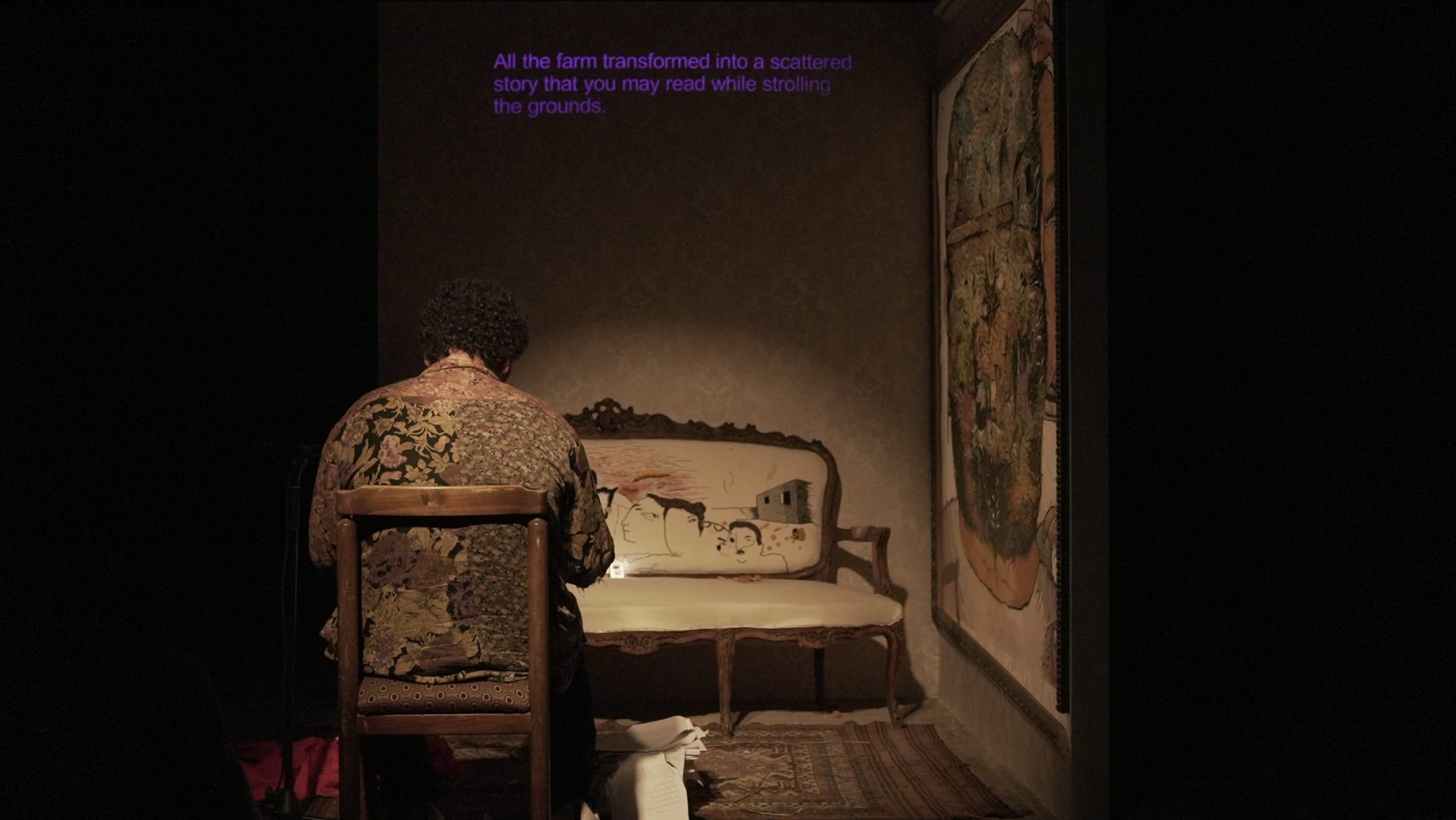
Though Eyal has been using his artwork to heal, trauma from the past lingers. Two days before Eyal’s interview, the US and Israel bombed Iran. In response, Iran bombed military bases throughout the Gulf region, including in Baghdad, where Eyal’s mother felt the shocks. Pundits drew parallels between this act of aggression and the war of his childhood.
“I feel paralyzed. I felt like I became a kid when I looked at a TV this morning,” Eyal said. “The only thing that I wish for my mom, and my family, is to have rest from wars.”