From Niche to Best-Seller
Over 30 years ago, the idea of a car-based SUV was a novelty. For the most part, SUVs had ladder-frame chassis, and the few unibody examples were built as SUVs from the get-go. But then that all changed with the Toyota RAV Four concept, which eventually became the RAV4.
Eventually, all Japanese carmakers followed suit, with Honda being the first to respond to Toyota. The first-generation CR-V made its world premiere in Japan in late 1995 and eventually reached America for the 1997 model year. Based on the Civic from the same era, it would later define the crossover SUV genre and become Honda’s best-selling product.
Honda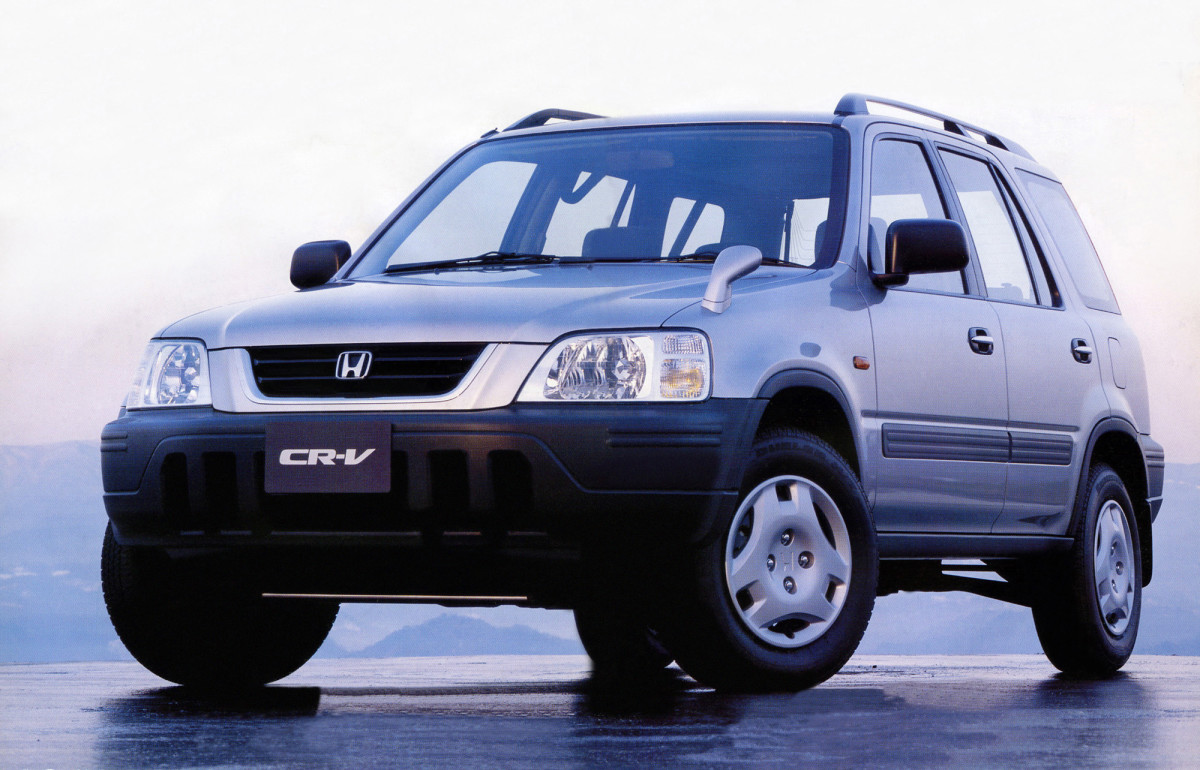
From the Design Archives
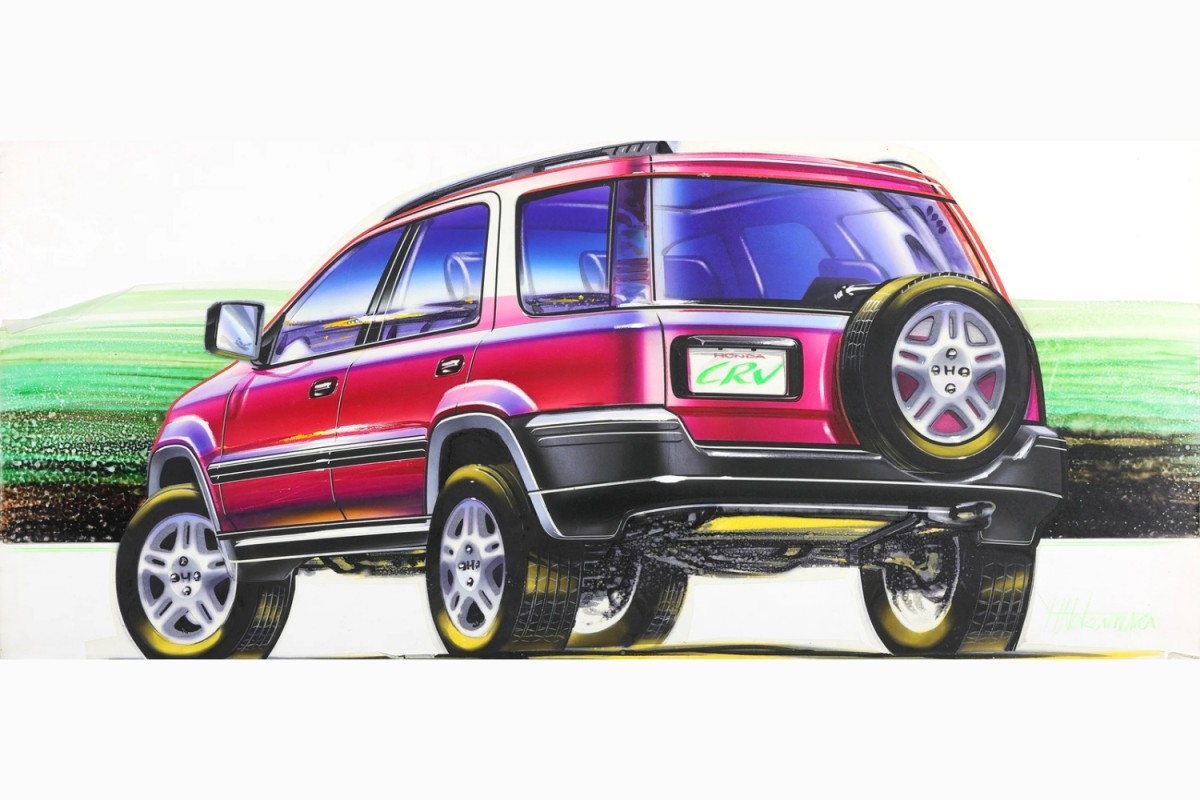
Before the first-generation we all know and love was revealed, there were several styling proposals that came before it. While we’re unsure when Honda started plotting out ideas for its first in-house SUV, it’s safe to say that the initial design looked very different from the final product.
As part of the CR-V‘s 30th anniversary celebrations last year, Honda shared early sketches of every generation made for the first time. There, we saw some pretty wild ideas for both the interior and exterior of the first-generation model.
Honda
Aztek Vibes
The look of the original CR-V looks conventional by today’s standards, but it was groundbreaking all those years ago. In Honda’s own words, they set out to ‘create a new genre that is neither a wagon nor an off-road vehicle,’ and one with a ‘living room feeling package.’
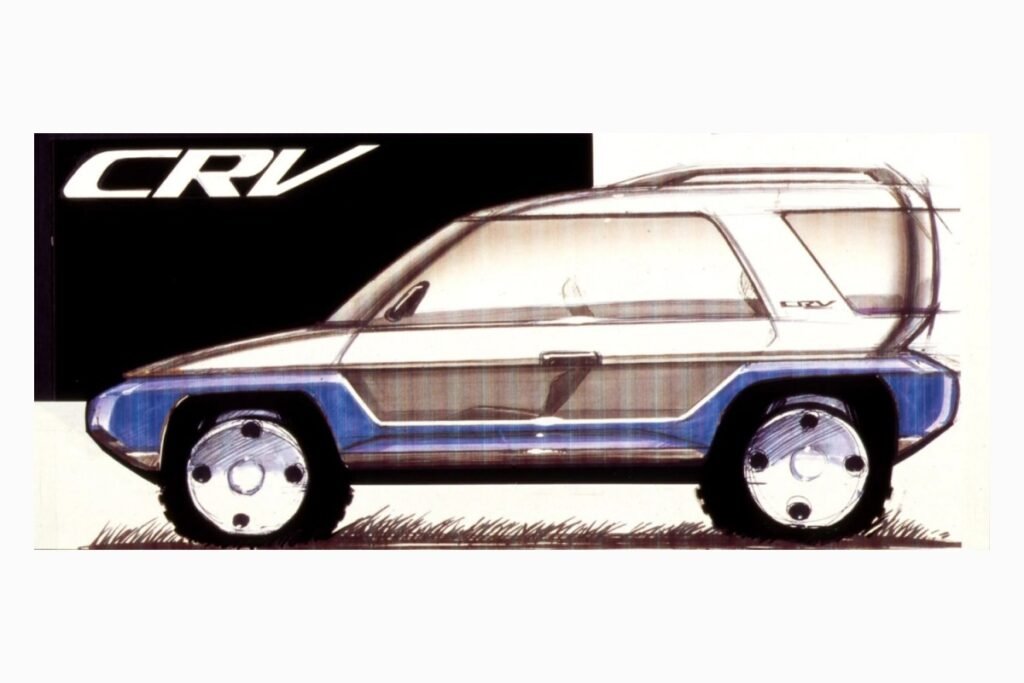
That said, Honda could’ve easily taken a more daring approach if sanity hadn’t prevailed. They wanted a wagon-like vehicle with a very generous glass area, and the first set of sketches followed that to a tee. From the side, it looked like a Pontiac Aztek with the tent permanently attached to the back.
The sharp and pointy nose also reminds us of the ill-fated crossover, and we’re glad the awkward rear end didn’t reach the next design phase. Oh, and that front end is reminiscent of a Fiat Multipla.
Honda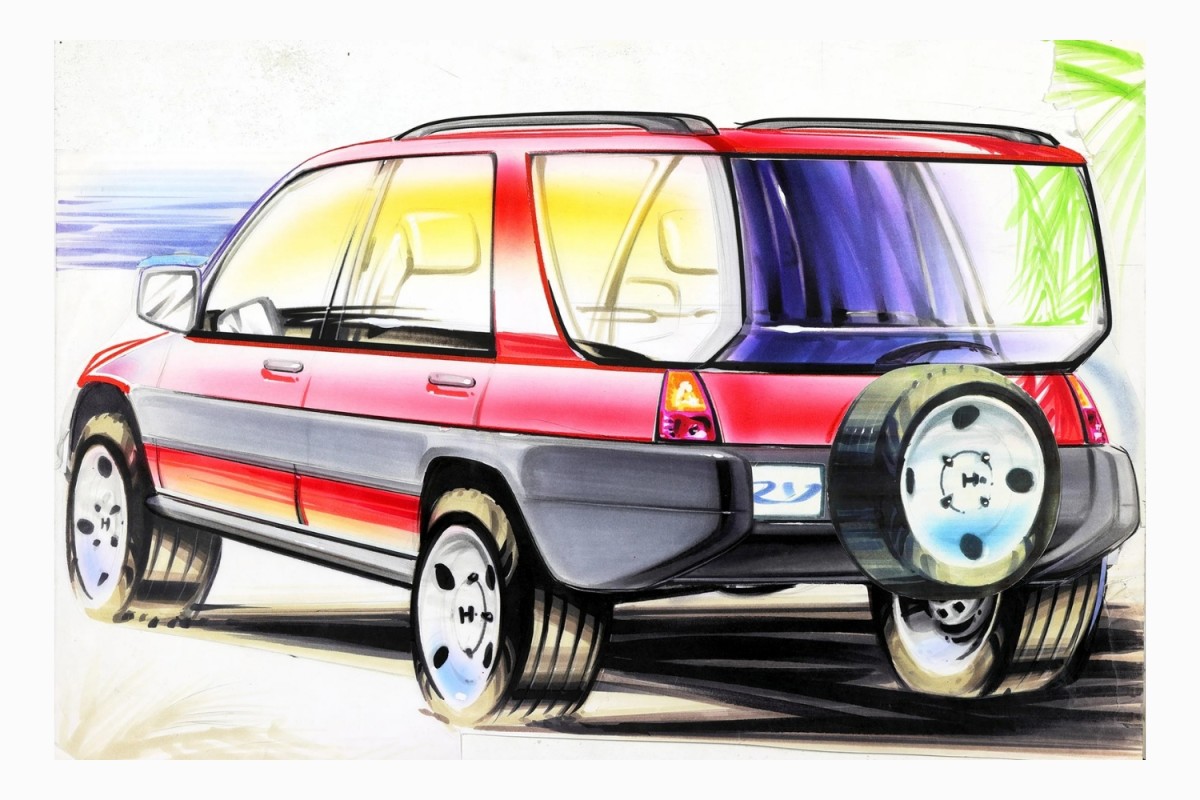
Ovals in the Cabin
Also looking dramatically different from the eventual product was the interior. Forget everything you remember about the gen-one’s cabin, as the first sketches showed a more playful and ovoid design.
One sketch showed a pod-like center stack, a rather conventional set of dials, and a floor shift automatic. If you ask us, it wouldn’t look out of place in a ’96 Ford Taurus. Later designs were less rounded, and we can see some elements of it in the production version such as the center stack layout and the column shifter. Interestingly, a center-mounted digital speedometer was also proposed.
Honda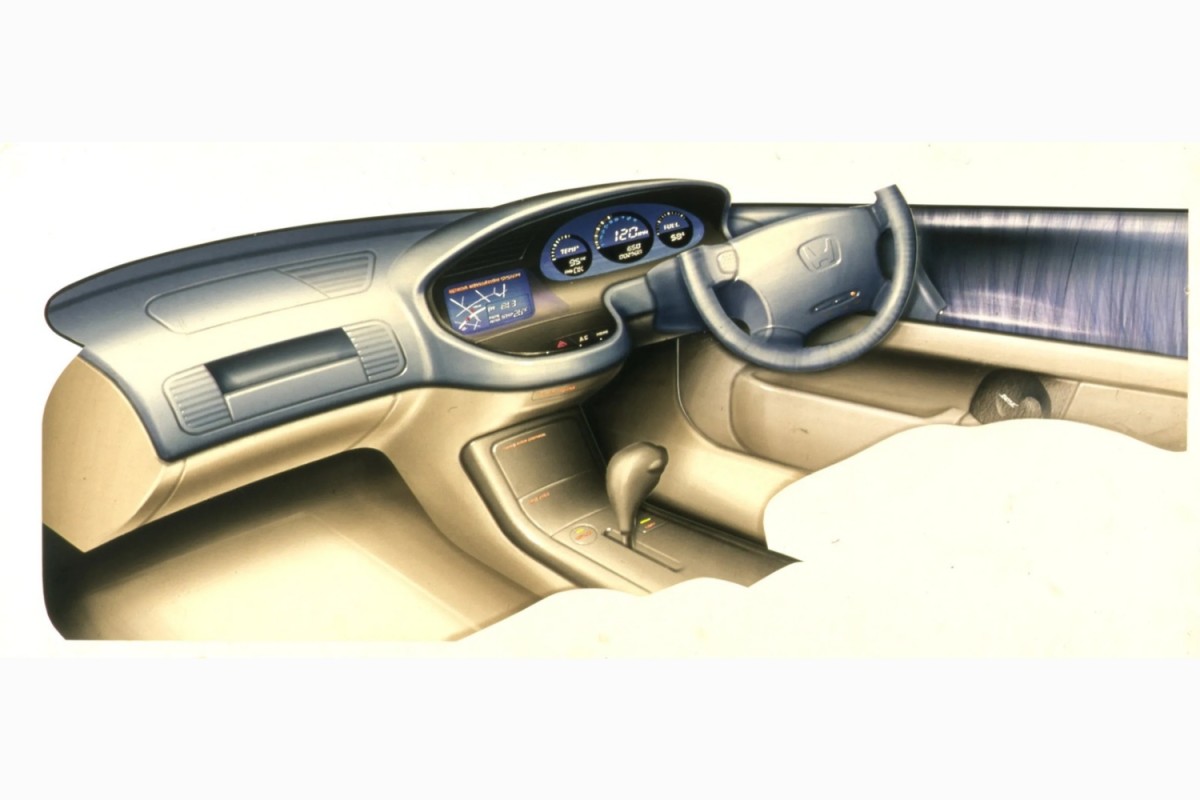
Taking Shape
As the design studies progressed, more familiar design elements emerged. The round headlights gave way to squarer units, and the tail lights were eventually moved to the pillars – a trait the CR-V carries to this day. Speaking of pillars, those were made less upright, and there’s far less body cladding present.
The interior now featured the now-familiar black housing, and the signature dimpled surfaced have appeared. Also present is the swing-up center console and additional storage areas, and the column shifter for automatic models remained.
Honda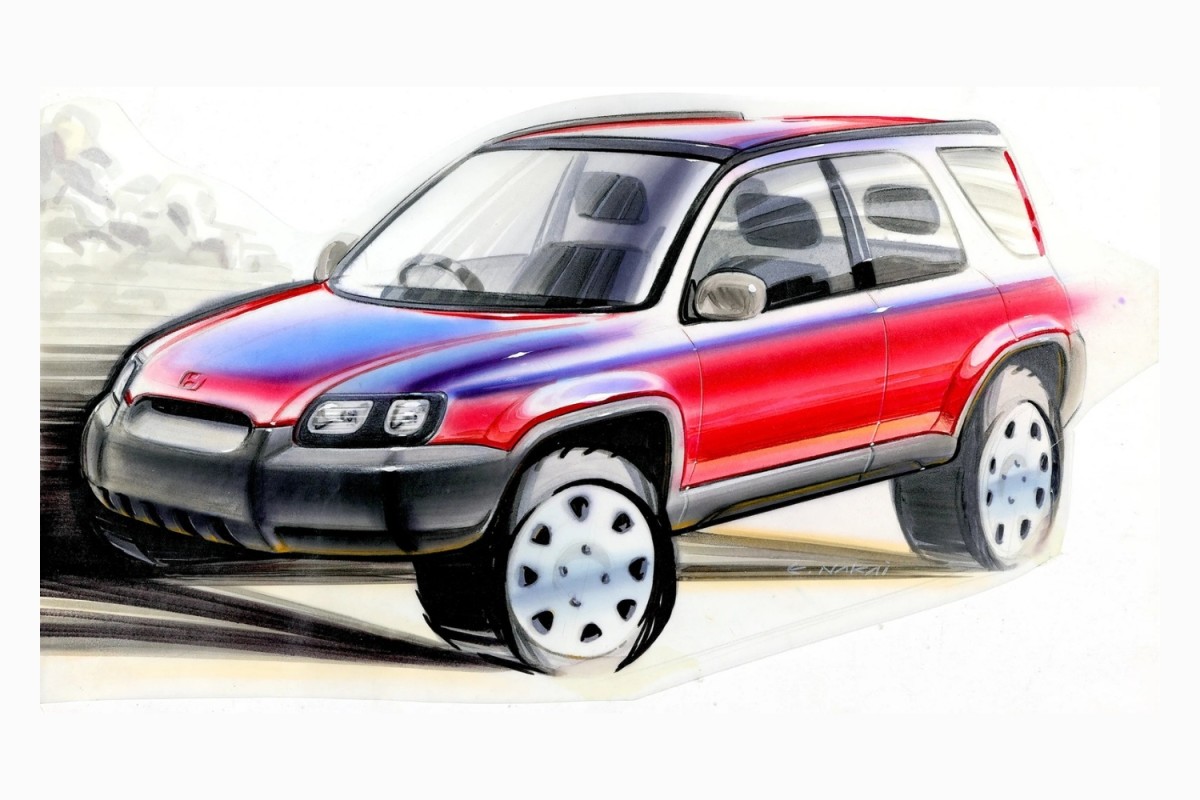
The Result
After years of development and several revisits to the drawing board, the Honda CR-V made its world premiere at the 1995 Tokyo Motor Show. What’s interesting about the entire design process is that Honda never released a concept version to preview the model. It just…appeared on the company’s show stand, ready to be sold to Japanese consumers in a few months. The CR-V, quite literally, burst onto the scene and has been a huge seller since.
It’s interesting to see how the CR-V’s initial design concept evolved to what appeared in October ’95. It started out as a rather wacky-looking proposal for one of the most impactful cars ever made during the decade. Of course, it could’ve easily gone south, but we’re glad the CR-V ended up looking the way it did. Let’s not forget about that built-in table, too.
Honda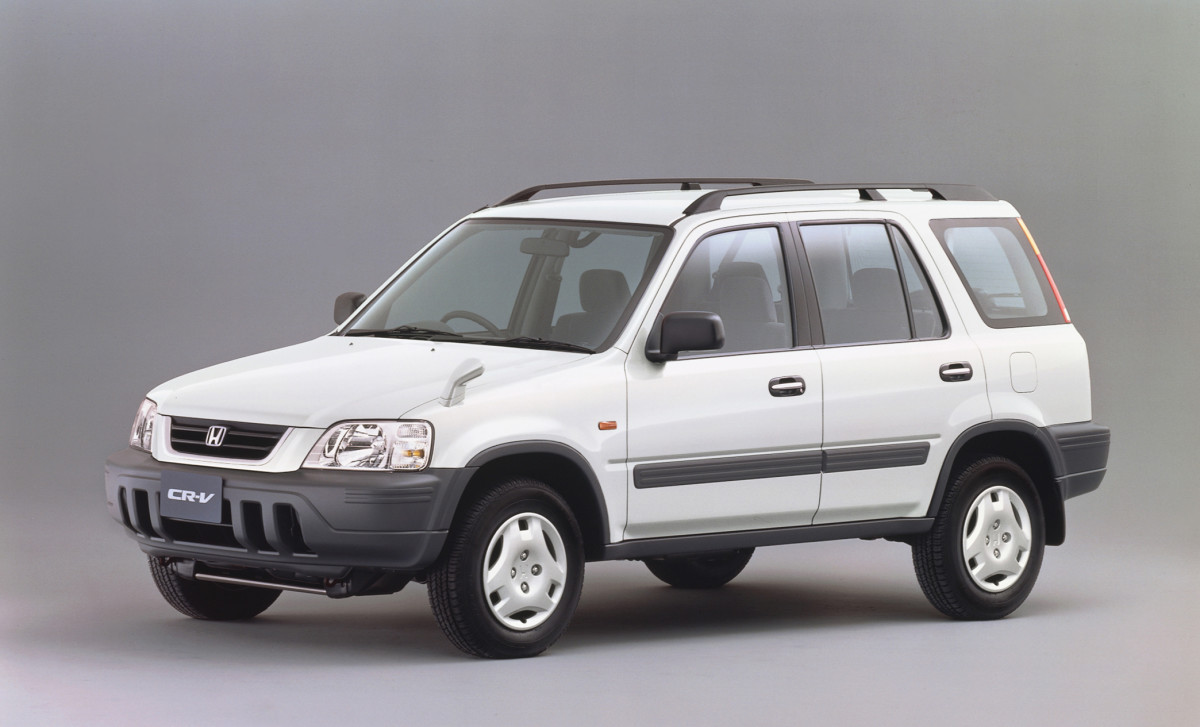
Honda