- Real-world PHEV fuel use far exceeds lab ratings.
- Nearly 1 million vehicles analyzed via OBFCM data.
- Drivers charge less often than WLTP models assume.
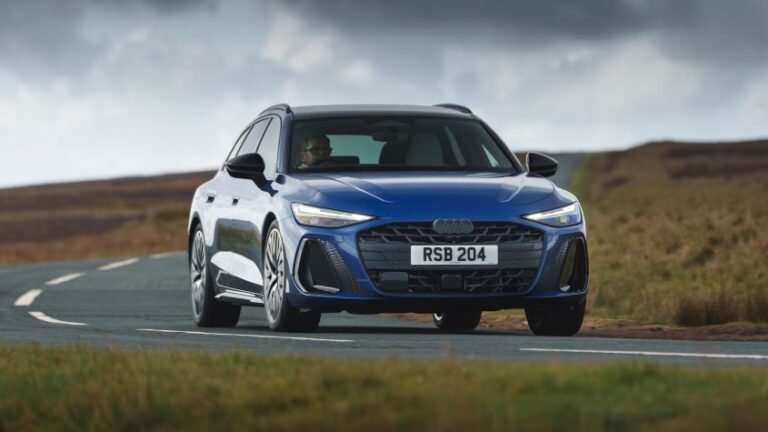
Plug-in hybrids are meant to be the sensible middle ground, bridging the gap between conventional hybrids and fully electric cars, even if they carry a substantial weight penalty. We have seen that trade-off clearly even in performance machinery such as the BMW M5 and the new Audi RS5. The pitch is simple. A short burst of electric range for the school run, then a combustion engine for everything else.
In theory, that blend should make them the most efficient form of hybrid. According to a new study, though, they are nowhere near what regulators expected.
Researchers at the Fraunhofer Institute analyzed real-world data from 981,035 PHEVs built between 2021 and 2023 using on-board fuel consumption monitoring (OBFCM). The analysis is thought to be the most comprehensive real-world study of plug-in hybrids so far, using wireless data transmitted directly from vehicles across multiple manufacturers.
They compared official WLTP lab certification figures with how these cars were actually driven. The result? The two sets of numbers were nowhere near each other.
Real-World Gap Emerges
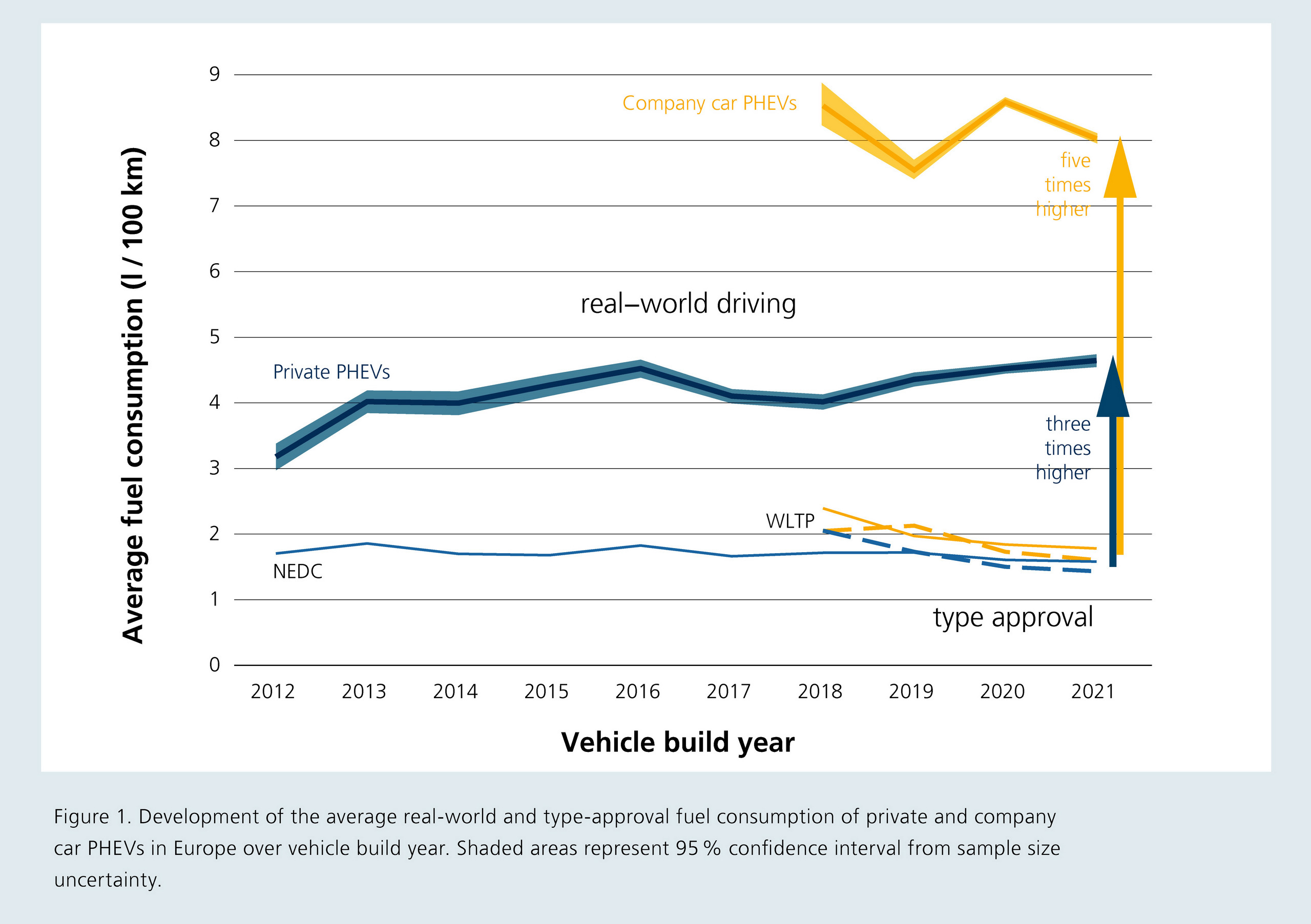
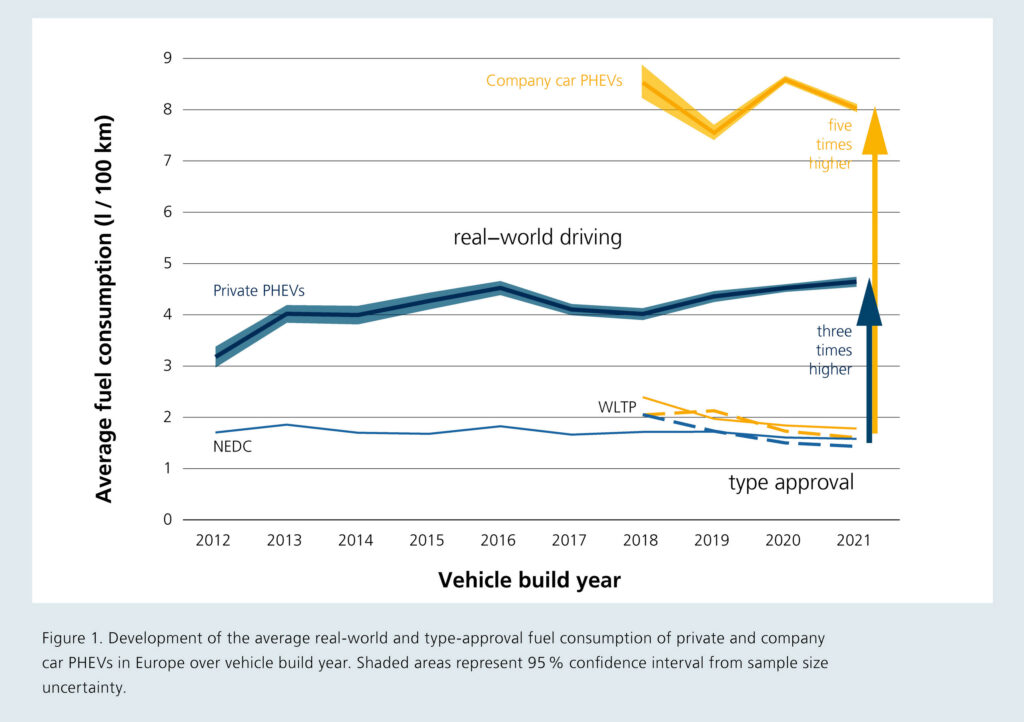
Data suggests that PHEVs consume more than three times as much fuel as their official ratings suggest. On paper, the average plug-in hybrid is rated at around 1.57 L/100 km (149.8 mpg US) under WLTP testing. In real-world driving, that jumps to 6.12 L/100 km (38.4 mpg US).
More: Lamborghini Kills Its EV Dream After Calling Interest ‘Close To Zero’
It gets worse. Even in “charge-depleting” mode, when the car is supposed to rely primarily on battery power, fuel consumption averaged 2.98 L/100 km (78.9 mpg US). That is nearly double the official combined figure.
There were also notable differences between brands. Some high-end German models recorded the highest real-world consumption, with certain Porsche plug-in hybrids averaging around 7 L/100 km (33.6 mpg US).
At the other end of the spectrum, lower-priced models from Kia, Toyota, Ford, and Renault frequently came in under 1 L/100 km (over 235.2 mpg US) in comparable conditions, roughly 85 percent less fuel than the Porsche.
Asked about the discrepancy, Porsche said its published figures comply with EU testing procedures and that variations reflect differing usage patterns and driving conditions, according to The Guardian. The European Commission declined to comment, while Germany’s automotive industry association said existing testing frameworks remain reliable.
Not Plugging In Often Enough
So what’s driving the gap? The researchers point to four main causes. The overwhelming key component is that PHEV users don’t plug in to charge nearly as much as regulators assumed they would. Even Toyota has run into that reality and attempted to nudge owners toward charging more regularly through its own app.
More: Drivers Buy Plug-In Hybrids And Forget The ‘Plug-In’ Part
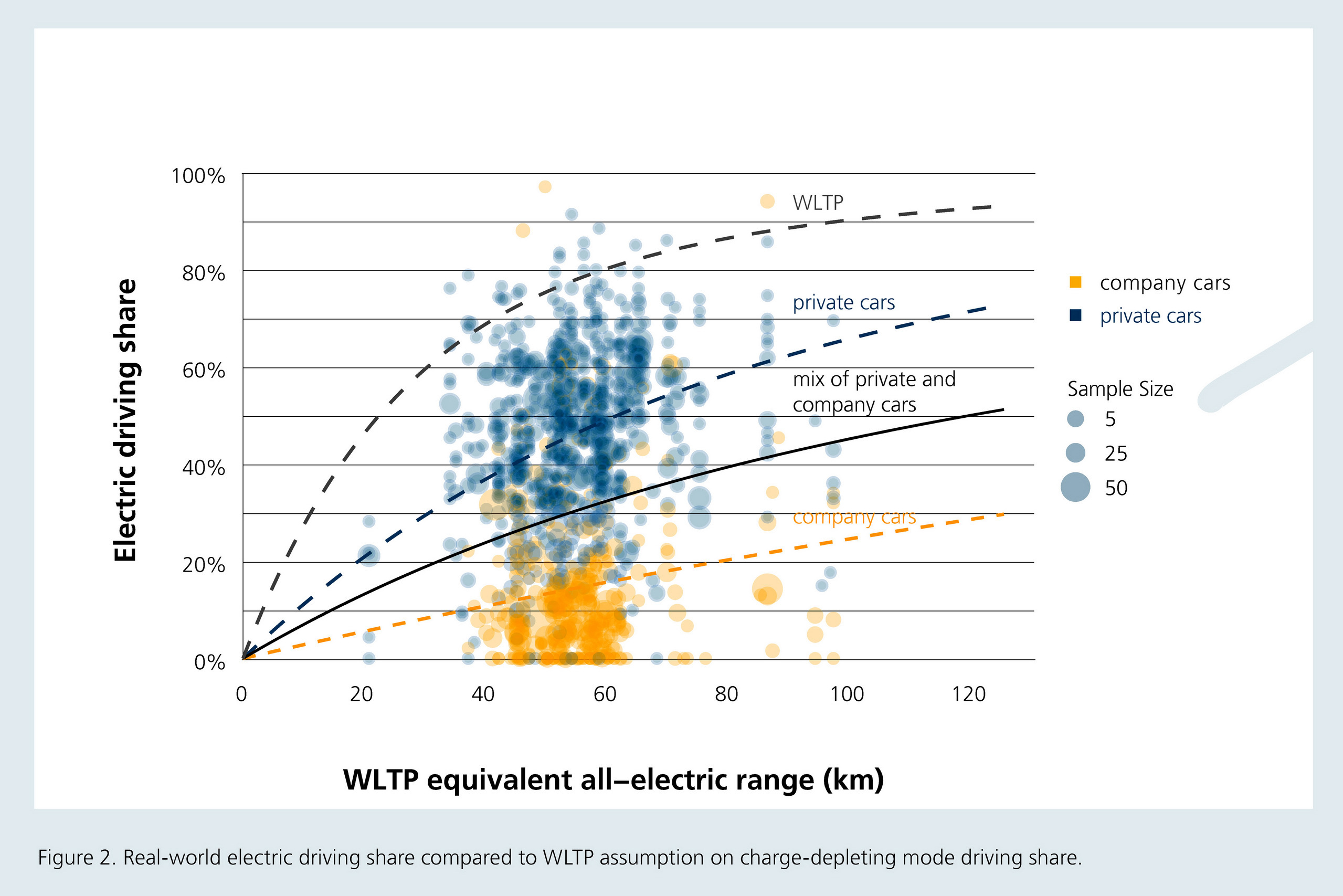
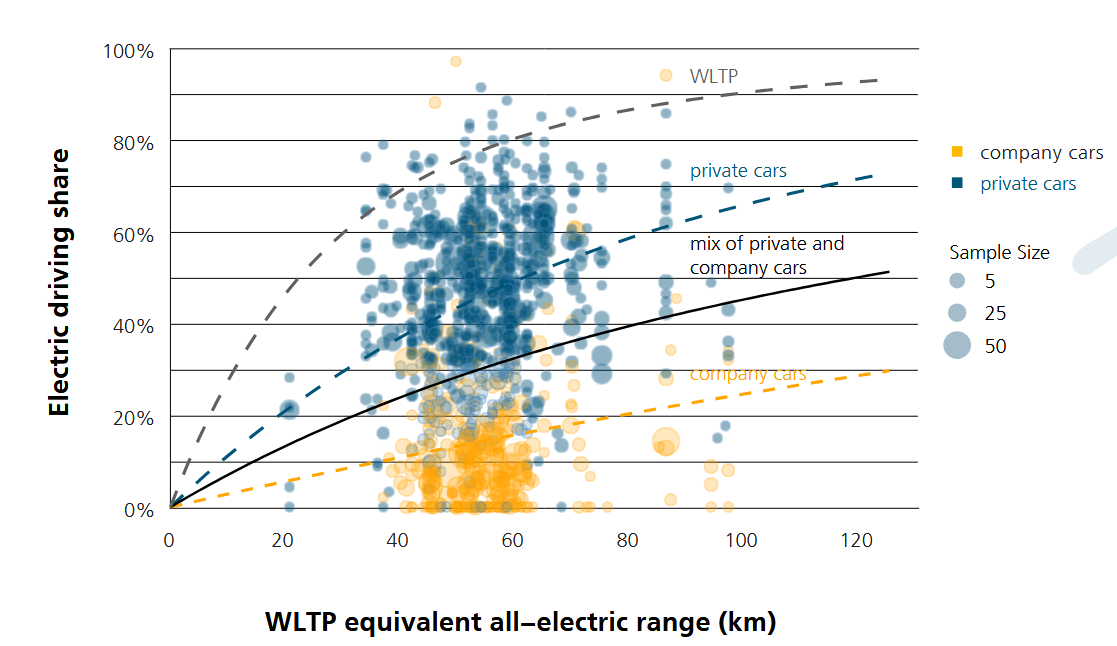
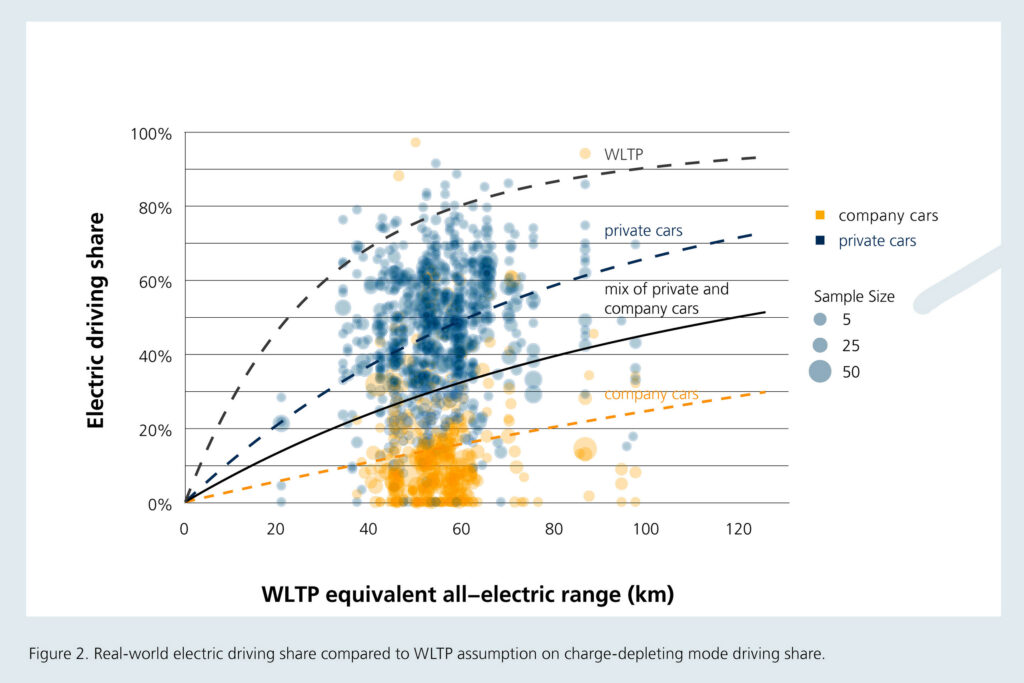
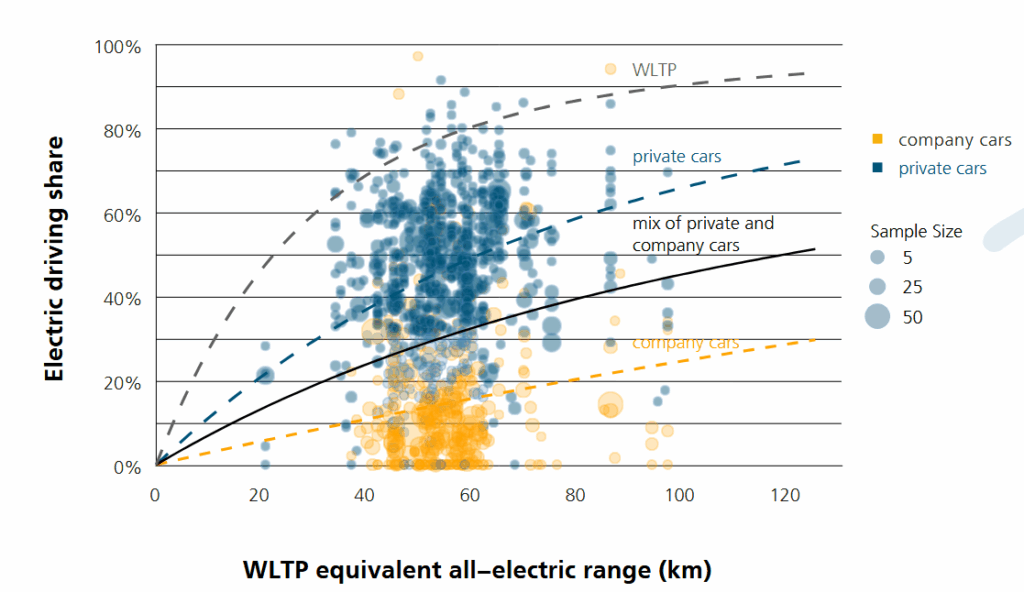
Real-world data shows private PHEVs drive electrically about 45–49 percent of the time, while company cars drop to just 11–15 percent. WLTP calculations assume an electric driving share closer to 70–85 percent. When the battery isn’t charged, EV miles automatically dip, and the combustion engine has to burn more fuel, now with a dead, heavy battery to lug around.
Environmental groups have long questioned whether laboratory figures accurately reflect daily driving, and these findings appear to reinforce those concerns.
That’s a problem in more ways than one because the study found that the combustion engines in question burn more fuel in real-world conditions than they do in lab testing. On top of that, there are two more, albeit smaller, issues to consider.
First, real-world electric range often ends up being shorter than advertised. Cold weather, higher speeds, elevation changes, and other factors diminish range. Finally, some drivers drove well beyond the EV range available to them each day, which further skews the results against PHEVs.
Patrick Plötz of the Fraunhofer Institute told German broadcaster SWR that the engine appears to engage far more often than manufacturers implied, even when drivers expect the vehicle to remain in electric mode. He added that several German-built models ranked among the thirstiest in real-world use, with a high-end Porsche plug-in hybrid turning in some of the weakest results in the study.
Testing Conditions Matter
At the end of the day, PHEVs are still more fuel efficient than their traditional hybrid counterparts, but only when used as intended. Top Gear once tested the fuel economy of a Prius against that of a BMW M3 and the German sports car won, not because of some fancy trick, but because the test required the Prius to lap a race track at its fastest pace possible while the M3 simply had to keep up. The point? The test conditions matter as much as the way one uses the car in question.
Buying a plug-in hybrid doesn’t offer much benefit if users don’t plug it in. Conversely, there are known issues with the WLTP protocol. Had this test gone down in the US with EPA ratings, the figures would’ve likely been closer to reality, though not perfect. The EPA still assumes that PHEV owners charge regularly. When they don’t, we get results like the ones from this latest study.