I’m lucky: I haven’t been to many funerals. The ones I have experienced were not cinematic, weepy affairs in grand cathedrals with an organ and a procession out to the misty cemetery where a black-veiled woman dumps the first pile of dirt with a wrought iron shovel. Instead, military regalia and scuffed chairs and polite nods. I did not cry.
Admitting to such detachment perhaps confirms my belonging to what Secretary of War Pete Hegseth recently called the “godless left.” And it’s basically true that I go without god in my heart. So, how to explain the real sense of reverence I felt in a blue, dimly lit room tucked away in the furthest wing of the Egyptian Galleries on the Brooklyn Museum’s third floor? In Unrolling Eternity: The Brooklyn Books of the Dead, it’s possible to view a 2,000-year-old instruction manual to the afterlife, hushed and hovering as if over a casket in a tomb. Visible are boats floating through the mythical Field of Reeds; an offering table piled with bread and trussed ducks; and the famous scene of a heart weighed on a scale against the feather of Ma’at, to make sure one is in balance, that the heart is not too heavy. If it is, there’s a lion-hippo-crocodile creature waiting to eat it. This is how one dies.
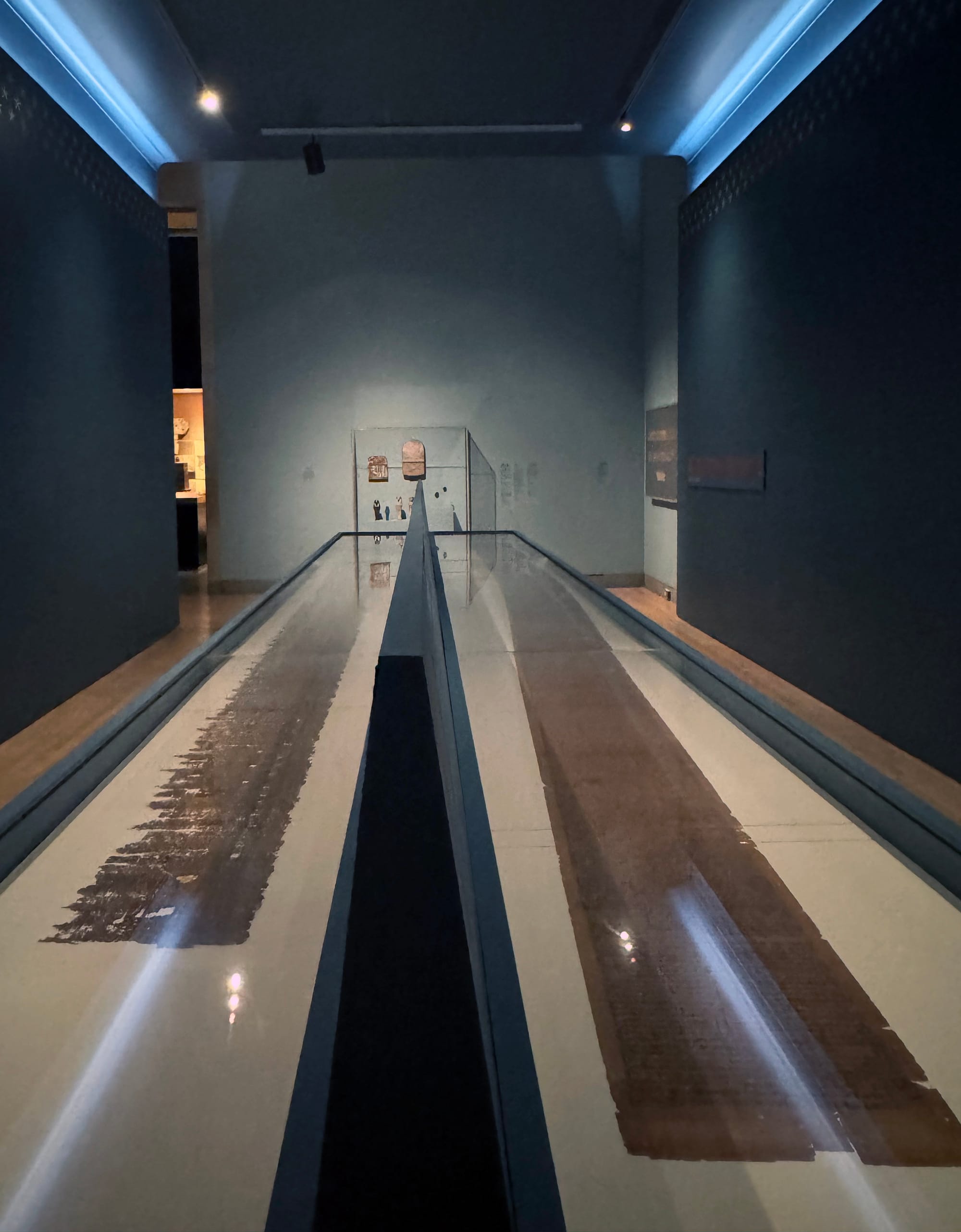
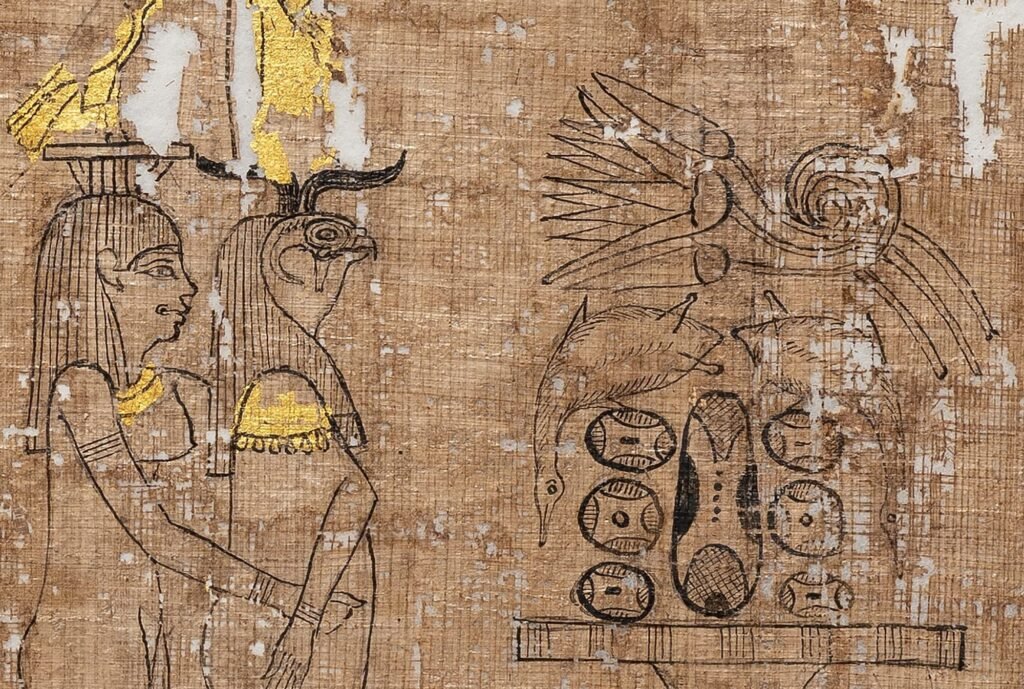
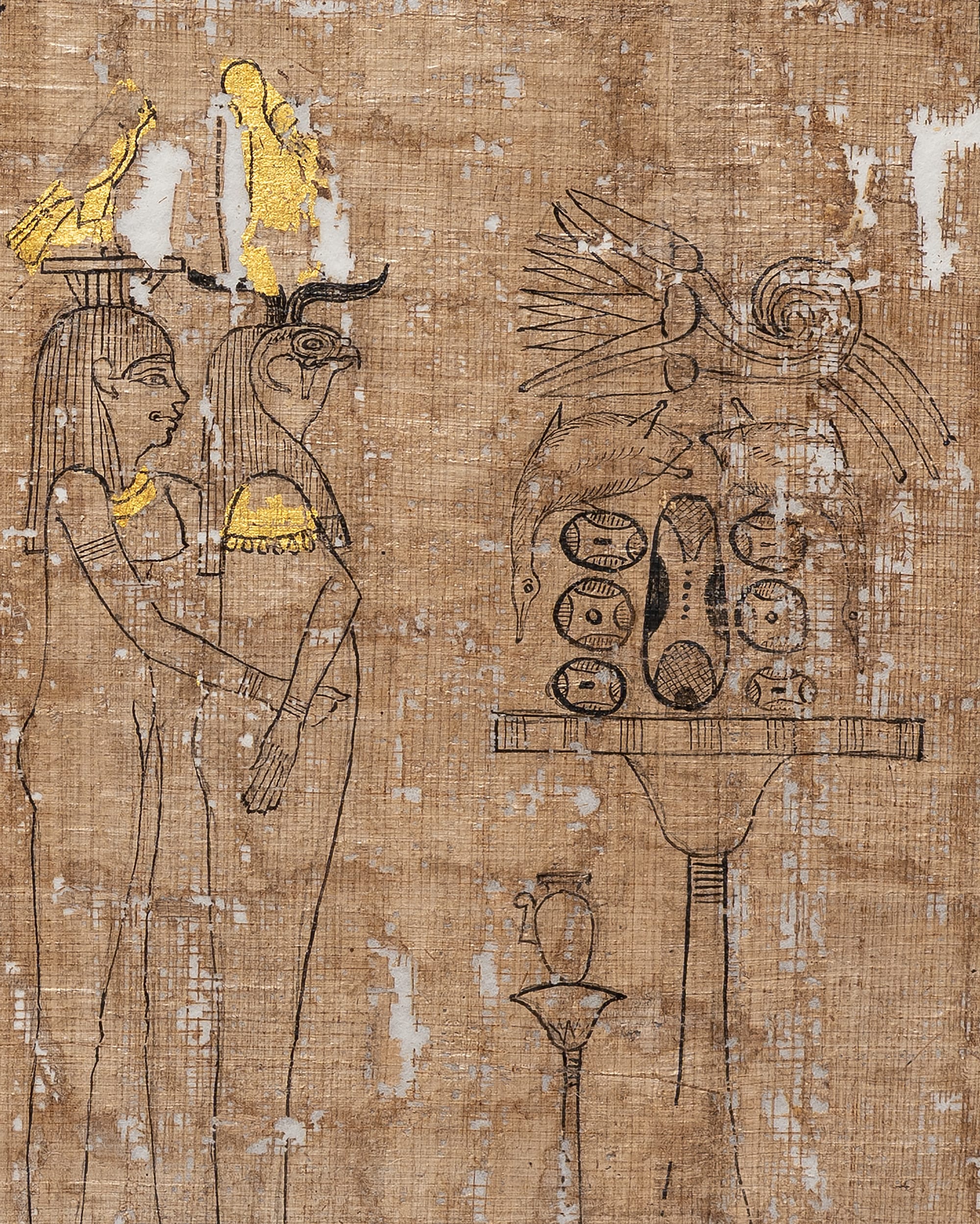
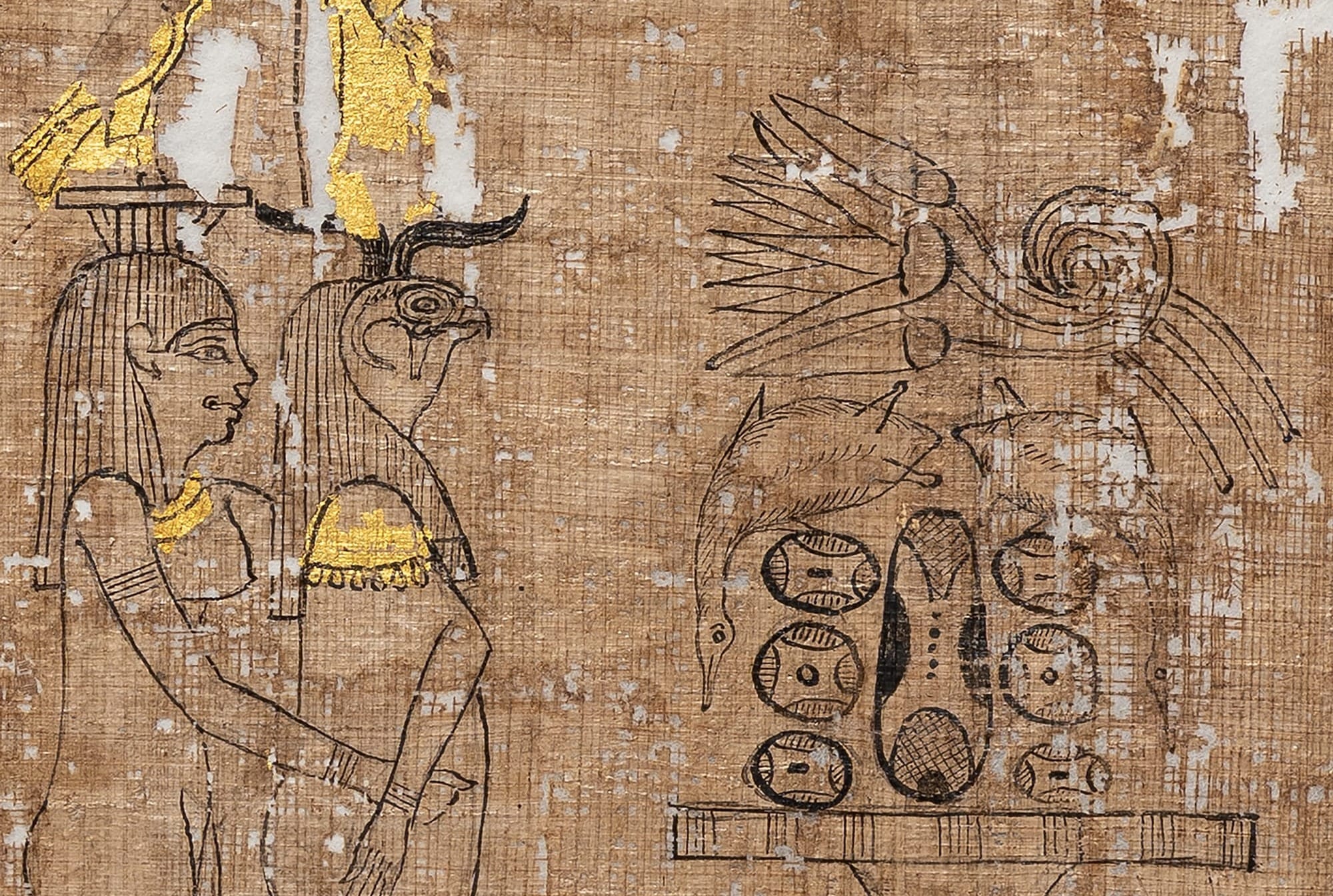
There is no singular “Book of the Dead”: The term refers to a loose collection of funerary texts — a written version of the Kemetic tradition of protection spells and mummification rules for the deceased — that anyone in Ancient Egypt could theoretically acquire from a scribe, though it would cost you. There are about 200 known spells, and while no book contains all of them, the tour de force of the new Brooklyn exhibition is a 21-foot papyrus from around 250 BCE containing more than 160. This artifact is special for several reasons: it’s one of about 10 known surviving Books of the Dead to be gilded; there are spaces on either side indicating we have it from beginning to end — and it’s been in storage since 1937. Three years ago, the Brooklyn Museum conservation team won a major grant to restore it.
This is likely not the first time it’s been on display for a Western audience’s passing delight. In the 1840s, Henry Abbott, a British physician living in Cairo, purchased or discovered the Book, which was originally buried in the tomb of a man named Ankhmerwer. Abbott amassed a collection of about 1,200 or so objects, brought them to New York’s Stuyvesant Institute in 1853, and staged the first Egyptian artifact show in the United States.
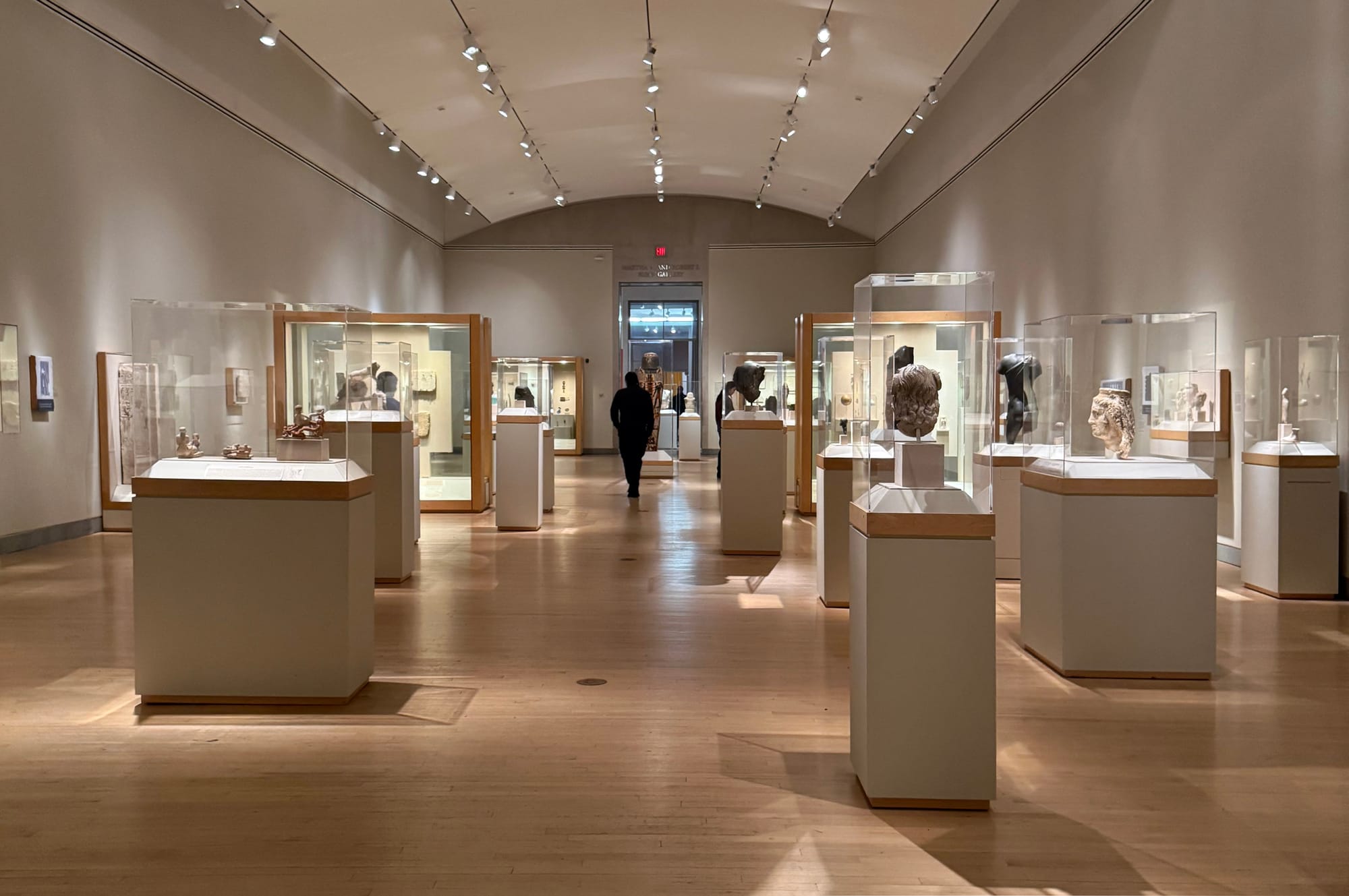
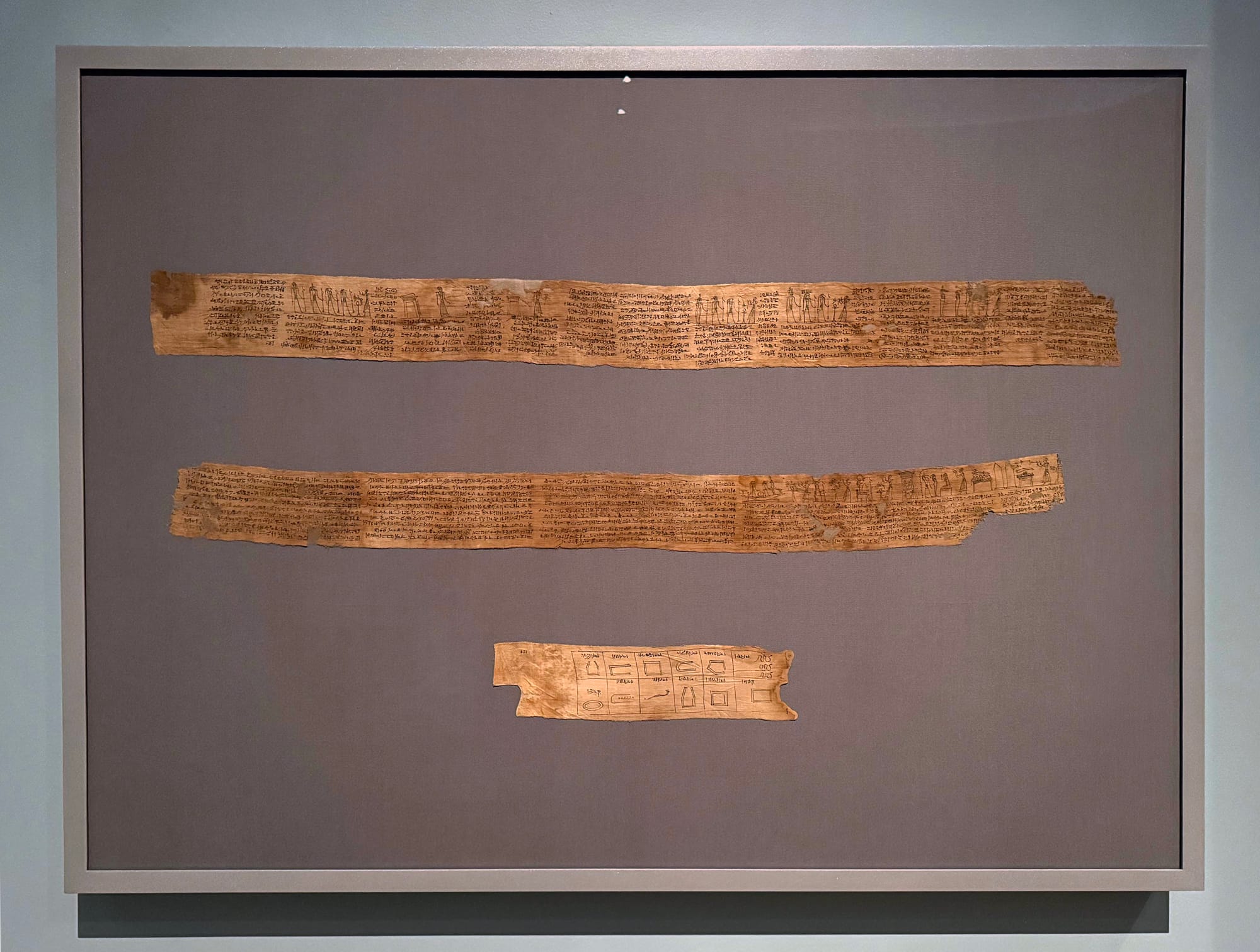
“We have a little flyer from that time, and we were trying to see if the papyrus was part of that show, but we’re not totally sure,” Morgan Moroney, assistant curator for Egyptian, Classical, and Ancient Near Eastern Art, told Hyperallergic. “He would sell tickets, trying to get people to buy his collection. Nobody bit.” It eventually ended up at the New York Historical, then was officially acquired by the Brooklyn Museum in 1948, along with some 2,000 objects from other 19th-century collectors. It was obviously an exciting object, but it wasn’t a gimme for display. The papyrus is legible, but it is shredded and frayed at the ends, and gold has flaked off from some of the sun discs. “The damage would have been from insects,” Moroney said. “And in the 1800s, the papyrus was glued to a paper backing. That both probably helped save it and created some of this cracking and wear.”
A grant from Bank of America allowed the museum to hire a superstar conservator from the Grand Egyptian Museum in Cairo, Ahmed Tarek. Testing revealed animal glue used, in part, for the problematic backing, and Tarek knew they would be able to detach it with warm water and Laponite gel. Millimeter by millimeter, they applied the solution and peeled part by tiny part. “You just have to cut your breath and be very, very patient,” Tarek told Hyperallergic. “Every day for 18 months, we went to work and peeled acidic paper from just this one object.” He had used this technique some 10 years before, so he wasn’t exactly nervous, though he was determined not to lose a single fiber.
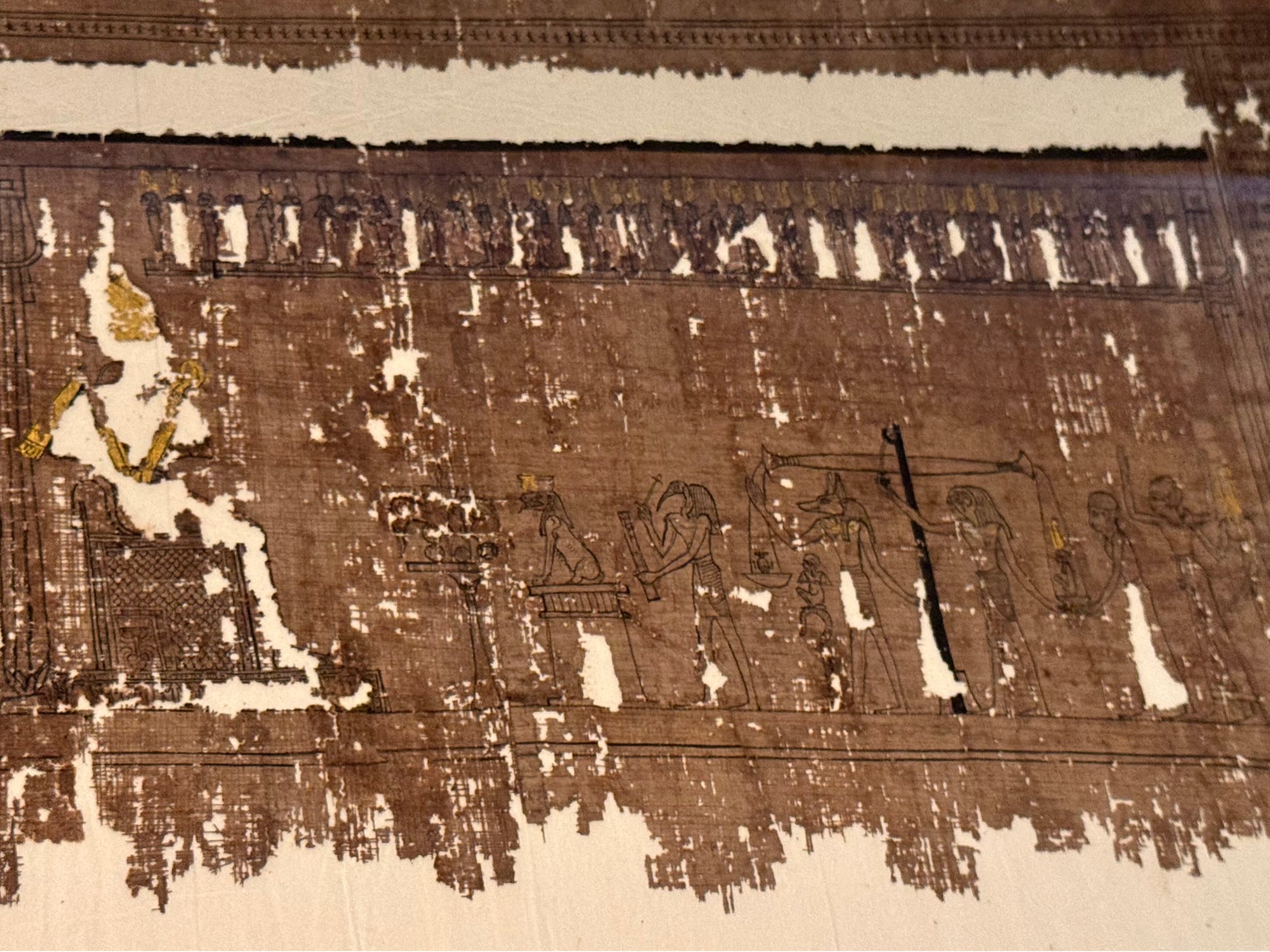
“Restoring something that is stone or wood, you already have the object as the object. You clean it and conserve it, but it’s still the same shape,” said Tarek, who trained in Egypt, Japan, Italy, Germany, and France. “For papyrus, usually you have it in fragments, and no one has seen it for hundreds of years. You feel that at the end you did something, changing it from fragments to a sheet. Now a lot of people can see it, can read it.”
Papyrus preserves a great deal, though not without its own slant. “Papyri go back all the way to when writing was discovered. So much of it doesn’t survive because it’s organic matter, but thanks to Egypt’s dry climate, if something’s in a tomb, there’s a better chance of it surviving,” Moroney said. “Papyri are amazing in that we have this rich corpus to work with — people wrote down letters, accounts, administrative documents, literature, love songs — but it’s also the elite sector that we’re seeing, who have access to writing and that knowledge. Potentially mainly male, although some women had the ability to write, as well. So it’s only a part of society.”
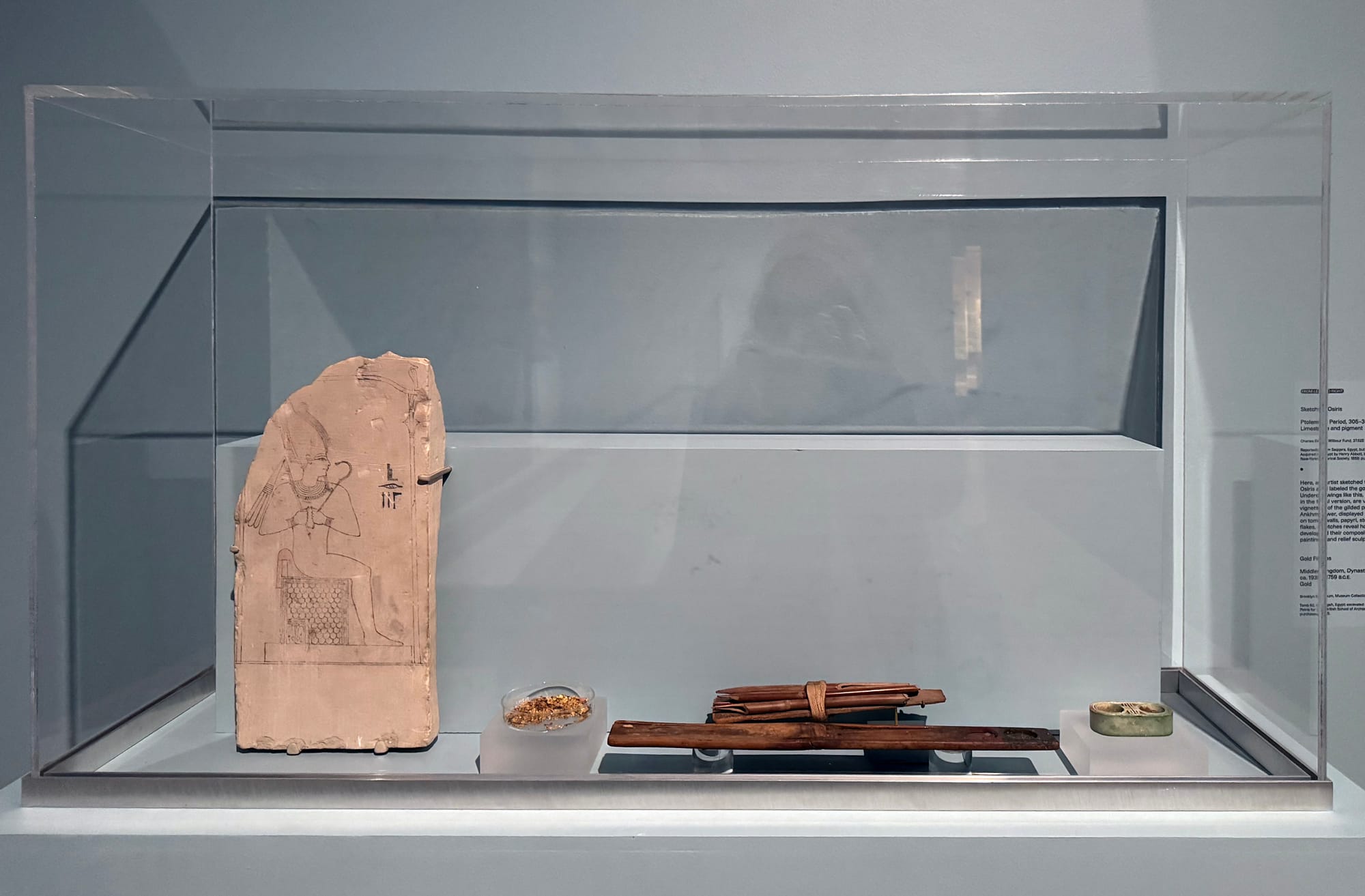
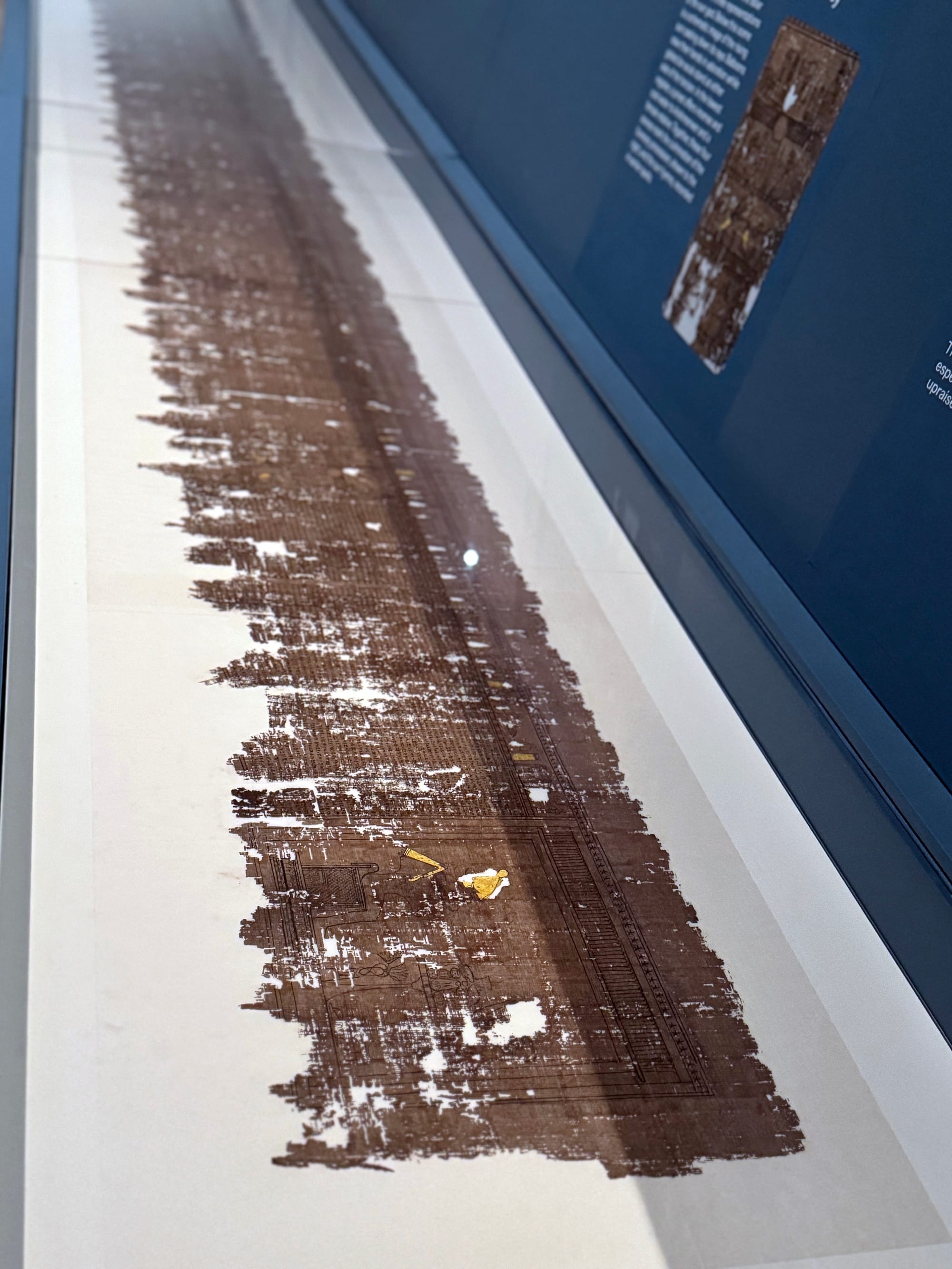
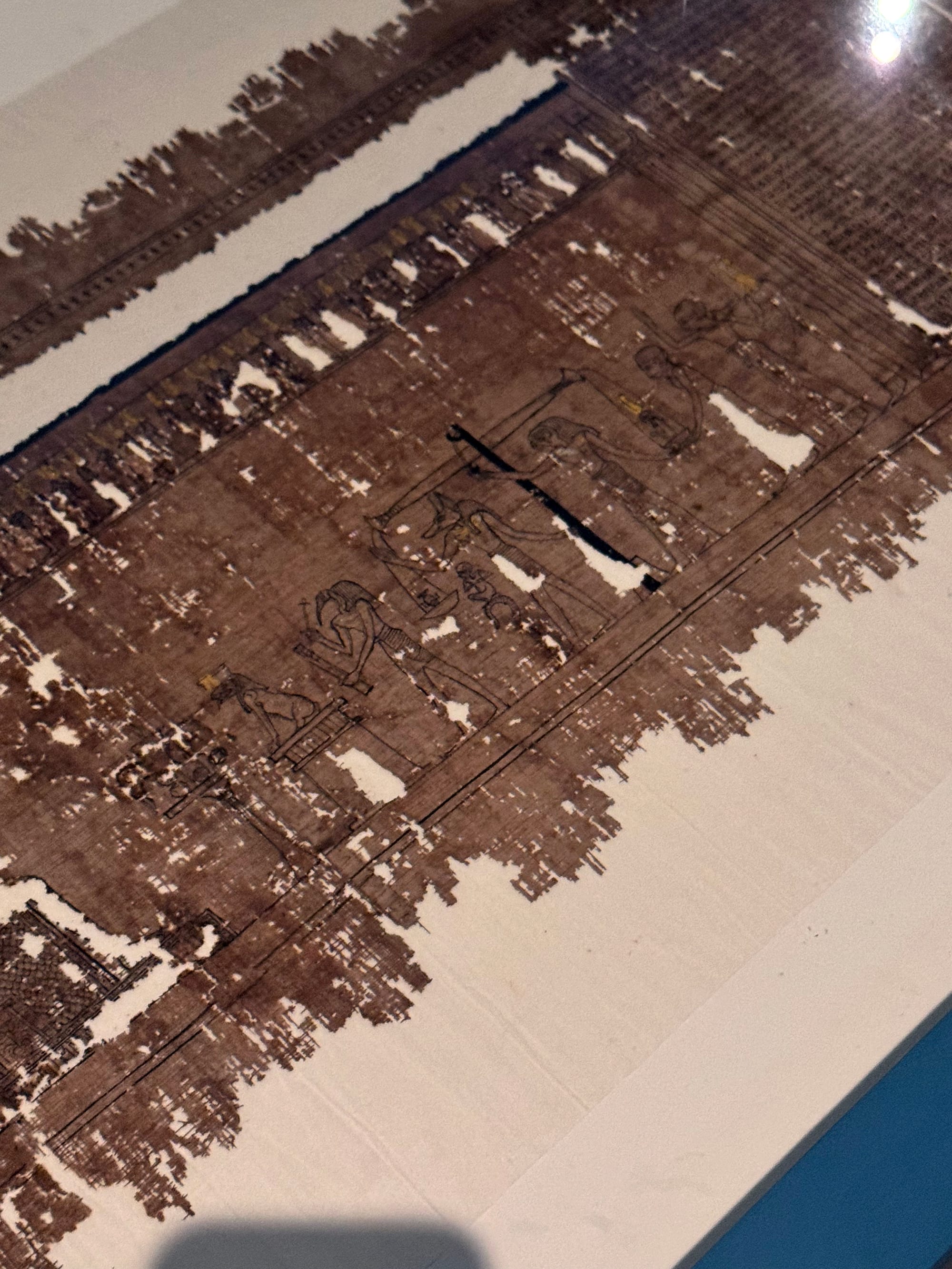
Installation views of Unrolling Eternity: The Brooklyn Books of the Dead
Unrolling Eternity includes the “behind the scenes” of a Book of the Dead — which is in fact a misnomer attributed to 19th-century Western scholars. The Egyptians called it the “Book of Coming Forth By Day.” Opposite Ankhmerwer’s Book is an even older one — in better condition, though without the still-glittering gilding or the cartoony drawings that depict Ankhmerwer himself among the deities. On the walls around the scrolls, there are stelae and figurines with spells written on them, mummy bandages, plus a case with a scribal palette and gold flakes, to show how such a Book would have been made.
Curator Yekaterina Barbash confirmed there were at least two scribes who worked on Ankhmerwer’s Book, pointing to different handwritings and styles of drawing the head of Thoth. There are certain areas where the penmanship gets tight and scribbly towards the end, like the scribe was running out of room. It’s details like this that really impress: This thing was made by humans. A people more holy, perhaps, but the same species nonetheless.
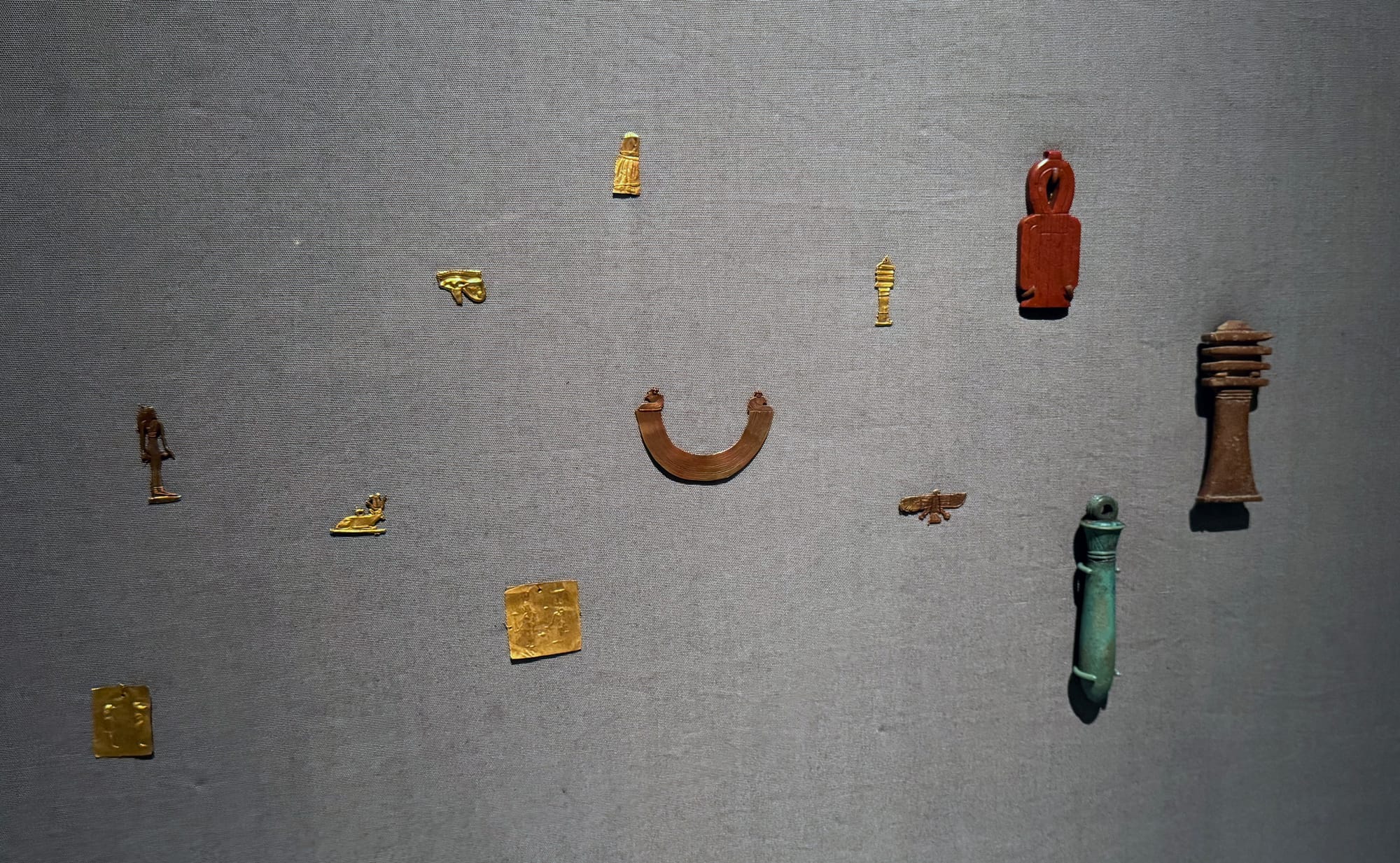
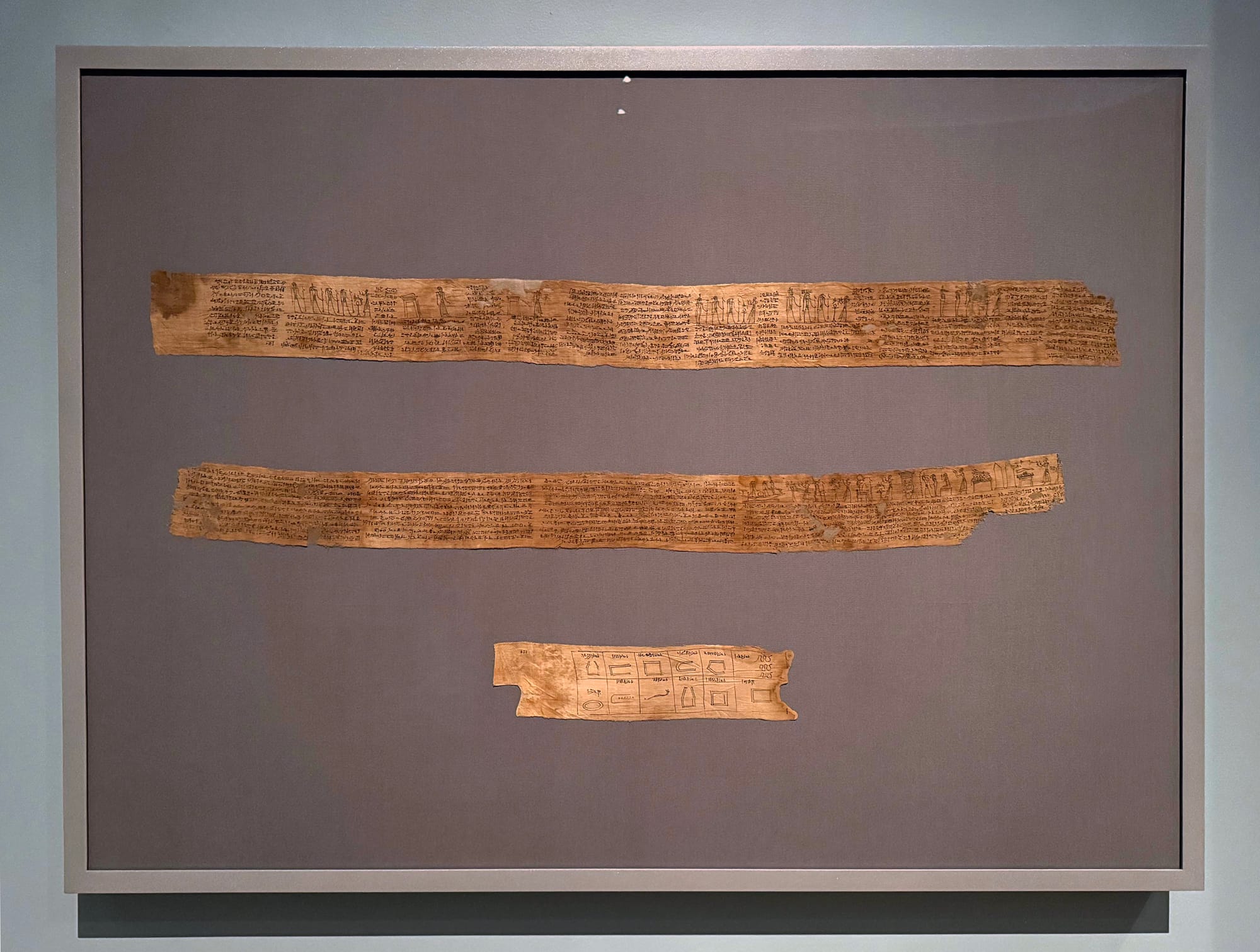
On the other side of the freestanding wall that separates the Books of the Dead from the larger collection of coffins and keepsakes found inside them, there is one coffin that still contains the body of its owner, Gautseshenu, in her cartonnage. A small plaque reminds visitors to treat her with respect.
As I circle the exhibition, a mother and daughter enter. The mother is bowled over: “This is thousands and thousands of years old,” she said. “And think about it — you’re only 14. Only 14 years compared to a thousand.” The teenager is on her phone.
I smile, because the girl doesn’t need to feel it yet. It will hit her one day — the marvel for the past and the people who preserve it. Maybe it’s that appreciation for the practice that moved me, more than any idea about heaven. “Everything in the world is going to age, will die at some time,” Tarek said. “Conservation is very important as a political project …. When we talk about history to our next generation, how will we explain something if they cannot see it? Without our past, we don’t have a future.”