Activist and painter Judy Baca, best known for her half-mile-long mural “The Great Wall of Los Angeles” (1983), has been accused of using a grant awarded to her nonprofit organization for her personal art business. The artist, however, denies any such wrongdoing.
According to a new report from the Los Angeles Times, 10 former employees of Baca’s nonprofit, the Social and Public Art Resource Center (SPARC), allege that she misused funds from a $5 million Mellon Foundation grant in 2021. The funding was specifically to be administered over three years for the expansion of “The Great Wall” mural, a portion of which went on view at Jeffrey Deitch gallery in Los Angeles last Saturday, February 20. However, employees whose salaries were partially covered by the grant said Baca asked them to perform personal work for her.
The report also highlighted that Baca’s salary rose from about $50,000 to between $211,000 and $236,000 in the years after the organization won the grant, though it noted that SPARC was attempting to match the prior salary she earned as a professor at the University of California, Los Angeles, where she taught for over two decades.
Baca and SPARC Board Chair Zojeila Flores vehemently denied all reported allegations of funding misuse to the LA Times. Baca attributed the allegations to disgruntled former employees and said she hoped SPARC could complete the mural “without more of this sort of rage and hostility and anger and hate” by its projected 2028 completion date.
SPARC and a representative of Baca have not yet responded to Hyperallergic’s requests for comment.
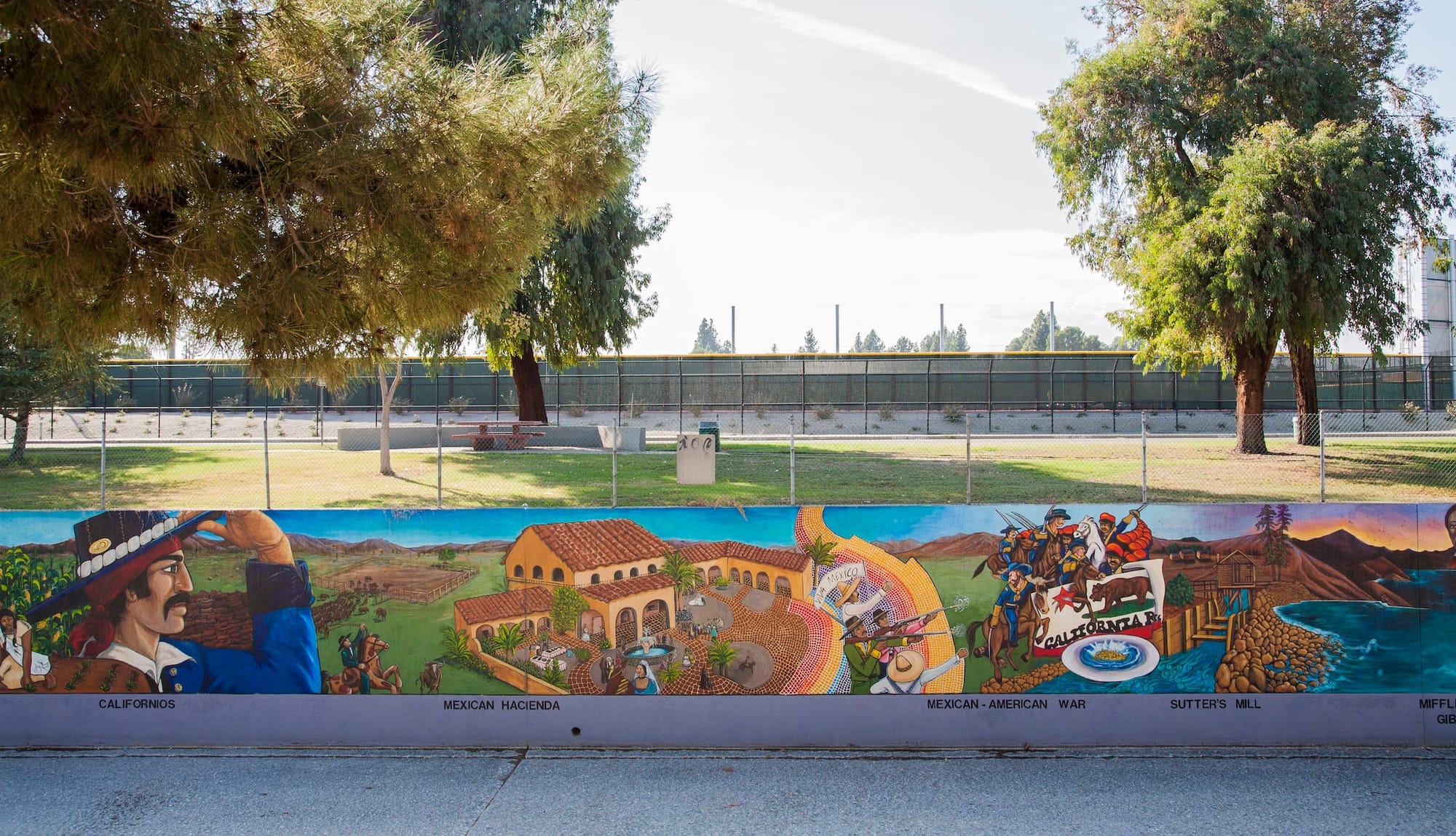
Baca began work on the mural in 1974 as a monument to California’s long multi-ethnic and queer history along the concrete walls lining the San Fernando Valley’s Tujunga Wash flood control channel. The project was completed over several summers with the help of over 400 young people from the local community and their families. She founded SPARC in 1976 as a public arts nonprofit. From 1983 until a 2011 restoration project, she and the organization jointly held the mural’s copyright. Now, Baca retains the rights to the work.
According to a 2021 press release from SPARC, the Mellon Foundation grant was intended to be used specifically for the “preservation, activation, and expansion of one of the country’s largest monuments to interracial harmony through civic engagement and muralist training.” The funds were also granted for the purposes of “developing digital techniques and resources for future artists and enhancing community engagement.”
But the former employees interviewed by the LA Times said that they were asked to perform unrelated jobs. One of the employees named in the report, Pete Galindo, said that Baca asked him to assist in selling her personal work and to address a termite infestation in her archives while he was directing the mural expansion project. Galindo alleges that he was terminated in 2022, less than a year after assuming the post, because he raised concerns about Baca’s use of the grant money.
Carmen Garcia, who briefly served as the organization’s director until 2023, resigned after accusing Baca of misappropriating the Mellon funds. Other employees said they believed that Baca had benefited from the community project unfairly, including from her sale of the mural’s archival materials to the Lucas Museum of Narrative Art in 2021 for a rumored $1.5 million. Flores told the LA Times that Baca donated more than half a million dollars from the sale to SPARC.
The Mellon Foundation did not respond to Hyperallergic’s request for comment.