Stellantis has posted a €22.3 billion ($26.3 billion) net loss for 2025, the first since the automotive holding company was formed in January 2021 from the 50/50 merger of FiatChrysler Automobiles (FCA) and France’s PSA Group. The automaker had recorded a full-year profit of 5.5 billion euros for 2024.
The company said that the massive net loss is due to €25.4 billion in charges for H2 2025 that include resetting the product plan and EV supply chain to reflect customer demand and shifting regulations, a change in the estimation process for contractual warranty provisions, and other charges, mainly related to workforce reductions in Europe. The scaling back of EV investment took the lion’s share of the write-downs.
“Over-Estimating the Pace of the Energy Transition” Is the Main Culprit
Stellantis
“Our 2025 full year results reflect the cost of over-estimating the pace of the energy transition and of the need to reset our business around our customers’ freedom to choose from the full range of electric, hybrid and internal combustion technologies,” Stellantis CEO Antonio Filosa said.
The company also noted that 2025 net revenues were down 2% to €153.5 billion ($181.3 billion), mainly due to “FX headwinds and also from H1 2025 net pricing declines.” As a result of the massive net loss, Stellantis announced the suspension of its dividend for 2026.
It’s not all bad, though. Stellantis said the second half of 2025, in which the new leadership team was in power, saw improvements in revenue growth and industrial free cash flows (IFCF) of 10% and 50%, respectively.
“In the second half of the year we began to see initial, positive signs of progress with the early results of our drive to improve quality, strong execution of the launches of our new product wave and a return to top line growth,” CEO Antonio Filosa said. The company reported consolidated shipments of 2.8 million units in the second half of 2025, driven by North America growth.
A Positive Outlook for 2026 Fueled by New Products
So what’s next? Stellantis reiterated its 2026 forecasts, including a mid-single-digit percent increase in net revenues and a low-single-digit adjusting operating margin. The carmaker also expects positive industrial free cash flow in 2027.
“In 2026 our focus will be on continuing to close the execution gaps of the past, adding further momentum to our return to profitable growth,” CEO Filosa said.
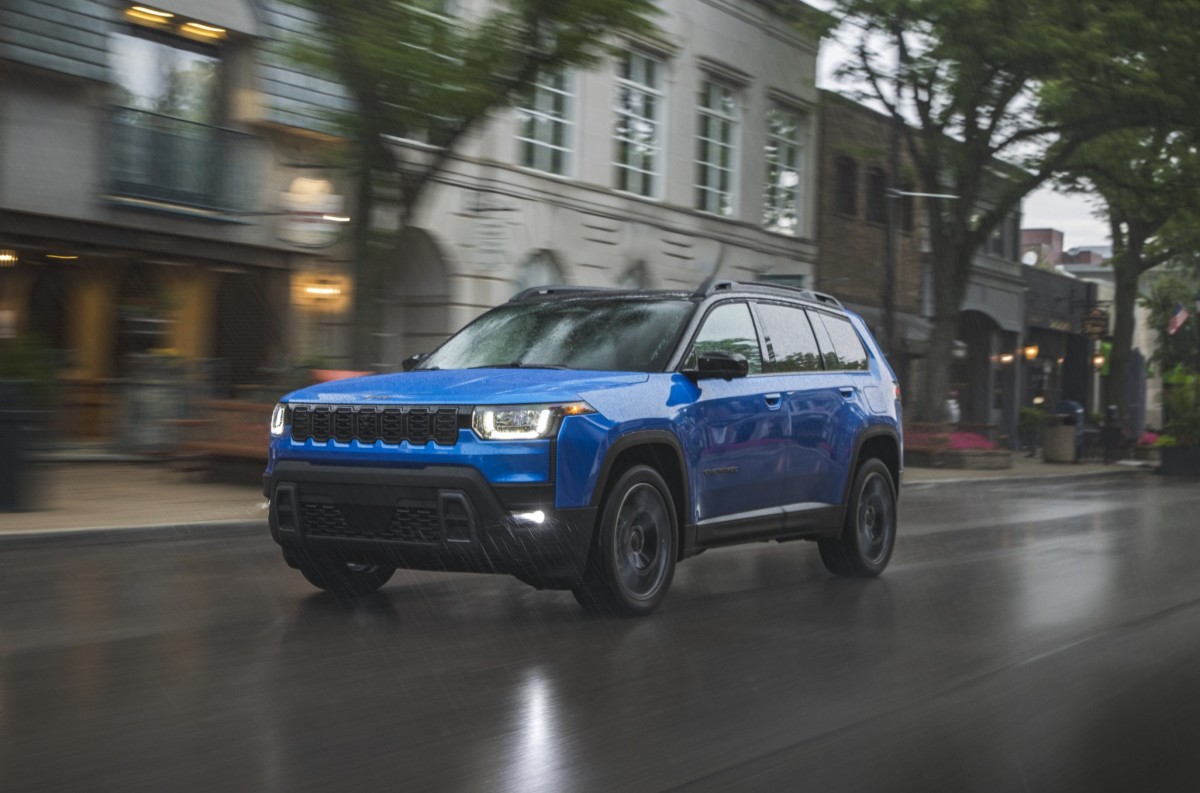
That growth is expected to be driven by the expanding line of products, aimed at broadening the company’s market coverage. In North America, Stellantis noted that the new Jeep Cherokee and Dodge Charger Sixpack mark its re-entry into the mid-SUV and ICE muscle-car segments. Furthermore, the late-2025 launch of the Ram 1500 Hemi V8 and Express models is expected to bring additional momentum.
In South America, Stellantis has high expectations from the Ram Dakota midsize pickup, while in Europe, the all-electric Jeep Compass and Citroën C5 Aircross, plus the recently launched Fiat 500 Hybrid, should strengthen the company’s lineup, giving customers more choices that fit their needs.