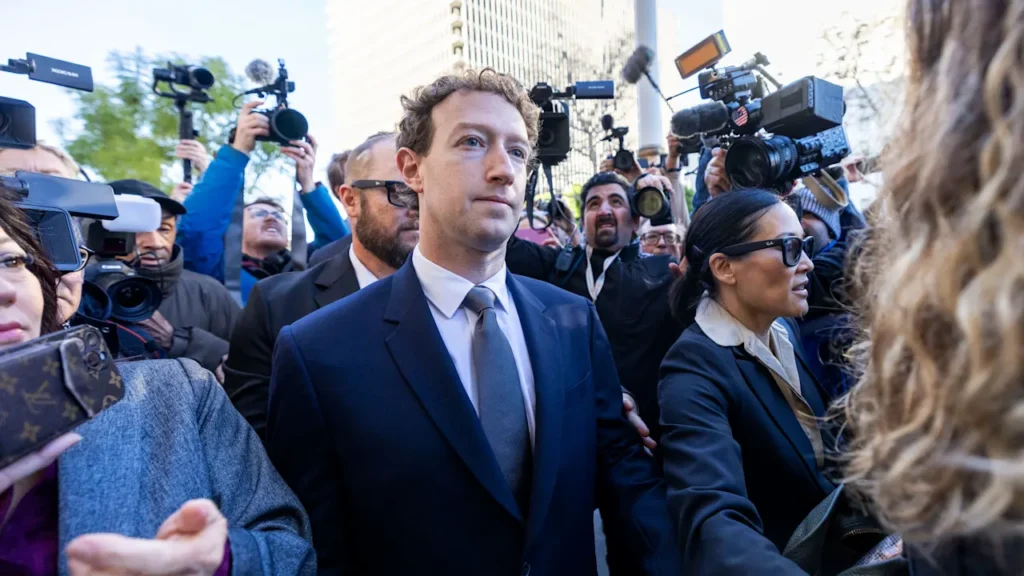
Meta founder and CEO Mark Zuckerberg took the stand Wednesday to defend his company’s practices in a landmark trial that could determine whether social media companies can be held liable for alleged harms to children. But if the defendants lose, the implications could extend far beyond social media.
The case centers on Meta and Google, with plaintiffs alleging that services like Instagram and YouTube are intentionally designed to keep users, especially kids, engaged—a dynamic they say can lead to harmful mental health effects, including addiction. The trial is widely viewed as a test case for roughly 1,500 similar lawsuits waiting in the wings. Meta and Google deny the charges, with Zuckerberg testifying on Wednesday that “I care about the well-being of teens and kids who are using our services.”
If Meta and Google lose this case, it could change how people interact with their platforms. But the consequences may not stop there: The outcome could also have implications for other tech giants, as well as companies far outside the technology sector.
More insurance claims for social media addiction?
Insurance companies, for example, could see a rise in claims for digital or social media addiction treatment. For now, social media addiction is not recognized as an official disorder in the Diagnostic and Statistical Manual of Mental Disorders, Fifth Edition, Text Revision (DSM-5-TR), the authoritative guide used to diagnose mental health issues. That makes specialized coverage rare, though insurers do pay for underlying mental health conditions caused or worsened by social media, such as anxiety, depression, or behavioral disorders.
Still, the DSM-5-TR is published by the American Psychiatric Association, which has warned that “excessive, compulsive or out-of-control use of various types of technologies is an increasing area of concern.” Business experts say a legal victory by the plaintiffs could accelerate that shift, making digital addiction a more bigger factor for insurers and employers alike.
“I think, depending on the outcome of this court case, that may give more credibility to the notion of digital addiction,” says David Schweidel, a marketing professor and the chair of Business Technology at Emory University’s Goizueta Business School. “In an extreme scenario, social media could get labeled as the next Big Tobacco.”
Insurance companies declined to comment on the trial and its implications, but some have already taken steps to shield their liability when it comes to social media clients. In 2024, Hartford Casualty and several other insurers filed suit in Delaware seeking declaratory relief that they were not legally required to cover Meta’s legal defense or any resulting settlements or damages in a consolidated California case alleging that social media platforms contribute to harmful behaviors in children. (That case is still pending.)
And insurance companies may not be the only businesses to feel the ripple effects. If the jury finds that programmed algorithms are not protected by Section 230, the federal law that shields social media companies from liability over content posted by their users, it could expose many tech companies outside the social media industry to new legal risks.
Streamers could feel the effects, too
Streaming services that rely on autoplay to encourage binge-watching, or mobile games that lure players back with dopamine-triggering lock-screen alerts, could also find themselves on shakier legal ground. (The European Union, meanwhile, has opened a formal investigation into online retailer Shein that includes scrutiny of its “addictive design,” specifically gamified programs that reward shoppers with points and other incentives.)
Even smartphone makers could be forced to make changes, such as giving users more control over notifications. Other companies across the business spectrum could feel the effects if a growing number of people begin seeking treatment for digital addiction.
“Employers could potentially affected by severity of addition as well,” says Schweidel. “As the idea of treatment for digital addiction or social media addiction becomes more socially acceptable, people will be taking more time off work to get that treatment.”