The retail platform eBay is set to acquire fashion resale app Depop from Etsy in a $1.2 billion transaction. Ostensibly, the deal will help eBay to cultivate a new audience of Gen Z and Gen Alpha shoppers. But I think there’s a deeper reason that eBay might want to lock Depop down: it’s simply the best looking resale interface out there right now.
The deal was announced on February 18 in a press release from Etsy. It’s expected to close some time in the second quarter of 2026, and, per an email sent to Depop’s customers, after the merger Depop will remain a stand-alone brand within eBay and retain its name, brand, and platform.
For eBay, acquiring Depop makes a good measure of intuitive sense. Generally, resale is trending upward: Based on ThredUp’s 2025 Resale Report, the secondhand apparel market is expected to reach $367 billion by 2029, growing 2.7 times faster than the overall global apparel market. Millennials, Gen Z, and Gen Alpha shoppers are some of the strongest drivers of that trend, with 39% of younger generation shoppers having made a secondhand apparel purchase on a social commerce platform in the 12 months before the study was published.
Depop is one of the top platforms for young people looking to buy and sell clothes. In 2025, the brand achieved approximately $1 billion in sales, including nearly 60% year-over-year growth in the U.S. As of December 31, it had seven million active customers, nearly 90% of which were younger than 34. That user base will be a major boon for eBay, who says that millennial and Gen Z consumers have been two of the biggest drivers of active buyer growth in the past three years.
As a Gen Z vintage clothing enthusiast, I’ve shopped on pretty much every resale site you can think of, from Poshmark and ThredUp to eBay, Facebook Marketplace, Mercari, and Etsy. Among all of these options, Depop is far and away the best resale site to look at and the easiest one to use. That’s not to say that Depop doesn’t have any issues—a brief glance at the site’s subreddit will reveal plenty of user grievances, not least of which is the tendency of certain Depop sellers to price a Brandy Melville baby tee at a cost that could put your checking account in the red.
But from a pure UX and design standpoint, Depop is far outperforming its competitors by taking its major design cues from popular social media apps. And for a digitally native generation that’s used to doing most of their shopping online, that makes a big difference.
A social media-esque app experience
Depop knows that its customers are young, tech savvy, and probably spending most of their phone time on social media sites like TikTok and Instagram—and it shows in the app’s design.
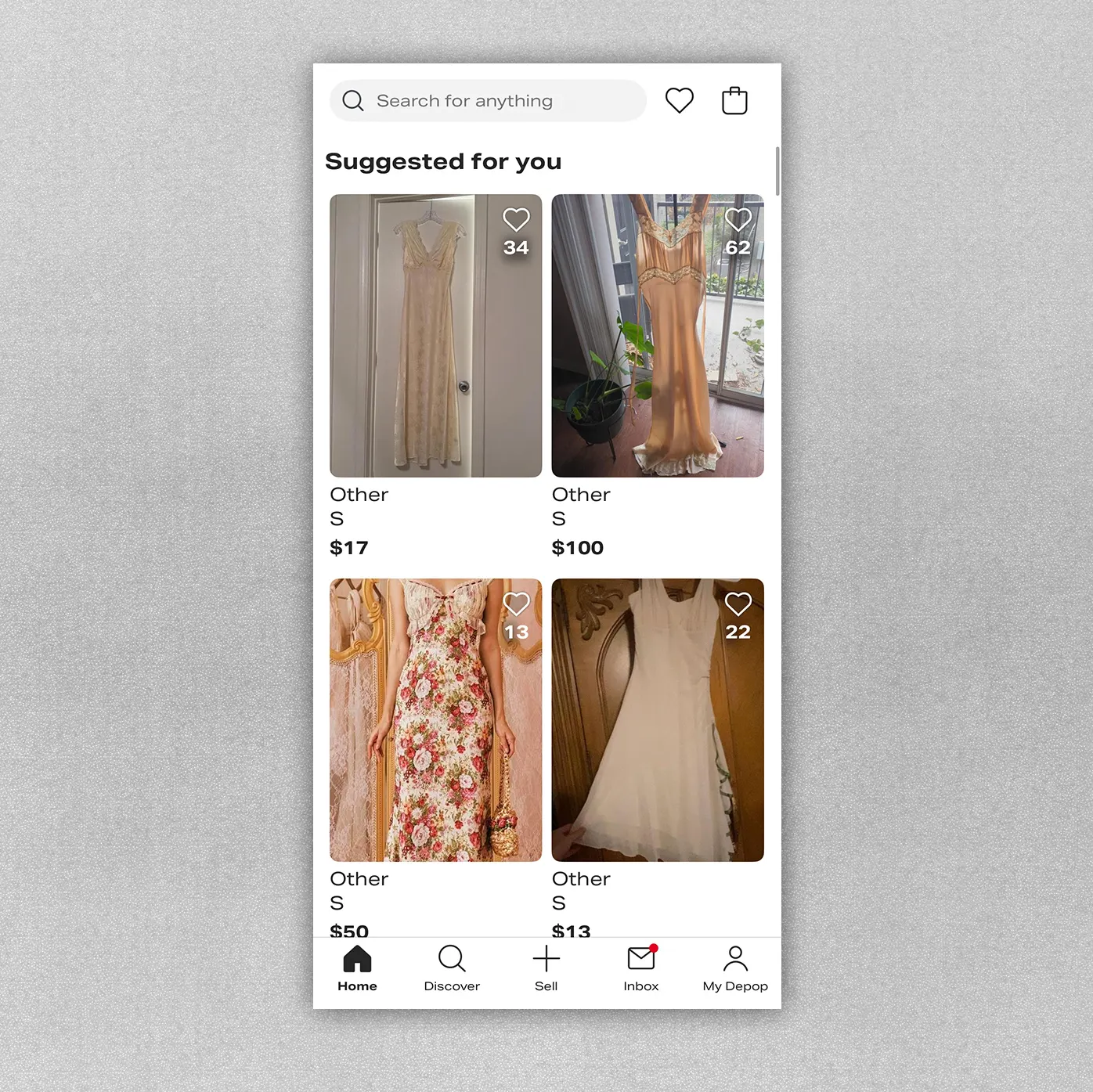
When you open the Depop app, you’re immediately greeted with a “Suggested for you” page that’s functionally similarly to TikTok’s Explore feature. Here, the Depop algorithm presents you with an endlessly scrollable page of items curated based on your searches, likes, and saves—like how TikTok or Instagram might serve you videos according to your interests.
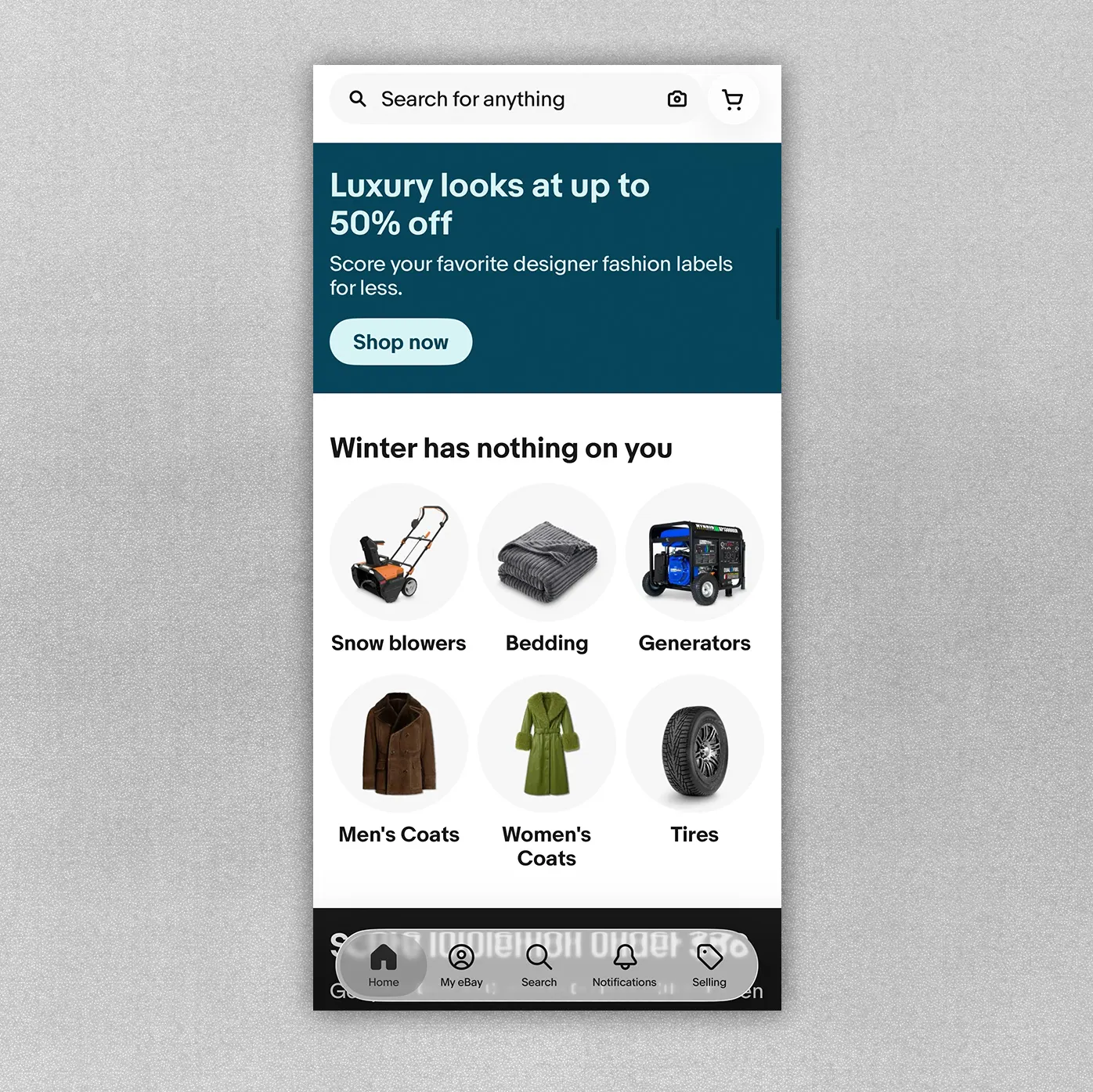
In contrast, eBay’s app homepage looks more similar to a standard e-commerce webpage, directing users to its different goods categories and promoting whatever deals and sales are currently trending.
In terms of its layout, Depop’s app is simple and aesthetically pleasing. Its interface is almost identical to Pinterest—where many customers are likely looking for outfit inspiration—with a subtle bar of categories at the bottom of the page and about four spotlighted items on view at a time.
The minimalist information density encourages you to keep scrolling to find more items, rather than overwhelming you with a sea of information. Other apps, like Poshmark, eBay, and ThredUp, seem to opt instead for presenting users with a wealth of options to choose from when they first log on, which, counterintuitively, can make scrolling feel less appealing.
While I tend to open my computer if I want to browse other retail sites, I almost always open Depop on my phone, and imagine it in a similar category to social media apps. Considering that the secondhand apparel market is becoming so popular among younger shoppers, other resale platforms might want to take note.
Simple selling UI
Over the past few months, I’ve developed the niche hobby of restoring and selling vintage wedding dresses online (typically for a profit of about $10 apiece, but I’m in it for the fun of the game). Having used both Depop and Etsy to sell my own products, I find Depop’s seller UX more intuitive and simple to follow.
From an app standpoint, Etsy has two separate platforms: one app for selling, and one app for buying. On its website, sellers also have to navigate to a shop management platform to look at their listings. Depop, on the other hand, is consolidated into one app experience, where sellers can manage all of their listings and their purchases.
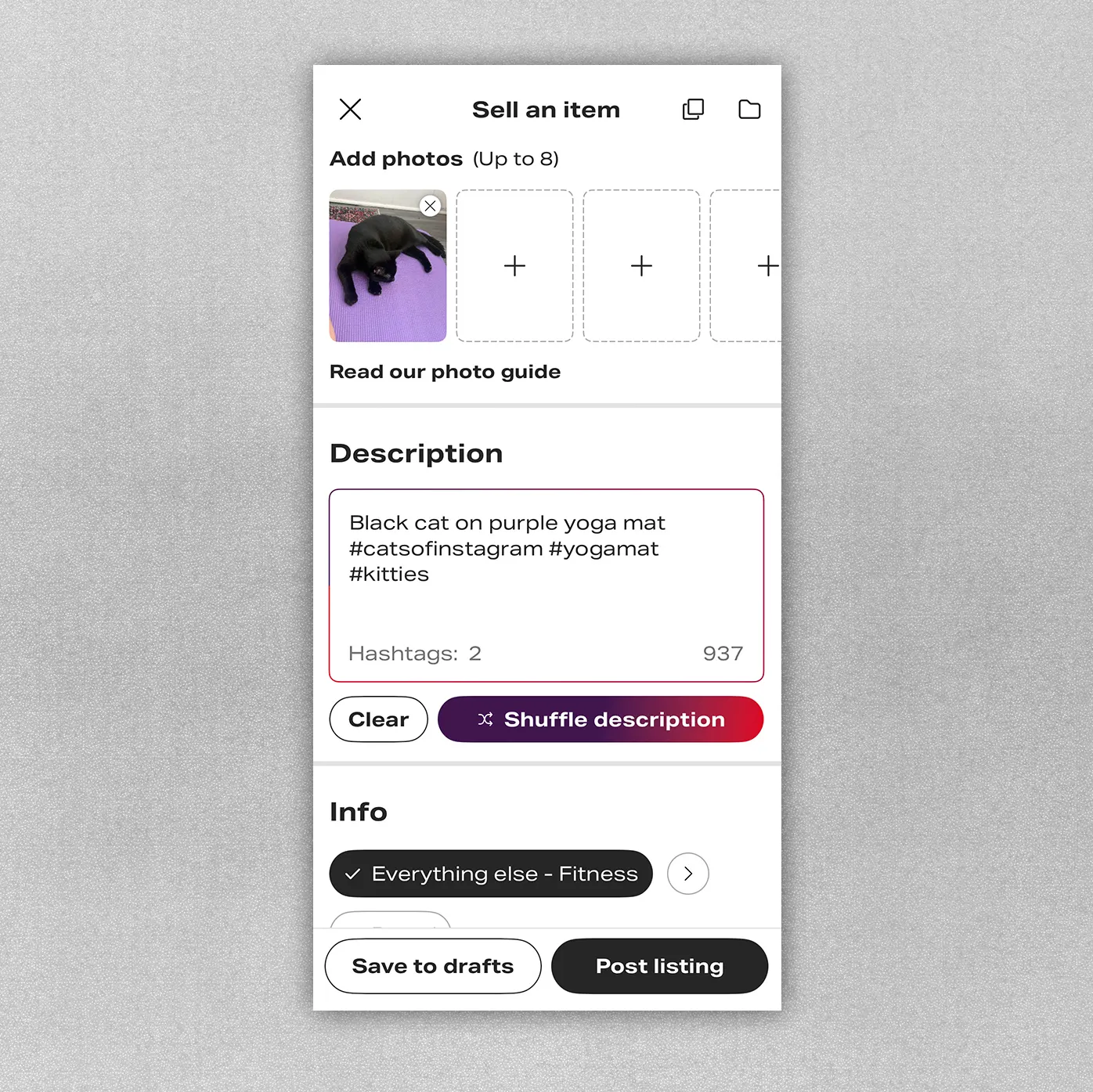
Creating an actual Depop listing feels akin to making a post on Instagram. Sellers navigate to a “+” at the bottom of the app (like Instagram), add a series of photos and a caption (also like Instagram), and include a few key tags for their item. Depop also handles shipping through a system that lets users provide an estimate of their item’s weight and then creates an appropriate label. Shipping on Etsy is more seller-directed. While some more experienced sellers might prefer Etsy’s approach, Depop’s feels more beginner-friendly.
A final refuge from AI listings
One of my biggest personal gripes with the current state of resale shopping is the absolute deluge of AI-generated product images that seem to have flooded certain sites over the past few months.
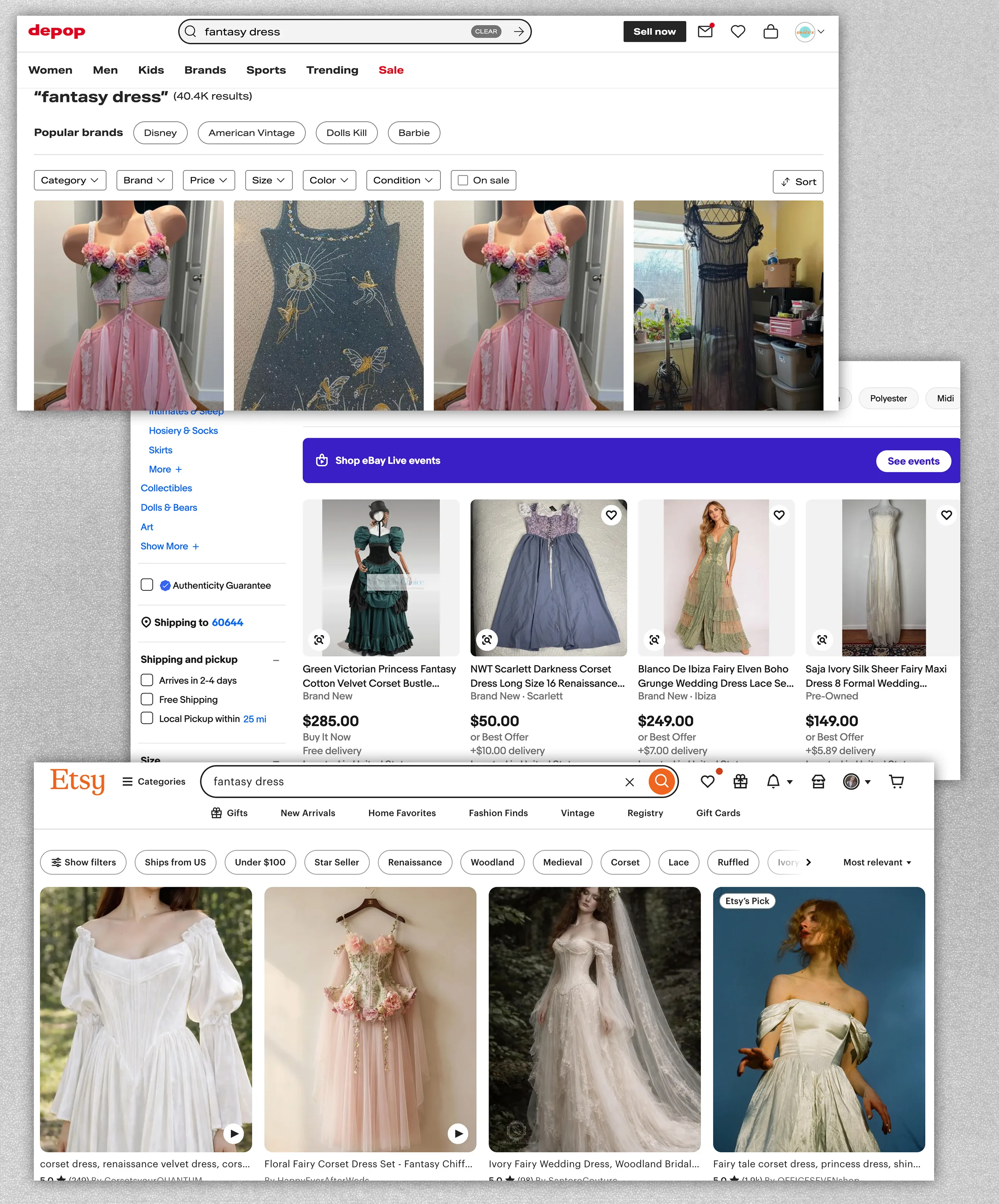
In my experience, eBay and Etsy are the biggest offenders of this trend. Searching for the term “fantasy dress,” on eBay and Etsy, for example, leads to at least one out of four top results with all the hallmarks of an AI image. The same search on Depop yields results that all seem to be real photographs. This example is just one small microcosm of the shopping experience on these sites: while AI photos are becoming increasingly common in resale, buying on Depop still largely feels like sifting through a stranger’s closet, which was the site’s original charm.
It’s unclear exactly why AI photos seem less prominent on Depop; though it may be related to the company’s regulations against stock photos. In its guidelines, Depop instructs sellers to “Only use photos taken by yourself.” Depop didn’t immediately respond to Fast Company’s request for comment on its AI imagery policies.