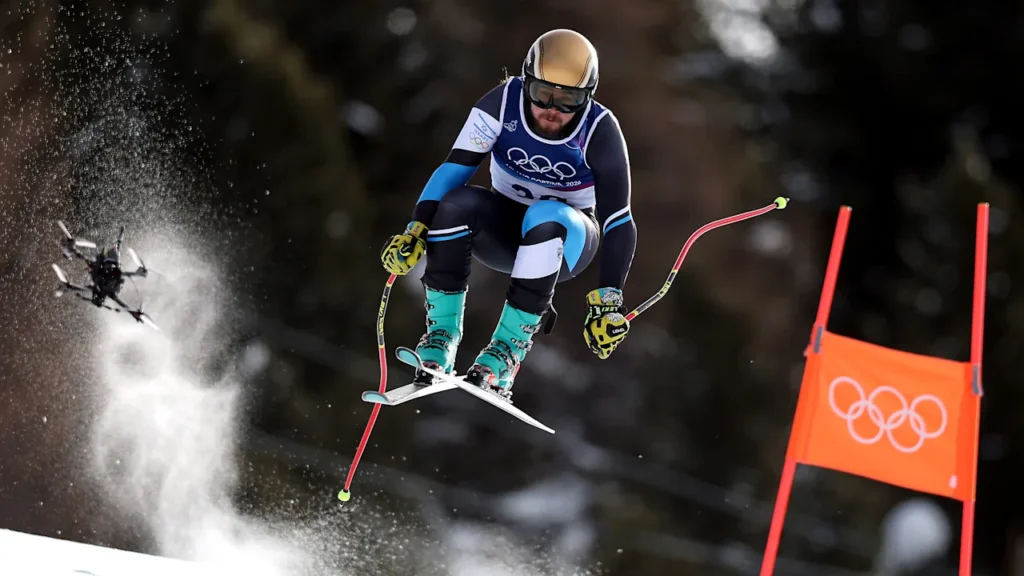
The 2026 Milan Cortina Olympics are giving people at home a first-of-its-kind, first-person view of the Winter Games, all thanks to a fleet of custom-built drones.
The small, agile drones can be spotted—not to mention heard—buzzing across Olympic venues, and they’re giving what broadcasters call a “third dimension” to the viewing experience. Instead of capturing the action only from fixed or semifixed cameras on cables and cranes, operators of these drones give viewers an athlete’s perspective as they race down slopes and around tracks.
“This is the closest you can get to feeling a jump,” ski-jumper-turned-drone-operator Jonas Sandell said in a statement.
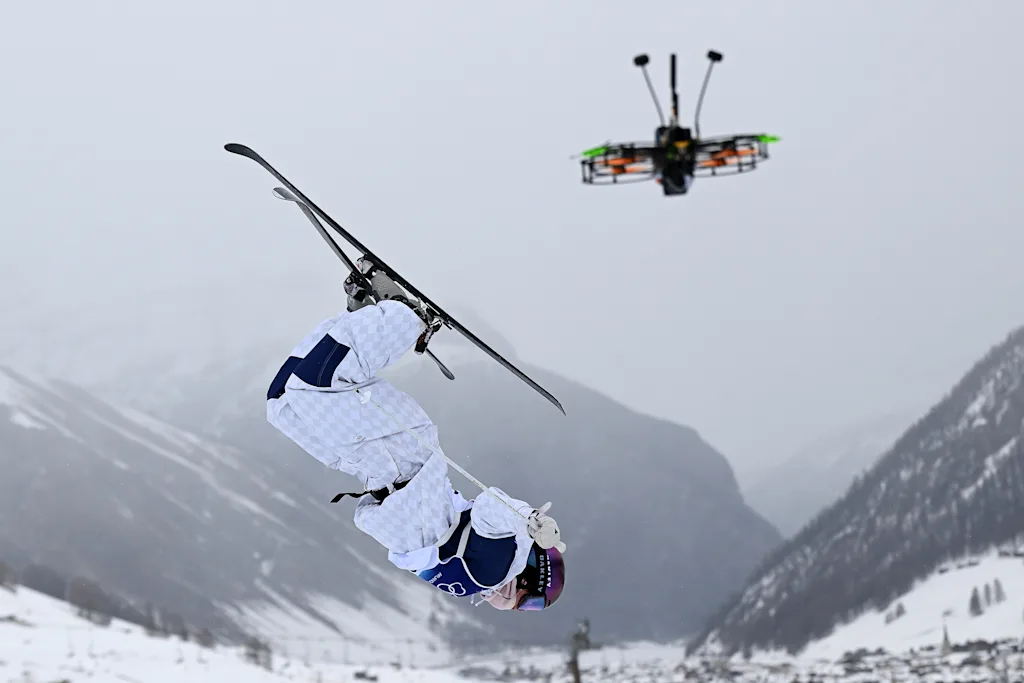
It’s a thrilling perspective, and it’s at the heart of the visual concept for the Games, which is about showing movement in sport.
“It’s about capturing the motion of the athlete—not just the result, but the sensation of speed, the tactics, the technique, and the environment in which they compete,” Mark Wallace, Olympic Broadcasting Services chief content officer, said in a statement.
The custom drones are designed for agility and speed, with inverted blades and propellers mounted on the bottom so they can make smoother flight curves and tighter turns, providing viewers with immersive aerial coverage. What the drones are not designed for? Endurance; their batteries only last an average of two athlete runs before having to be replaced, according to the Olympics media guide.
Broadcasters are deploying 25 drones during the Games, including these agile, custom drones as well as the standard drones used for scenic and transitional coverage.
Each of the custom first-person-view drones is operated by a team of three—a pilot, director, and technician—and they’re supported by technical crew. Heated support cabins feature battery charging stations, spare drones, and receivers the drone teams use to communicate.
Drones have made cameos at the Olympics before. More than 1,218 drones put on a light show during the 2018 PyeongChang Games, and drones also filmed mountain biking for the 2024 Paris Games.
For Milan Cortina, drones are being deployed more widely than ever for a slew of events, including bobsled, luge, ski mountaineering, and indoor speed skating. For sliding sports, the drones are following athletes traveling at speeds of up to nearly 90 mph. It’s a view of the Olympics viewers have never seen before.