- The world’s largest wildlife bridge opens later this year.
- It will reside over ten lanes of US 101 in California.
- Construction began in 2022 and continues to progress.
Most bridges are designed for cars or people, but California always does things a little differently. That trend continues as they’re coming closer to completing the world’s largest wildlife crossing.
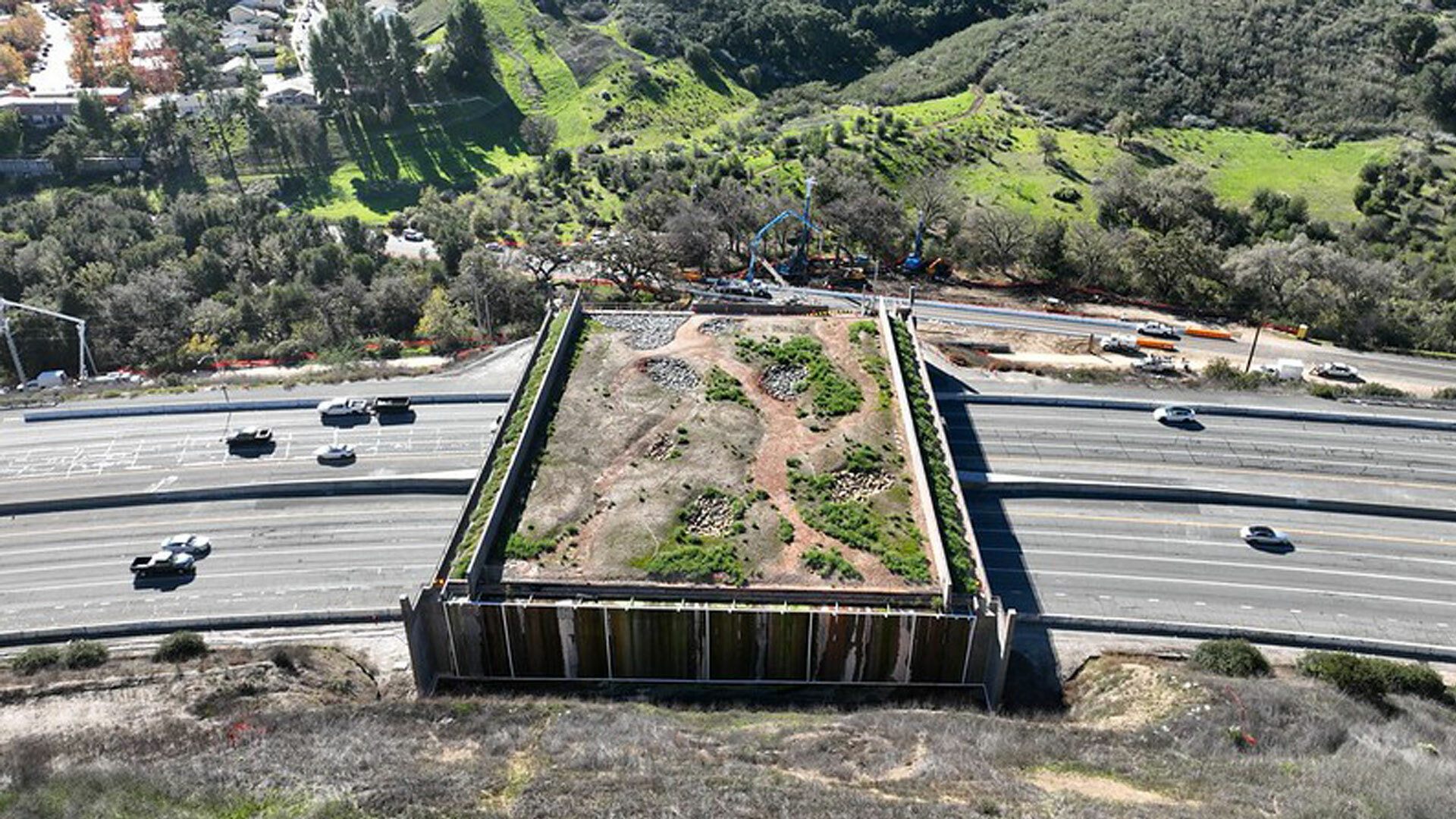
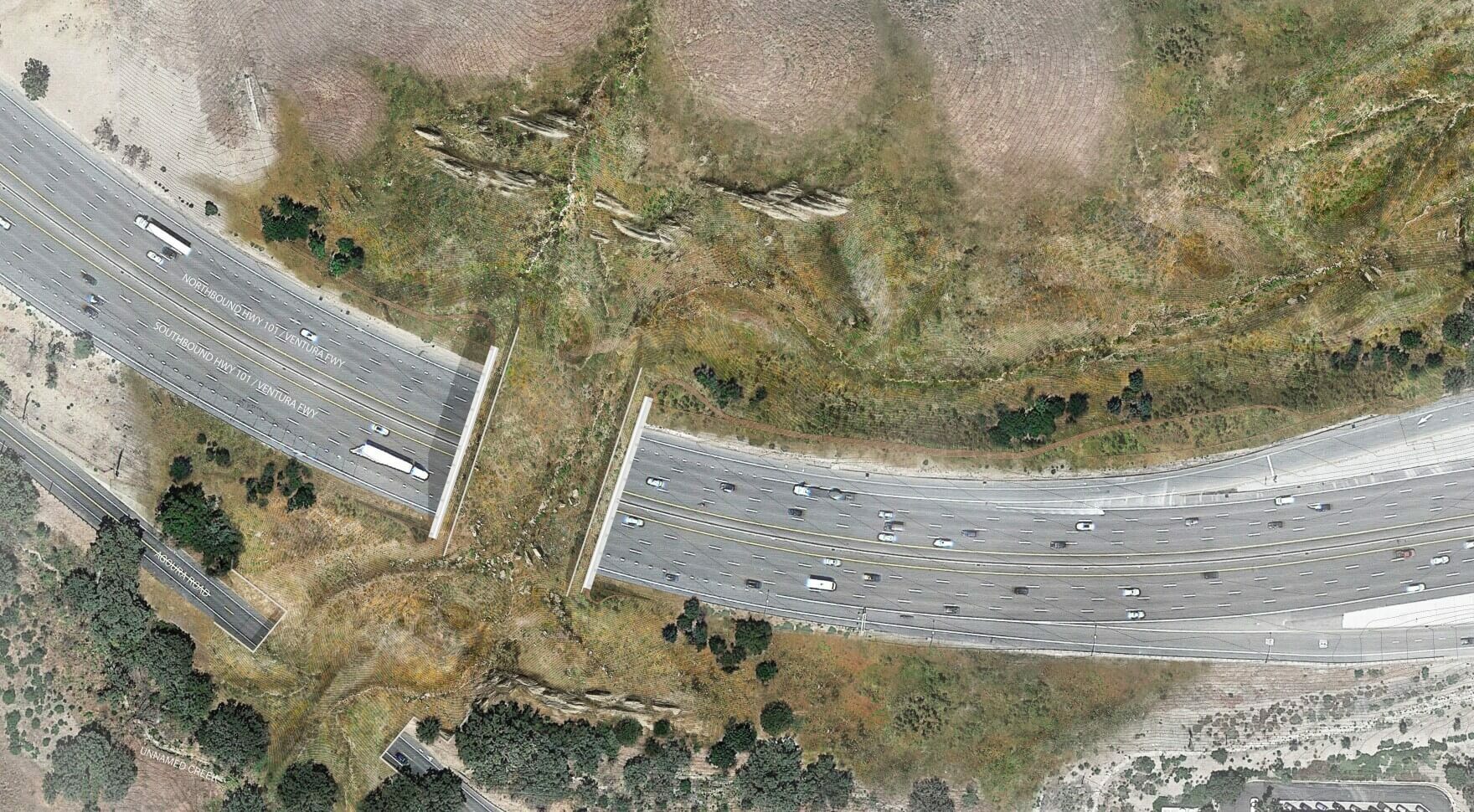
Known as the Wallis Annenberg Wildlife Crossing, the bridge is the first of its kind in California and provides a safe way for animals to cross over US 101, between Calabasas and Westlake Village.
More: Utah Police Shuts Down Roadway To Allow Wandering Bear To Cross Over
Construction on the bridge started in 2022 and Governor Gavin Newsom recently announced the project has received funding for its completion. If everything goes according to plan, the bridge will be finished this fall.
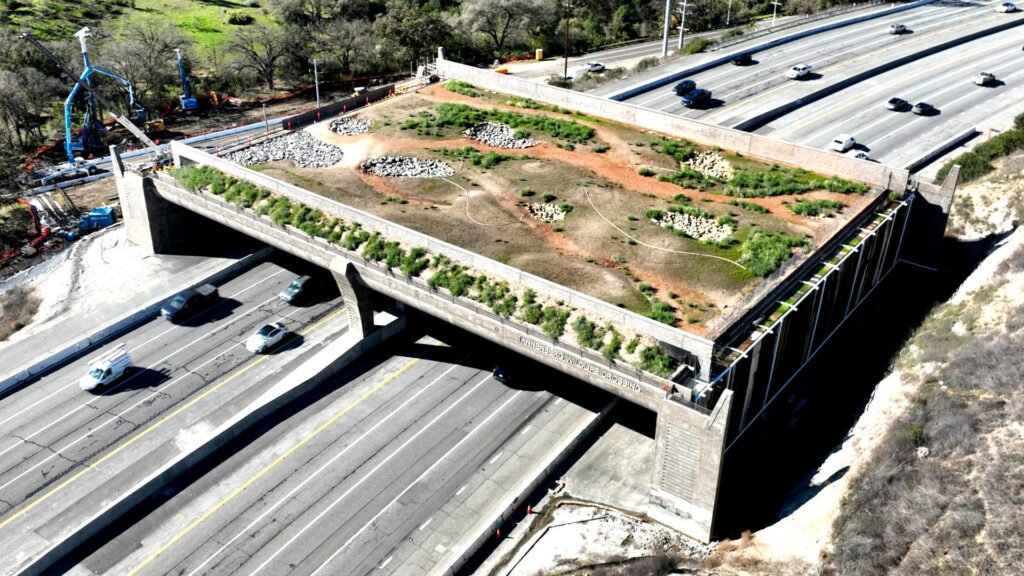
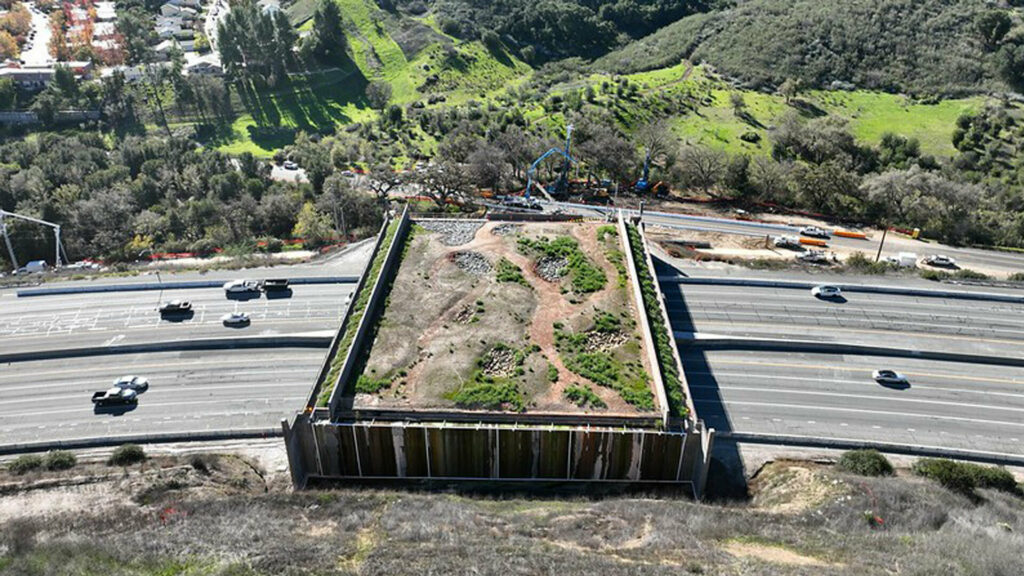
A lot of work remains ahead, as images released by the state show a half-constructed bridge. It lacks a connection to either side of the highway, effectively making it useless in the interim.
However, it will eventually connect “protected lands in the Santa Monica Mountains and the Sierra Madre Range on both sides of the highway.” The bridge will be covered with native vegetation and is designed to appear to organically flow into the surrounding area.
Who Will Use the Crossing?
Graphics put out by the group behind the crossing suggest it will aid a number of animals including bobcats, coyotes, and mountain lions as well as mule deer and desert cottontail rabbits. The bridge should also help smaller animals such as snakes, lizards, and toads.
Besides allowing animals to move more freely, the bridge aims to reduce wildlife-vehicle collisions on the ten-lane stretch of highway. This is a big problem in the state, as UC Davis notes more than 48,000 deer and roughly 100 mountain lions are killed by vehicles each year. In 2024, they noted “more than twice as many deer die from vehicle collisions … than from hunting.”
While dead animals are sad, they’re also costly. That same year, the university said wildlife-vehicle collisions cost California more than $200 million annually.
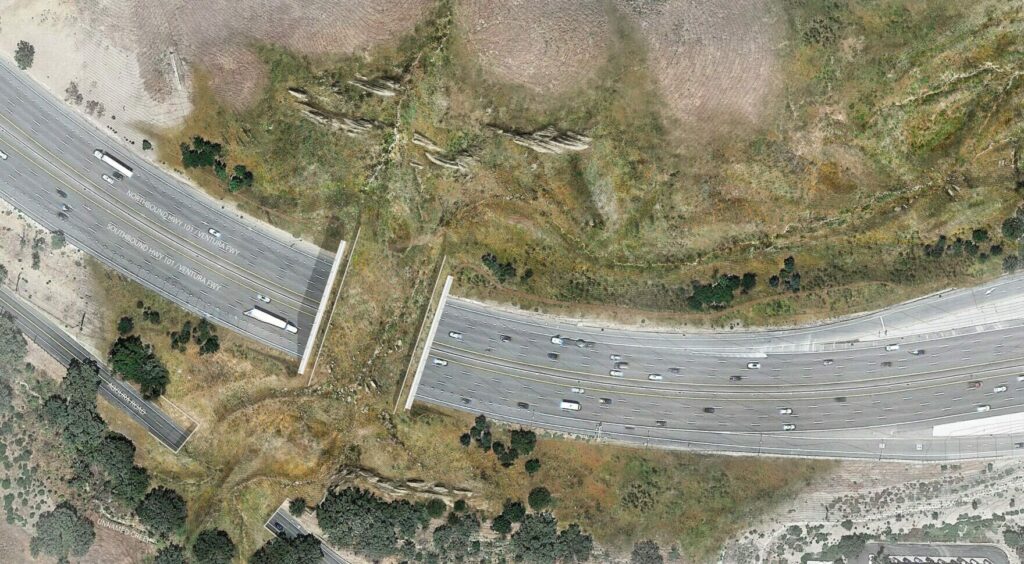
Images: California and Wallis Annenberg Wildlife Crossing