“Me everyday bc my nervous system doesn’t know the difference between a busy day at work or being attacked by a tiger,” a TikTok post reads.
The sentiment is the same across dozens of videos online. As an antidote to this workplace-anxiety, “nervous system regulation” has been trending across TikTok, with 178,500 tagged videos beneath the hashtag #nervoussystemhealing.
“Real footage of me regulating my nervous system at work,” one posted, hopping around the bathroom, animatedly shaking her wrists and legs.
“Pov: when you remember that slow is the secret to a regulated nervous system and your job isn’t an emergency,” another commented on a separate video captioned “your urgency is not my emergency” as a woman calmly taps away on a keyboard.
It may sound self-explanatory, but what does this trend even refer to?
“‘Nervous system regulation’ refers to our body’s ability to shift between stress (fight or flight) and calm (rest and digest) in a healthy and balanced way,” Dr. Jair Olivares, clinic director at wellness clinic SHA Mexico, told Fast Company. “It’s how we adapt to challenges, recover from stress, and stay mentally and physically resilient.”
Anxiety and perfectionism are all adaptive responses the nervous system uses to keep us safe. This can be helpful when you’re actually in danger—like if a wild animal is chasing you.
But these same responses kick in for everyday stresses that aren’t so much putting your life at risk—like Slack notifications and work deadlines—as much as they might feel like it.
“When this system is dysregulated, we may feel anxious, fatigued, irritable, or burned out even without obvious causes,” explains Dr. Olivares. “Constant stimulation, emails, meetings, notifications, deadlines keeps our stress system switched ‘on’. Add to that poor posture, lack of natural light, skipped meals, and little physical movement, and the body receives few signals of safety or rest.”
While it’s easy to dismiss this as another wellness trend, these gestures are signalling something more troubling afoot as workers attempt to regulate nervous systems pushed into a near-constant state of emergency. The proliferation of this content online speaks to a wider culture of workplace stress and burnout: Glassdoor named “fatigue” the word of the year for 2025, while WGSN, a global trend forecasting firm, predicted 2026 to be the year of “Great Exhaustion.”
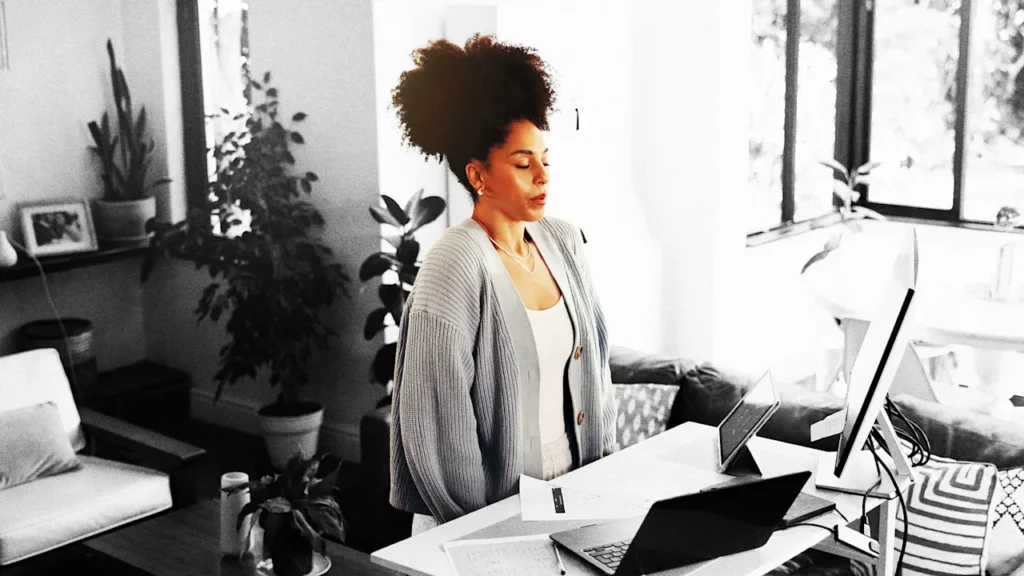
To counterbalance this, try taking micro-breaks to breathe deeply, or stimulate your vagus nerve (which is located in the neck and associated with the parasympathetic nervous system) by humming or lightly tapping on parts of the body.
Dr. Olivares also recommends sitting upright or taking walking meetings during the workday to send calming signals to the brain.
When in doubt, focus on deep, conscious breathing as a starting point. From there, you can focus on larger, more systemic changes you can make in your day that can nip nervous system dysregulation in the bud.
Remember—it’s just a Slack notification. It can’t hurt you.