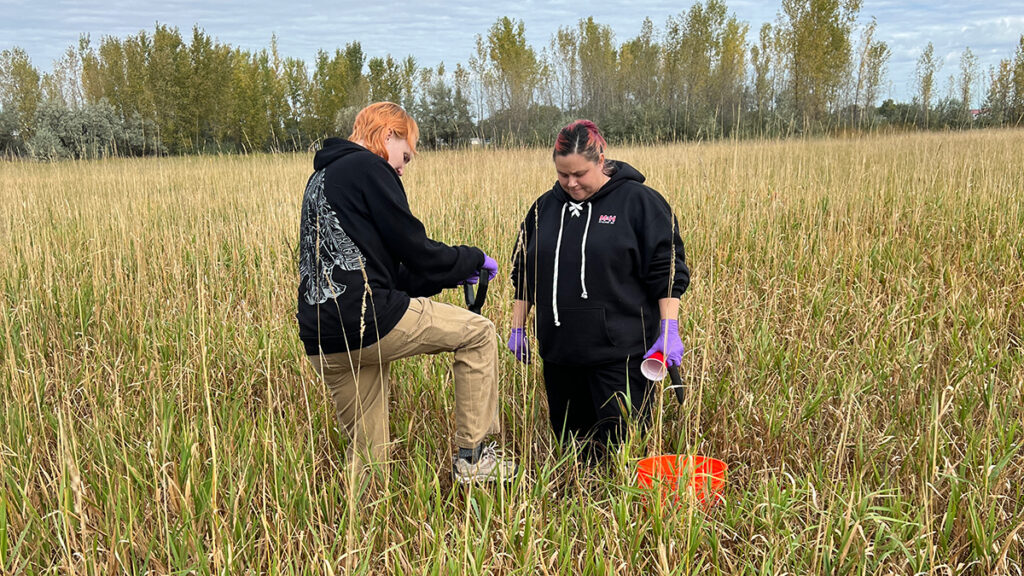
Just 1 gram of soil can host billions of microorganisms and thousands of species of bacteria, fungi, and viruses, some of which drive essential processes like nutrient cycling. Because soil is home to nearly 60% of all living organisms, from microbes to mammals, some researchers have described it as the most biodiverse habitat on Earth. Soil microbes can also affect human heath, including by harboring pathogens and contributing to the development of antibiotic resistance.
As the climate continues to change, soil and its many inhabitants are facing changes, too. Yet by some estimates, about 99% of soil microorganisms have not yet been studied.
“Soil is one of the last frontiers on Earth.”
“Soil is one of the last frontiers on Earth,” said biologist Ava Hoffman, a senior scientist at the Fred Hutch Cancer Center in Washington State.
A group of educators, researchers, and students from dozens of institutions have teamed up to create the first-of-its-kind soil microbiome map of the United States. Though the effort is in its preliminary stages, researchers have already cataloged more than 1,000 previously unknown strains of bacteria and other microbes. The team discussed the work in a commentary published in Nature Genetics.
By collecting samples from 40 sites across the country and analyzing them with DNA sequencing tools used in human genomic study, researchers are working to build a broader understanding of the microbial “dark matter” in the soil under our feet. At the same time, the project is connecting faculty and students into a nationwide network of soil researchers.
Soil Brings Us Together
During the early days of the COVID-19 pandemic, when community and connection were lacking, the members of the Genomic Data Science Community Network (GDSCN) met virtually. They wanted to create a research project that would excite faculty and students about genetics and data without requiring too much lab equipment, and they wondered how that might be done.
It would be done by sampling soil, said Hoffman, one of the study’s authors. “It was really a way to get faculty from all over the place involved and able to answer the questions they were interested in.”
The GDSCN created the BioDiversity and Informatics for Genomics Scholars (BioDIGS) initiative to address some of the knowledge gaps in soil biodiversity as well as train students and faculty in genomic data science by including participants from a range of institutions, from research-focused universities to community colleges.
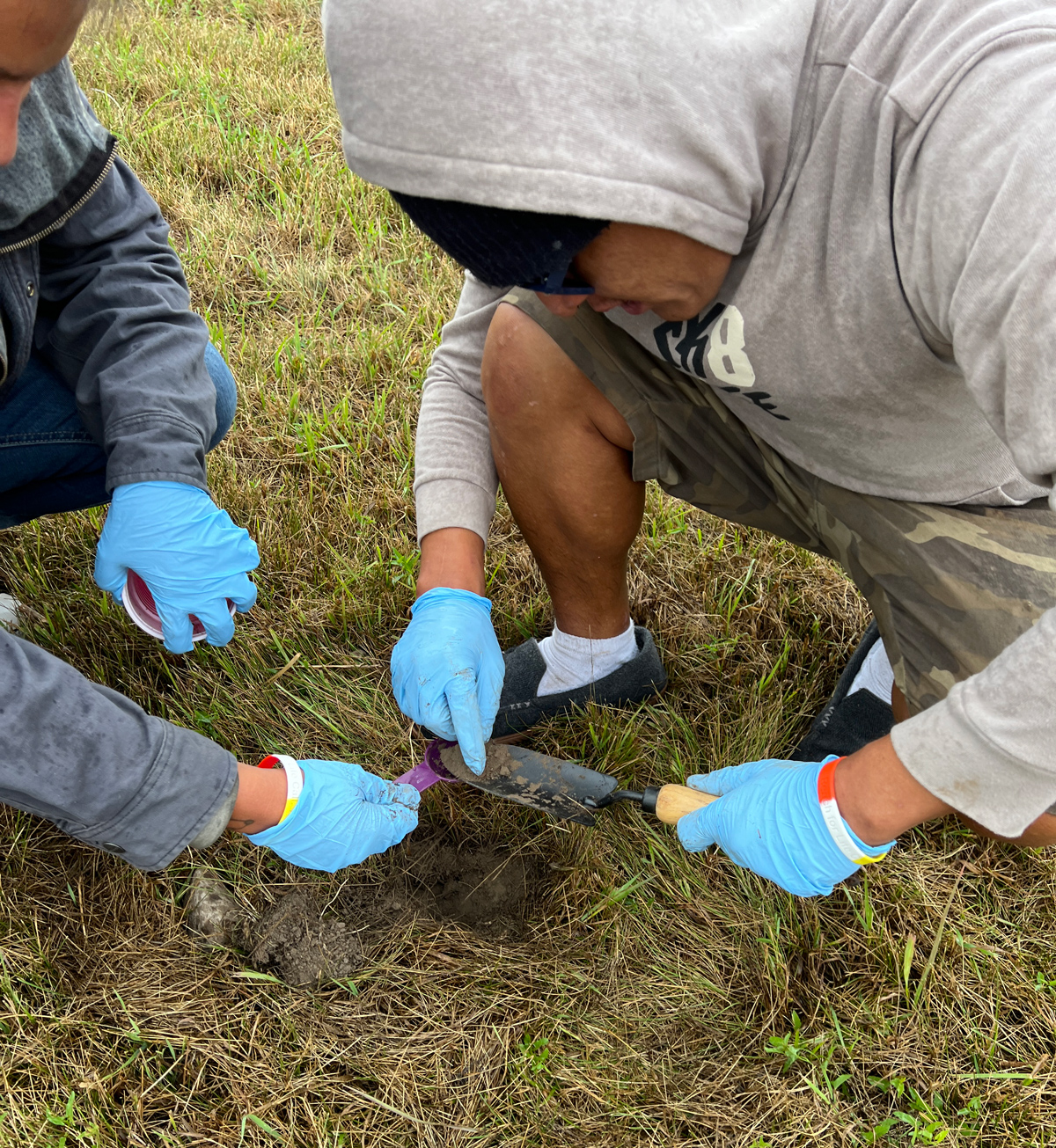
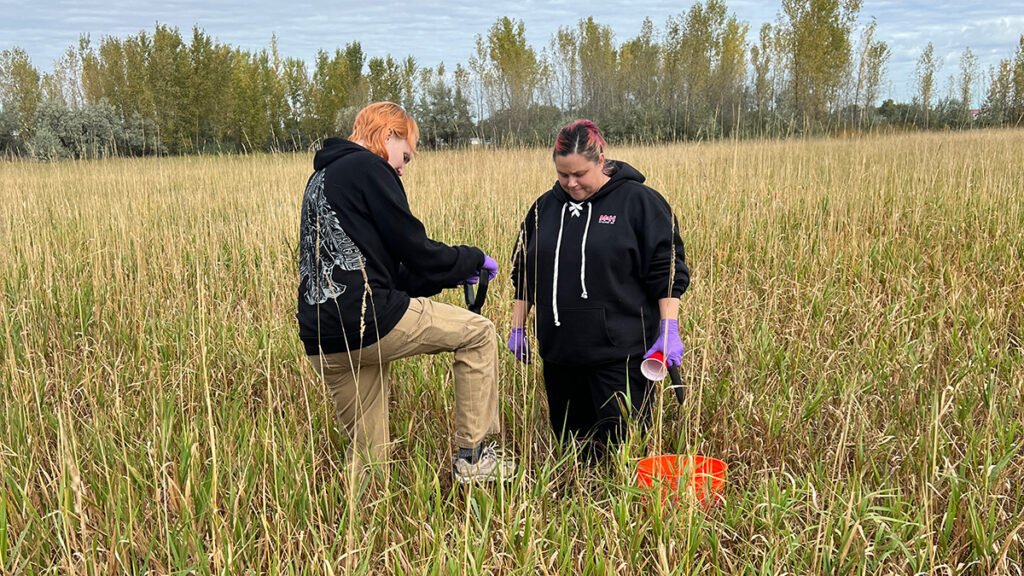
To take part in the project, participants are sent preassembled soil collection kits. Participants obtain permission to sample soil from their chosen sites—such as college campuses, parks, urban corridors, hiking trails, and spaces with local significance—and follow a specific protocol for sample collection. Students and faculty members then capture the GPS coordinates and images from each site and choose 16–24 sampling spots within a 100-meter area.
After collecting the soil, participants send their samples to Johns Hopkins University. From there, the samples are routed to labs at the Johns Hopkins School of Medicine and Cold Spring Harbor Laboratory in New York for genome sequencing and to the University of Delaware for chemical testing. Resulting data are uploaded to national research databases.
“One thing that is important is to bridge that disconnect between a sample as a data point on screen and its place of being: where it came from, how it got to the lab, and its story,” said cellular and molecular biologist Emily Biggane, one of the study’s authors and a research faculty member at the United Tribes Technical College’s Intertribal Research and Resource Center in North Dakota. “That connection is really important for our students. The land is something that’s honored and celebrated. Our students are very interested in learning about the soil that supports us.”
Unearthing Information
The soil sites sampled in the project ranged from the playgrounds and parks of Baltimore to a former Superfund site in Georgia, from urban Seattle to land under development at a college campus in Bismarck, N.D. “Understanding how different clades of bacteria vary across all our sites and how they vary with things like heavy metal concentration and pH and climate—that’s been pretty cool to see,” Hoffman said.
Continued sampling across these sites—and others that may become part of later incarnations of the project, as it continues to grow—can also help researchers understand how soil microbial communities respond to the effects of climate change. “Repeated sampling across sites in North America may help us to discover fragile soil ecosystems where microbial communities are undergoing rapid change,” Marie Schaedel, a soil microbiologist at Oregon State University who was not involved in the research, said in an email to Eos.
“At the end of the day, documenting soil biodiversity is not a problem that a single scientist can solve. We need a ton of people to do this.”
“Citizen science research like this benefits both science and society. It increases the amount of data on microbiomes in diverse soil habitats,” said Schaedel. “It also has the potential to motivate the next generation of researchers by making the research accessible and personal.”
While this project advances understanding of soil biodiversity, education is an important aspect of the work as well. More than 100 students participated in the first round of soil collection and research. Through hands-on sampling, data analysis, and interdisciplinary collaboration, students are gaining an understanding of the ways that ecology, climate, and human health intersect through soil, Hoffman said. The more microbial and bacterial genomes that are assembled, the greater the chance of discovering the next pathogen or the next cure is, she added. “At the end of the day, documenting soil biodiversity is not a problem that a single scientist can solve. We need a ton of people to do this.”
—Rebecca Owen (@beccapox.bsky.social), Science Writer
Citation: Owen, R. (2026), Nationwide soil microbiome mapping project connects students and scientists, Eos, 107, https://doi.org/10.1029/2026EO260046. Published on 3 February 2026.
Text © 2026. The authors. CC BY-NC-ND 3.0
Except where otherwise noted, images are subject to copyright. Any reuse without express permission from the copyright owner is prohibited.