Australia’s Toyota Theft Epidemic
Criminal gangs have stolen dozens of Toyota Land Cruisers and Prados worth $8 million in just the last six weeks in Australia. The vehicles were stolen in minutes without raising any warnings, using CAN Bus hacks, and were hidden inside shipping containers behind fake walls of car parts, destined for overseas markets like the United Arab Emirates. The top model types targeted by thieves include Toyota’s Hilux, Land Cruiser 300, and Prado. It’s resulted in Toyota Australia responding to the increasing number of thefts with a low-tech solution: steering locks.
Kristen Brown
Understanding the CAN Bus Hack
Thieves access the Controller Area Network through the headlight or tail light wiring, the communication system connecting all electronic control units in modern vehicles. Using devices disguised as Bluetooth speakers purchased on the dark web, criminals inject false messages into the network that trick vehicles into believing a genuine key fob is present. This disables the immobilizer and unlocks doors in under two minutes without needing the actual key. Unlike older relay attacks requiring proximity to real keys, CAN injection completely bypasses smart key systems by exploiting unencrypted communication networks inside the car.
Toyota
The Best Anti-Theft Solutions Are Simple
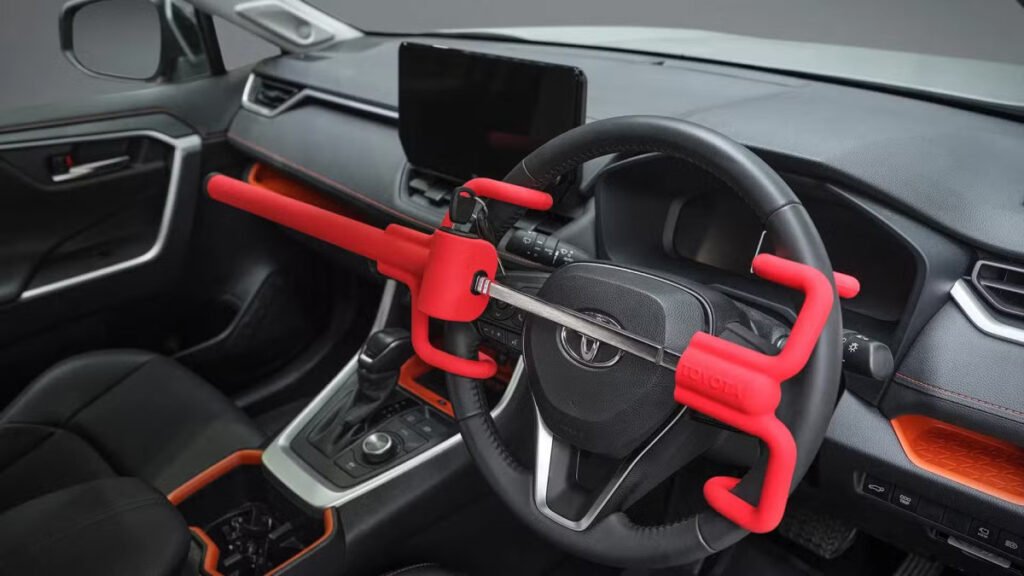
James E. Winner Jr. invented The Club in 1986, a simple metal bar that locked onto steering wheels, making vehicles impossible to steer. The devices dominated the 1990s before electronic immobilizers made them seem obsolete. Now, Toyota has released its own version, selling through Australian dealerships for about $140 USD. Constructed from automotive-grade steel with four-point contact technology, Toyota’s bright red lock aims to deter thieves through visibility. The company also promises additional security enhancements, including a new immobilizer, though details remain undisclosed to avoid tipping off criminals.
High-tech hackers armed with custom electronics designed to exploit vehicle computer networks are being countered with essentially the same technology that protected pre-computer cars. While Toyota develops proper software fixes, owners must now manually attach a physical lock each time they park. The automotive industry’s rush toward connectivity has created vulnerabilities that need old-fashioned solutions to address.