GT-R Godfather: As Nissan Faces Financial Pressure, e-Power Is Still About Driving Feel
Nissan enters its next technology cycle under financial strain, amid cost cuts, restructuring, and uneven global performance. Still, as e-Power readies for the U.S., the company is positioning it as more than a survival move. Speaking at the 2026 Philippine Nissan Festival, Hiroshi Tamura, longtime chief product specialist of the Nissan GT-R R35, said e-Power was engineered around the same principle that defined the GT-R: controlled, confidence-building acceleration.
Tamura is direct about where driving excitement comes from. It is not peak output. It is how torque is delivered. During the R35’s development, Nissan relied on electronic boost control to shape acceleration. Boost was never released all at once. It was built progressively, so the driver always knew what was coming. Tamura says e-Power applies that same logic, replacing turbo boost control with electric motor and inverter management.
Leroy Marion/Autoblog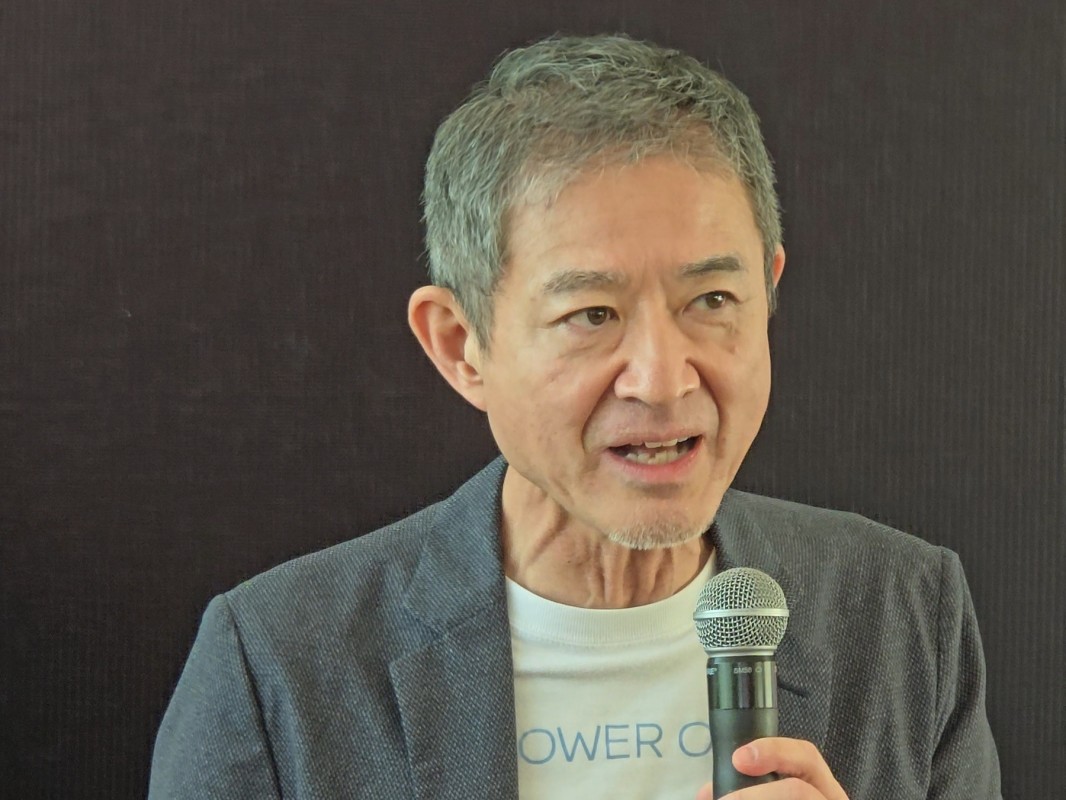
e-Power Is Not a Conventional Hybrid
Nissan e-Power works fundamentally differently from the hybrids most American buyers know. The gasoline engine never drives the wheels. It only generates electricity. The electric motor alone provides propulsion. That architecture allows Nissan to manage acceleration entirely through software and electronics.
Tamura says the link between the R35 GT-R and Nissan’s e-Power isn’t peak output, but how torque is delivered. “The R35 GT-R’s boost control is fully electronic. Peak power is easy to make, but what matters is how torque rises. It must come smoothly, not suddenly, but still be strong.” The GT-R’s fully electronic boost control prioritized smooth, progressive torque over big peak numbers, using smaller turbos for stronger low-speed response and consistent acceleration.
“That same philosophy applies to e-Power. Electronics allow us to shape power delivery so acceleration is controllable, especially in low-speed regions. The turbo on the R35 was never the biggest—we focused on usable torque and dynamic feel.”
Leroy Marion/Autoblog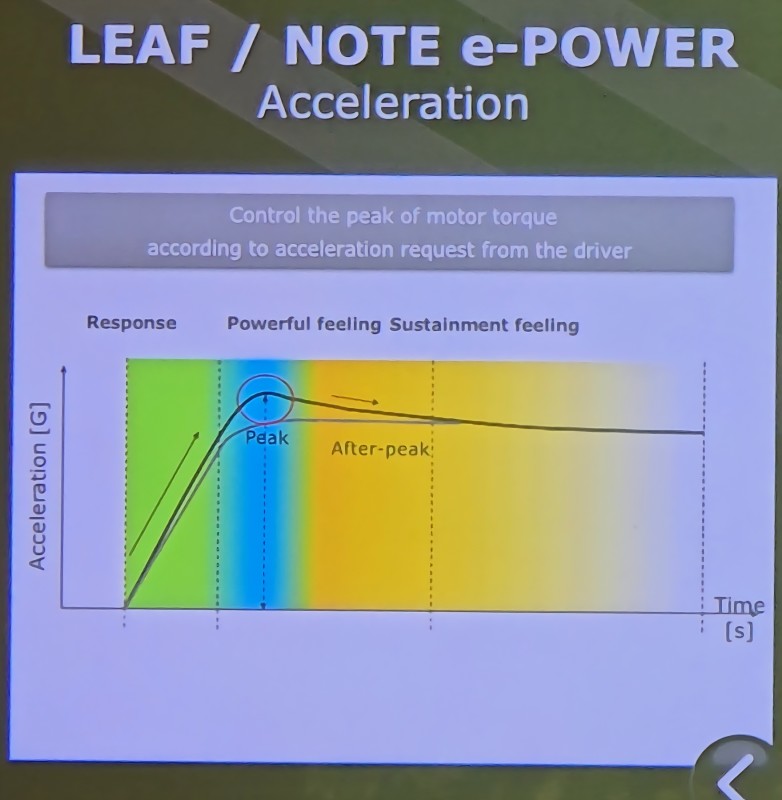
A Shared Engineering DNA With the GT-R
The connection between e-Power and the GT-R is not philosophical alone. The system was originally developed under drivetrain chief Naoki Nakada, who also contributed to the VR28DETT. “He was thinking about this philosophy during our R35 development. In both cases, Nissan focused on early torque, predictable delivery, and controllability across different driving conditions.”
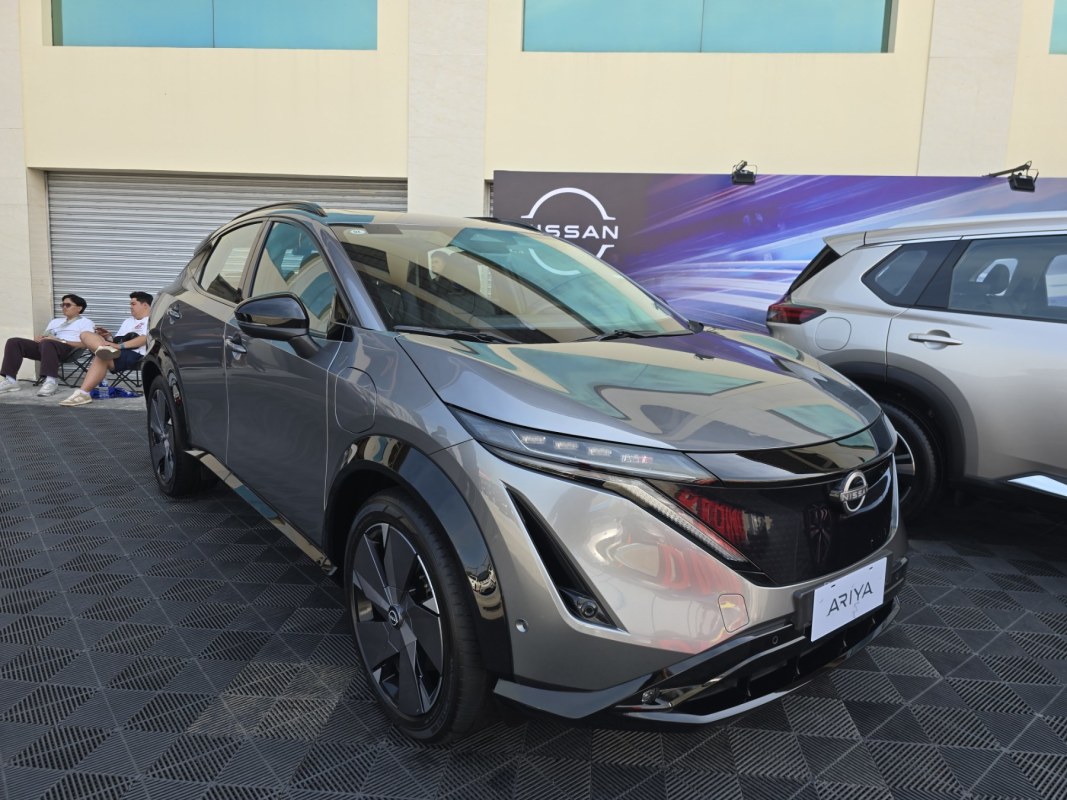
Nissan has already rolled out e-Power overseas in models like the Nissan Rogue and Nissan Kicks, though the system has yet to reach the U.S. Tamura sees it as a bridge between EVs and combustion. He supports electrification, but believes performance cars should remain fuel-powered.
“This is a very important idea, DNA and philosophy again. GT-R engineers think of power like this. It’s very natural and emotional,” he said, adding that it is “not like the ‘T’ companies or some Americans”—a pointed dig at Toyota and more conventional U.S. hybrid systems.
Leroy Marion/Autoblog