Source: AGU Advances
Earth’s oceans absorb carbon dioxide from the atmosphere, helping to temper the impact of climate change but increasing ocean acidity. However, calcium carbonate minerals found in the seabed act as a natural antacid: Higher acidity causes calcium carbonate to dissolve and generate carbonate molecules that can neutralize the acid.
For many years, researchers have thought of this carbonate dissolution buffer mainly as a very slow process because most ocean carbonates lie in deep-ocean sediments. There, the effects of their dissolution won’t reach the atmosphere for hundreds or thousands of years—long after many effects of acidification are already felt by ecosystems.
However, calcium carbonate also exists in more than 60% of the seabed of the shallower waters of continental shelves. New research by van de Velde et al. suggests that shelf carbonate dissolution may play a previously underappreciated climate feedback role on much faster timescales.
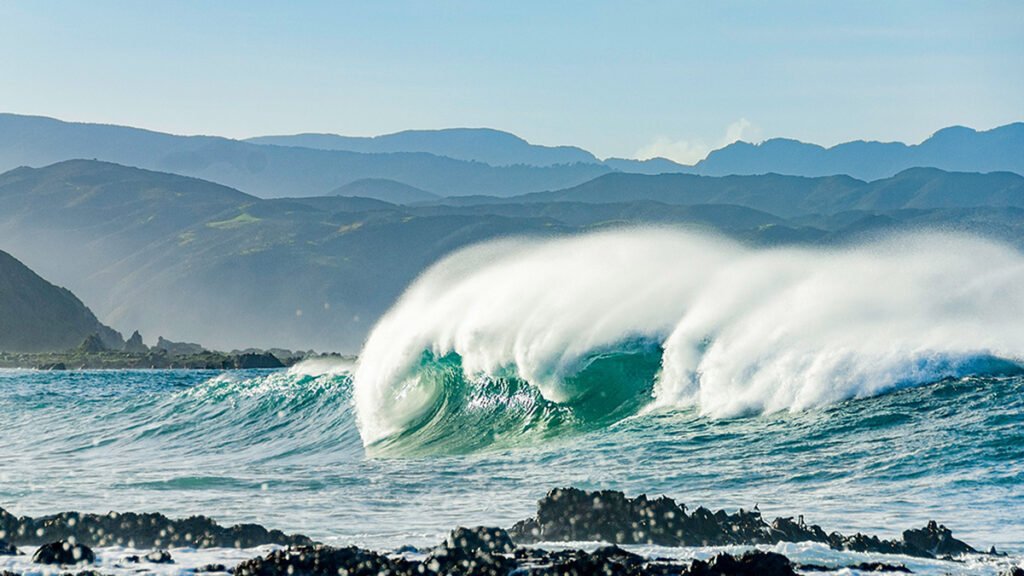
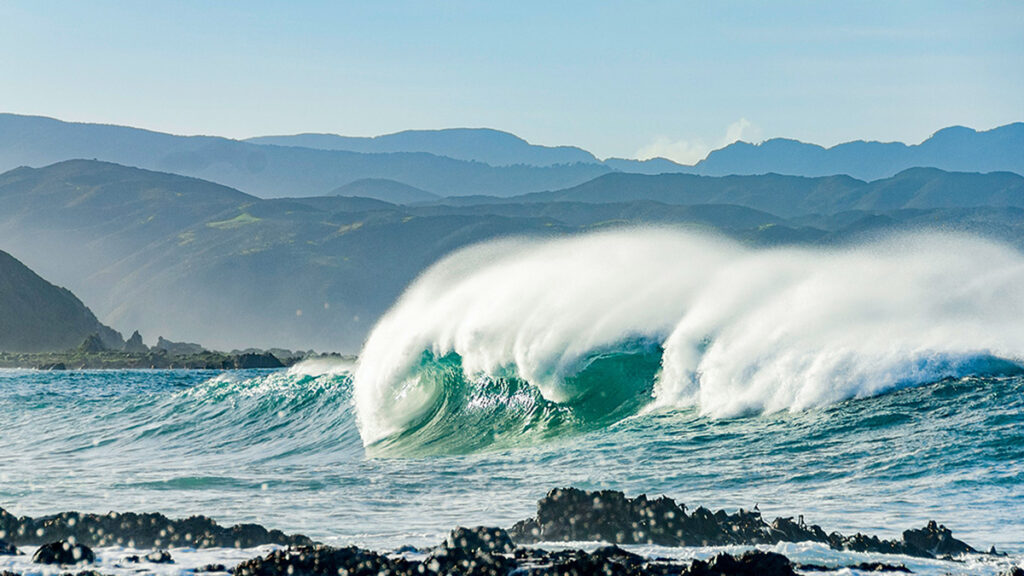
To explore the potential importance of shallow carbonate dissolution, the researchers analyzed high-precision ocean carbonate chemistry observations collected over 25 years in continental shelf waters off the southeastern coast of New Zealand.
They found that in the study area, calcium carbonate buffering has occurred in shallow shelf waters for at least the past 25 years and that this climate feedback process operates on annual to decadal timescales—orders of magnitude faster than in the deep ocean. Additional biogeochemical modeling suggested that this continental shelf carbonate dissolution is driven by an increase in dissolved carbon dioxide resulting from anthropogenic carbon dioxide emissions.
Similar dissolution feedback may occur in continental shelf waters around the world, in which case, shelf carbonate dissolution may have been accelerating globally since the 1800s. Furthermore, the researchers calculated that this process could account for up to 10% of the current discrepancy between state-of-the-art model predictions of ocean carbon dioxide uptake and real-world measurements.
Further research will be needed to explore the global role of shelf carbonate dissolution and how it should be incorporated into climate models. Such knowledge could have key implications for proposed efforts to combat climate change by deliberately boosting ocean alkalinity, the authors say. (AGU Advances, https://doi.org/10.1029/2025AV001865, 2025)
—Sarah Stanley, Science Writer

Citation: Stanley, S. (2026), Our ocean’s “natural antacids” act faster than we thought, Eos, 107, https://doi.org/10.1029/2026EO260013. Published on 30 January 2026.
Text © 2026. AGU. CC BY-NC-ND 3.0
Except where otherwise noted, images are subject to copyright. Any reuse without express permission from the copyright owner is prohibited.