Since Brian Niccol took over as Starbucks Chairman and CEO in 2024, he’s promised a grand turnaround for the coffee giant by going back to its roots in lovingly designed, customer-centric stores.
The messaging wasn’t enough to break six straight quarters of global sales decline. Global sales grew 1% at the end of the 2025 fiscal year, but they left the U.S. behind. Now, Starbucks’s Q1 2026 earnings have beat analyst estimates and seem to be cementing a turnaround, marking the first time same store sales have increased in the U.S. in eight quarters.
Starbucks same store sales were up 4% in the U.S. and 5% globally during the first quarter, thanks largely to a 3% rise in overall transactions. Despite well-documented store closures, the company says it still added 128 net new stores over the last quarter.
“Our Q1 results demonstrate our ‘Back to Starbucks’ strategy is working and we believe we’re ahead of schedule,” said Niccol during earnings. “It’s great to see the sales momentum driven by more customers choosing Starbucks more often, and this is just the beginning.”
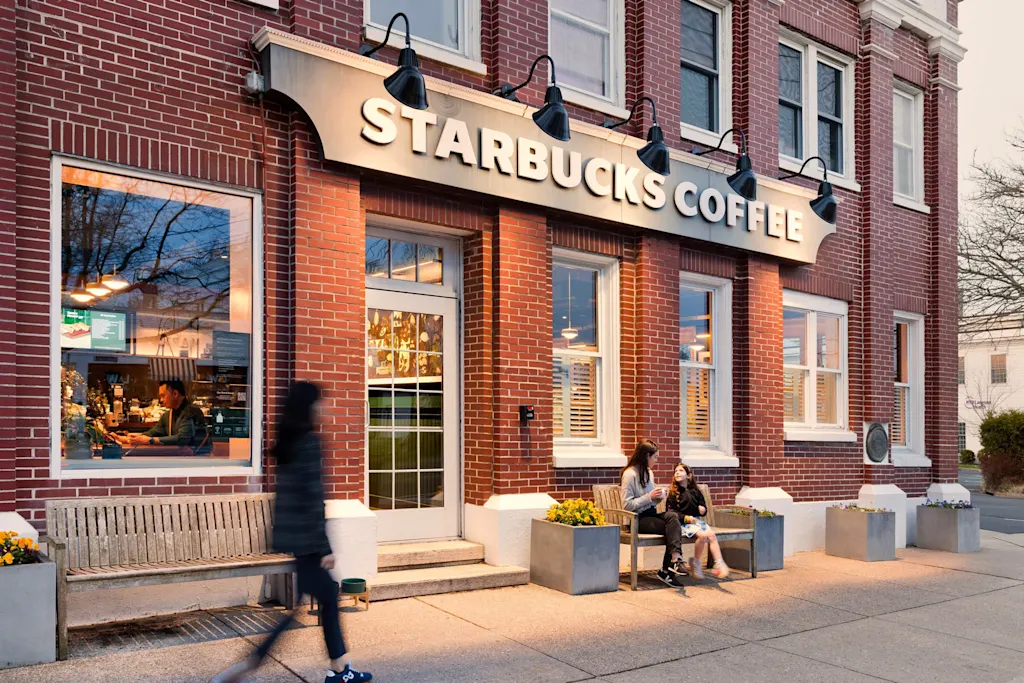
As I reported last year, Niccol’s thesis has been that better hospitality will drive more people to return to Starbucks—and that adding seats back to stores post-COVID is a way for the company to stand out. Improved store experience is just one piece of his strategy, which has also included fresh ad campaigns, an operationally simplified menu with lots of protein, beloved merch drops, and most recently, collabs with Mr. Beast and Khloe Kardashian.
Starbucks revenue grew by 6% last quarter overall. However, Niccol is facing tighter margins than he was a year ago. Costs ranging from uplifting Starbucks stores, to increasing staffing and pay (albeit not appeasing unions), to tariffs on ever-more-expensive coffee beans have decreased margins from 16.7% to 11.9%.
When I asked Niccol about the effects of coffee pricing on Starbucks last year, he mostly shrugged off the question, noting it was actually a relatively small line item for the company. But like many of its rising costs, it no doubt adds pressure for Starbucks to continue to grow, and to sell more product from each store in order to bolster profits when margins shrink.