Source: GeoHealth
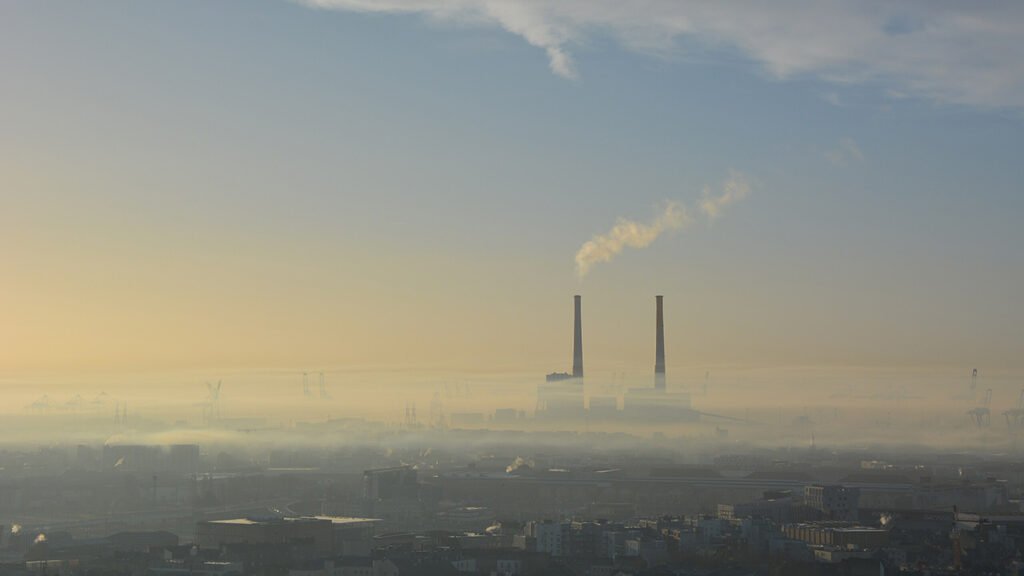
Polluted air causes an estimated 7 million deaths worldwide each year, according to the World Health Organization. Much of the mortality comes from PM2.5, particulate pollution smaller than 2.5 micrometers in diameter that can enter the lungs and bloodstream and cause respiratory and cardiovascular problems. In addition to particles emitted directly into the atmosphere, ammonia (NH3), nitrogen oxides (NOX), and sulfur dioxide (SO2), which are emitted by factories, ships, cars, and power plants, are all precursors that can contribute to the formation of PM2.5. The effects of particulate pollution are not evenly distributed, however.
Oztaner et al. model the consequences of air pollution across the Northern Hemisphere by region, offering a more granular look at where targeted mitigation policies could be the most beneficial. Using the multiphase adjoint model of EPA’s Community Multiscale Air Quality (CMAQ) modeling platform, the authors assessed the benefits of mitigating various pollutants from the perspective of both lives and money saved. Monetary values of air pollution impacts were calculated using a well-established method used by international agencies, although the method introduces ethical concerns because it assigns values to lives partly based on different countries’ per capita gross domestic products (GDP).
Overall, they found that a 10% reduction in all modeled emissions could save 513,700 lives and $1.2 trillion each year in the Northern Hemisphere.
The largest mortality reductions came from China and India, where cutting emissions would save 184,000 and 124,000 lives, respectively, each year. The largest cost savings were found in China, followed by Europe and North America. Health benefits also varied by type of emissions and sector. NH3 causes more issues in China, whereas NOX is relatively more harmful in Europe than in other places. Across the Northern Hemisphere, the agricultural sector contributes most to particulate and precursor pollution, with a 10% reduction in agriculture-related emissions projected to save 95,000 lives and an estimated $290 billion. This is followed by the residential and industrial sectors.
The authors note that caution is warranted when comparing results across similar studies, in part because the link between pollutant concentrations and health outcomes is not always linear and in part because different regions may have different methodologies when accounting for emissions by sector. Also, their study focuses only on PM2.5-related mortality and does not consider other pollutants, such as ozone. Overall, they suggest their work offers a meaningful reference for comparing the effects of different pollutant mitigation strategies in the Northern Hemisphere. (GeoHealth, https://doi.org/10.1029/2025GH001533, 2026)
—Nathaniel Scharping (@nathanielscharp), Science Writer


Citation: Scharping, N. (2026), Which countries are paying the highest price for particulate air pollution?, Eos, 107, https://doi.org/10.1029/2026EO260026. Published on 28 January 2026.
Text © 2026. AGU. CC BY-NC-ND 3.0
Except where otherwise noted, images are subject to copyright. Any reuse without express permission from the copyright owner is prohibited.