The Trade-Offs
As turbochargers and other advanced engine technologies become more common, newer vehicles generally deliver measurable gains over their predecessors in efficiency, emissions, and performance. However, YouTuber speedkar99 argues that this added complexity can come at the expense of long-term reliability, a claim he supports through a teardown of Honda’s R18 engine.
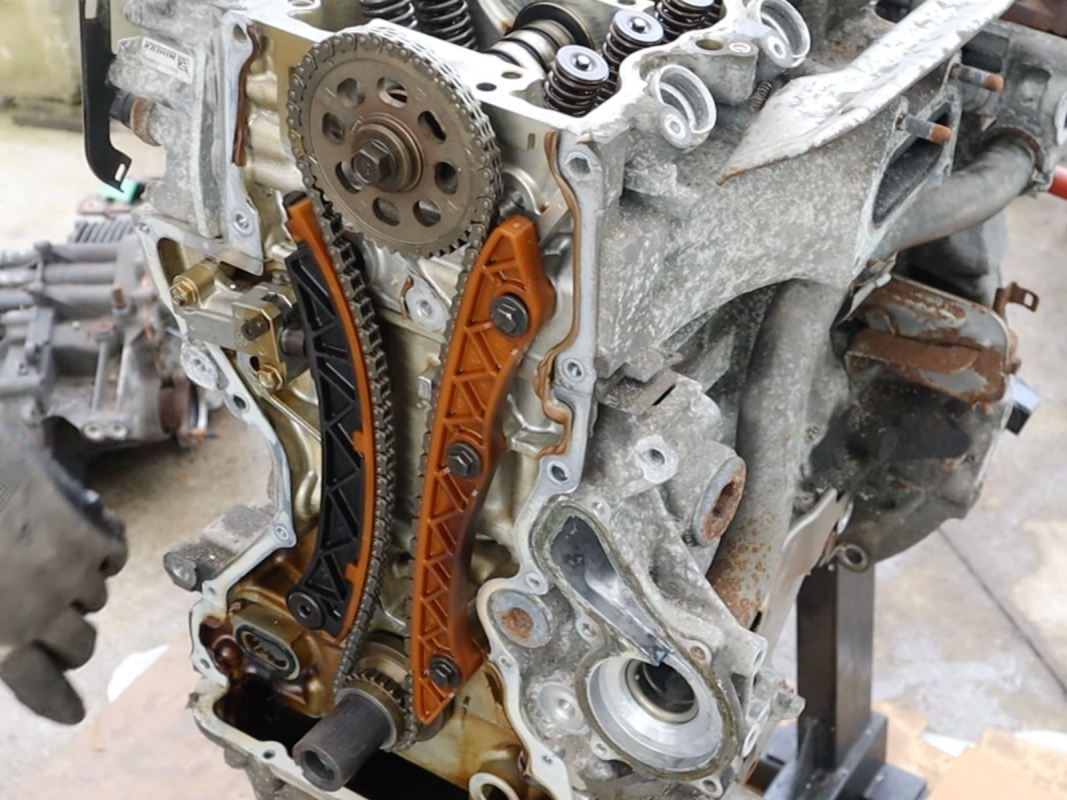
The R18 is a 1.8-liter naturally aspirated inline-four used in the 8th- and 9th-generation Honda Civic. It is also notable as the final non-turbo Civic engine before the 10th-generation model, which debuted in North America in 2015, introduced turbocharging to the mainstream lineup. The engine featured in the teardown came from a 2012 Civic and had accumulated roughly 210,000 kilometers (130,489 miles), with its primary issue traced to a head gasket leak.
Inside the Honda R18
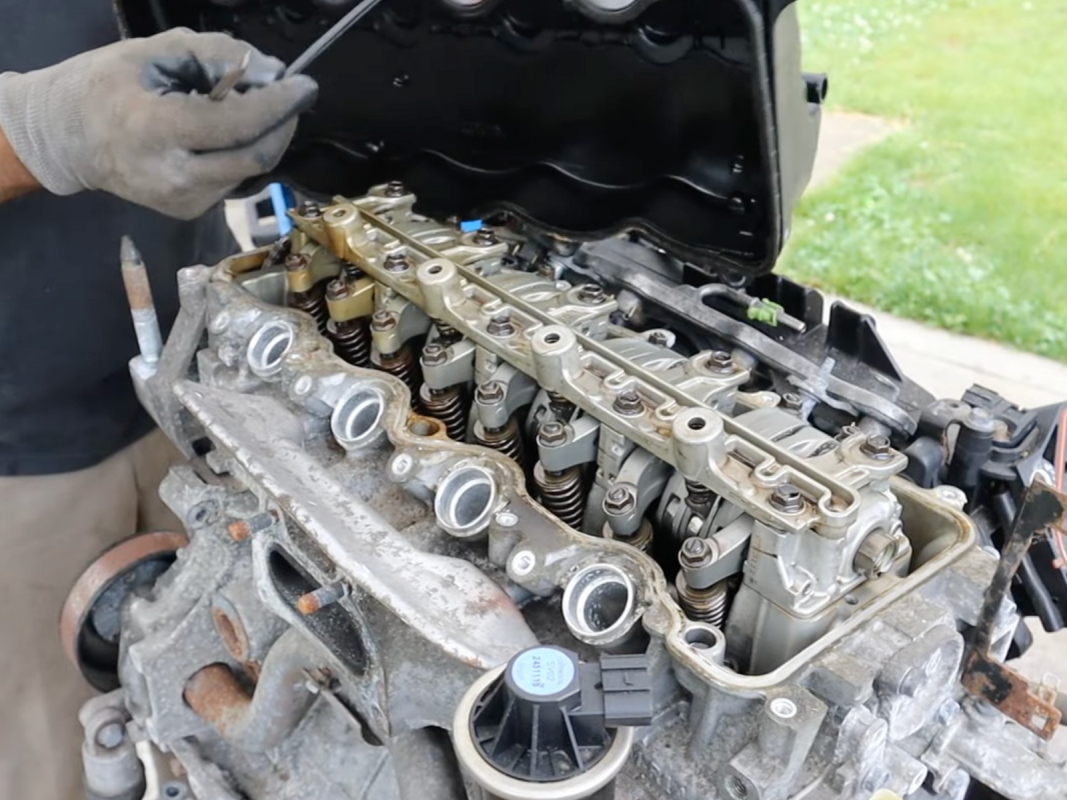
According to speedkar99, the R18’s appeal lies in its simplicity. The engine uses a plastic valve cover and intake manifold, and relies on port fuel injection rather than the direct-injection systems common in newer engines. With port injection, fuel is sprayed into the intake port, allowing gasoline to wash over the intake valves and help prevent carbon buildup. By contrast, direct injection sprays fuel directly into the combustion chamber, which can improve power and efficiency but is also associated with carbon buildup over time.
The R18 also features an economy-focused i-VTEC system. Unlike performance-oriented Honda engines, this setup does not rely on aggressive valve-lift changes. Instead, it prioritizes efficiency and smooth operation, lowering the risk of wear-related damage.
Upon removing the cylinder head, speedkar99 found burn marks on the head gasket between cylinders two and three, confirming a part failure. The breach allowed coolant to mix with combustion gases, which reduced the engine’s ability to regulate temperature, as low coolant levels directly compromise cooling performance. However, he attributed the failure to prolonged overheating that went unaddressed by the driver, rather than to an inherent design flaw.
The remaining engine components, such as the oil pan, crankshaft, and connecting rods, were in good condition. For an engine with roughly 130,000 miles, however, minor wear such as carbon buildup on the piston crowns is largely unavoidable.
Long Live The NA
In his conclusion, speedkar99 argued that the R18’s lack of turbocharging, straightforward design, and use of port injection are key contributors to its durability. As a counterpoint, some modern turbocharged engines have faced early reliability concerns, including the 3.5-liter twin-turbo V6 used in the third-generation Toyota Tundra, which has been linked to reports of premature engine failures.
In Honda’s lineup, the current 11th-generation Civic continues the turbocharged approach, while hybrid variants (which use a dual-electric-motor setup) add further complexity, increasing the number of components that could fail over time.