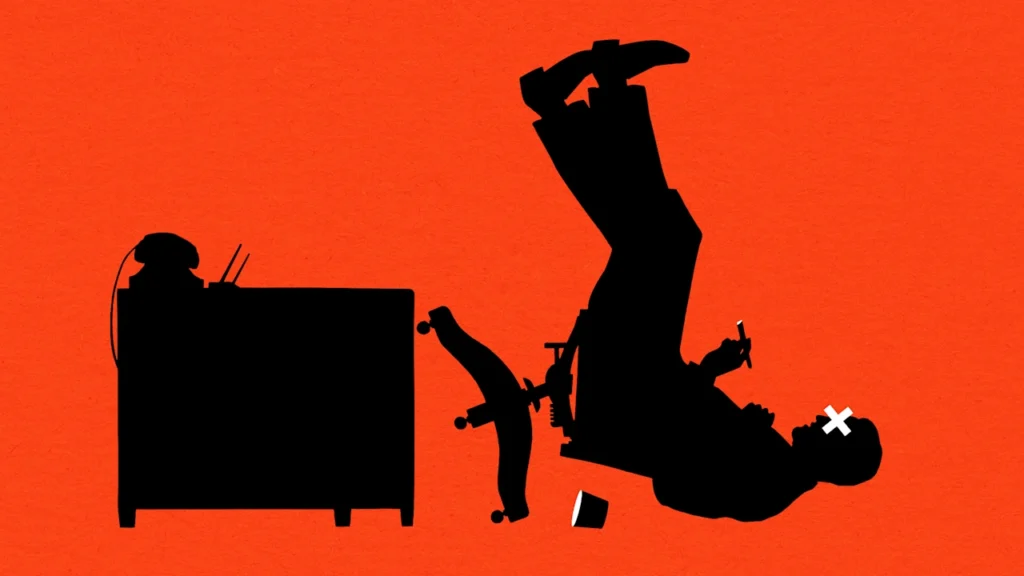
It’s been an unprecedented and brutal week for the advertising industry. The finalization of Omnicom Group’s $13 billion acquisition of Interpublic Group (IPG) (the biggest takeover in advertising history) is affecting tens of thousands of workers—most immediately the 4,000 expected to be laid off by the end of the year.
Both Omnicom and IPG own many different ad agency brands, all of which will be profoundly impacted by the merger. Omnicom is retaining only McCann from the IPG roster of agency networks, while folding FCB into BBDO, and both DDB and MullenLowe into TBWA, in order to achieve Omnicom Chairman and CEO John Wren’s goal of $750 million in synergies.
These are more than just a collection of acronyms, though. They are major agency brands, built over decades and generations, that will now disappear as their parent holding company fights to grow, survive, and remain competitive.
You’d be forgiven if you think the ad world is an alphabet soup of who’s eating who. But there is another side to the business that’s steering clear from the publicly traded drama. Independent agencies are growing in number, and in the scale and scope of work they’re being assigned by major brands.
It’s a trend that has been bubbling up for years. According to an Ibis World report, the number of U.S. ad agencies grew 2.2% from 2019 to 2024. Even anecdotally, there has been a surge in new creative shops. Isle of Any, for example, was launched in January by former Droga5 execs, and has already done work for The New York Times, A24, OpenAI, and Coinbase.
Part of the indie boom is undoubtedly a cultural correction to the mess that is major ad holding companies, as talent flees corporate bureaucracy for greener, more creative pastures. But it’s more than that at this point. In recent years, major brands have shown an increased willingness to work with these small shops despite (or because of) their size.
For years, independent agency Rethink has been winning industry awards and getting business results for Heinz. Mother, an agency founded in London 30 years ago, has a range of big clients, including Buick, Uber, Cheerios, and Stella Artois. And, of course, independent agency Wieden+Kennedy is known for its work for Nike, McDonald’s, Ford, and Michelob Ultra.
Amid all the ad world chaos, I spoke to indie agency execs at award-winning shops Rethink, Tombras, Joan Creative, Haymaker, and Mother about what the ad industry landscape looks like from their vantage point at this moment. As technology, data, and, in particular AI, levels the playing field in so many ways, these independents see a distinct competitive advantage in the combination of original creative and strategic thinking. Most crucially, though? They see clients—not investors—as their primary stakeholders.
Holding company drama
The massive consolidation of IPG-owned ad agencies is the latest in an ongoing trend among publicly traded advertising companies over the past decade to boost profits and efficiency. In 2018, holding company WPP combined Wunderman and J. Walter Thompson (JWT) into Wunderman Thompson, and VML and Young & Rubicam into VMLY&R. Then in 2023, it combined them all into just VML.
How did that work out? WPP shares are down more than 60% year to date, and have hit a quarter-century low. Reports emerged last month that France-based holding company Havas was exploring an acquisition or stake in WPP. Havas has denied the reports, but it’s the state of the industry that made it so believable.
Jay Kamath, founder and chief creative officer of Haymaker, says there’s nothing wrong with mergers if there is a strong vision behind it. “These aren’t visionary mergers, they’re survival mergers. The model is aging, margins are shrinking, and they think scale is a life raft,” says Kamath, who believes scale does little to really help clients. In reality, it’s speed, not scale that brands care about as they vie for customers’ increasingly divided attention. “They need faster teams who bring sharper ideas and are accountable partners,” he says.
Dooley Tombras, president of Tombras, a Knoxville, Tennessee-based agency with additional offices across the U.S. and in Buenos Aires, sees holding companies as a model in managed decline. As holding companies continue to consolidate to compensate for a loss of top-line growth, the winners will likely be in the independent space.
“As they consolidate brands, offices, and people to deliver cost synergies to Wall Street, they will naturally shore up to protect the billion-dollar-plus clients,” Tombras says. “Many major national brands spending in the $50 million to $100 million annual budget level will get lost in the shuffle and look to make a move. And it will likely be to a scaled independent.”
Advantage: independent
Tombras’s theory seems to be resonating. Geoff Cottrill, former CMO of Coca-Cola, Converse, and Topgolf, recently commented on LinkedIn: “If I were still a CMO, I’d be looking for creative partners outside these massive machines.”
So I called him up and asked him to elaborate. His answer should be encouraging to any indie agency, and to many of the impending holding company exiles looking to be hired. “Marketing, as an industry, has kind of lost the plot,” says Cottrill of the industry’s infatuation with data, AI, and money.
He notes, ”If you’re a midsized brand trying to fight for attention, needing to get the right creative ideas, get the right service levels, account management, you’re better off with a smaller, more nimble creative shop like Wieden+Kennedy or someone like Opinionated” (an independent ad shop out of Portland, Oregon, whose clients include Adidas, Panda Express, and Hinge).
For Lisa Clunie, founder and CEO of New York-based Joan, being independent is a superpower. “Brands want partners who can prototype, pivot, and produce without waiting for multinational approval chains,” she says.
This is not a new concept. Back in 2021, Domino’s took its brand to a small, 23-person indie shop called WorkInProgress. At the time, the pizza chain’s then-CMO, Art D’Elia, told Ad Age, “I really feel that the independent agency model gives us more flexibility and less distractions.”
Tombras believes that brand and culture are at an inflection point given the proliferation of AI. Machine value will decrease, he argues, while human value is poised to skyrocket. “The whole reason brands have gone to agencies in the first place is to get highly unique perspectives on how to solve business problems,” he says. “Independents are in an exponentially better position to attract talent because people are tribal; we want to play for teams.”
For Teri Miller, U.S. CEO of Mother, the holding company business model, and now consolidation, feels a million miles away from what is actually happening on the ground in the business of creativity. “It’s just a totally different vocabulary, rule set, body language,” she says. “Clients who have hired Independents as an antidote understand why: We know who we are, why we exist, what our strengths are. We aren’t trying to be everything to everyone.”
Creative advertising versus Public Company
I’ve been covering brands and ad agencies in one way or another for almost 20 years, and I’ve seen that great creative work is not exclusive to independent agencies. Agencies owned by holding companies, including those being shuttered through the Omnicom consolidation, have produced incredible work over decades. In fact, McCann, FCB, the Martin Agency, and TBWA/Worldwide were all on Fast Company’s 2025 Most Innovative Companies list earlier this year.
Still, holding company agencies are facing bigger challenges, as the media landscape continues to fragment and the demands of clients have become more complex and immediate. In a media era that prioritizes cost and efficiency, the great work these agencies are making increasingly feels like it’s despite being part of a public holding company, not because of it.
The global publicly traded conglomerate still has advantages in scale, particularly in media buying. But there is no discernible advantage in terms of solving business problems with creative ideas and strategy. Joan’s Clunie says creativity and public ownership aren’t enemies, they’re just bad roommates. While public companies optimize for shareholder value, independent agencies optimize for creative value.
“When you need to hit quarterly targets, the easy moves are cost cuts, procurement deals, and operational tweaks,” Clunie says. “The risky move? Betting on a bold creative idea that might take two years to prove itself. Guess which one gets the green light at 11:59 p.m. before earnings?”
It’s not that public companies can’t do brilliant work, she says. “It’s that their wiring makes the safe choice easier and the interesting choice harder. And in our business, interesting usually wins. Independence means we can take the long view. That’s not romantic—it’s structural.”