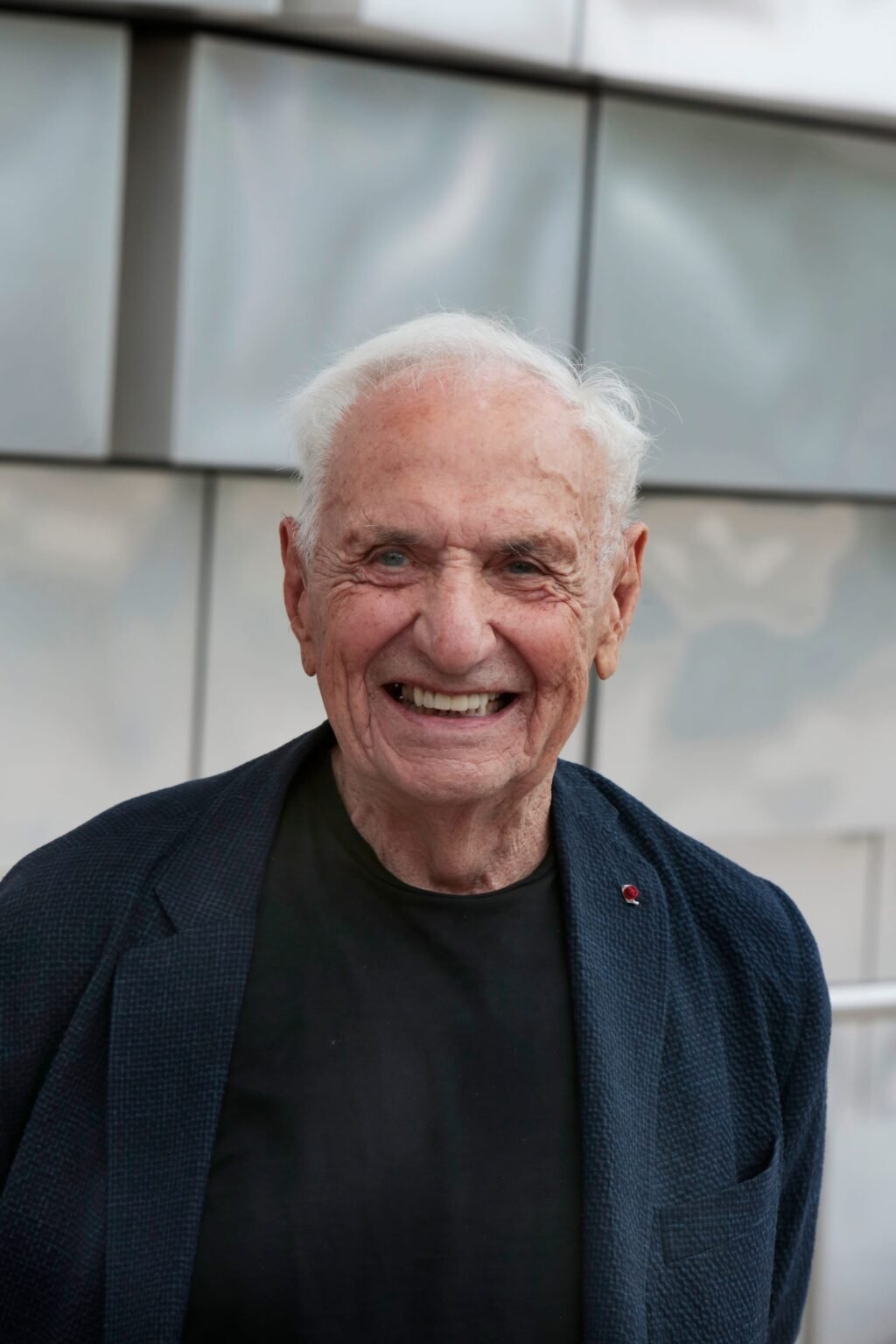
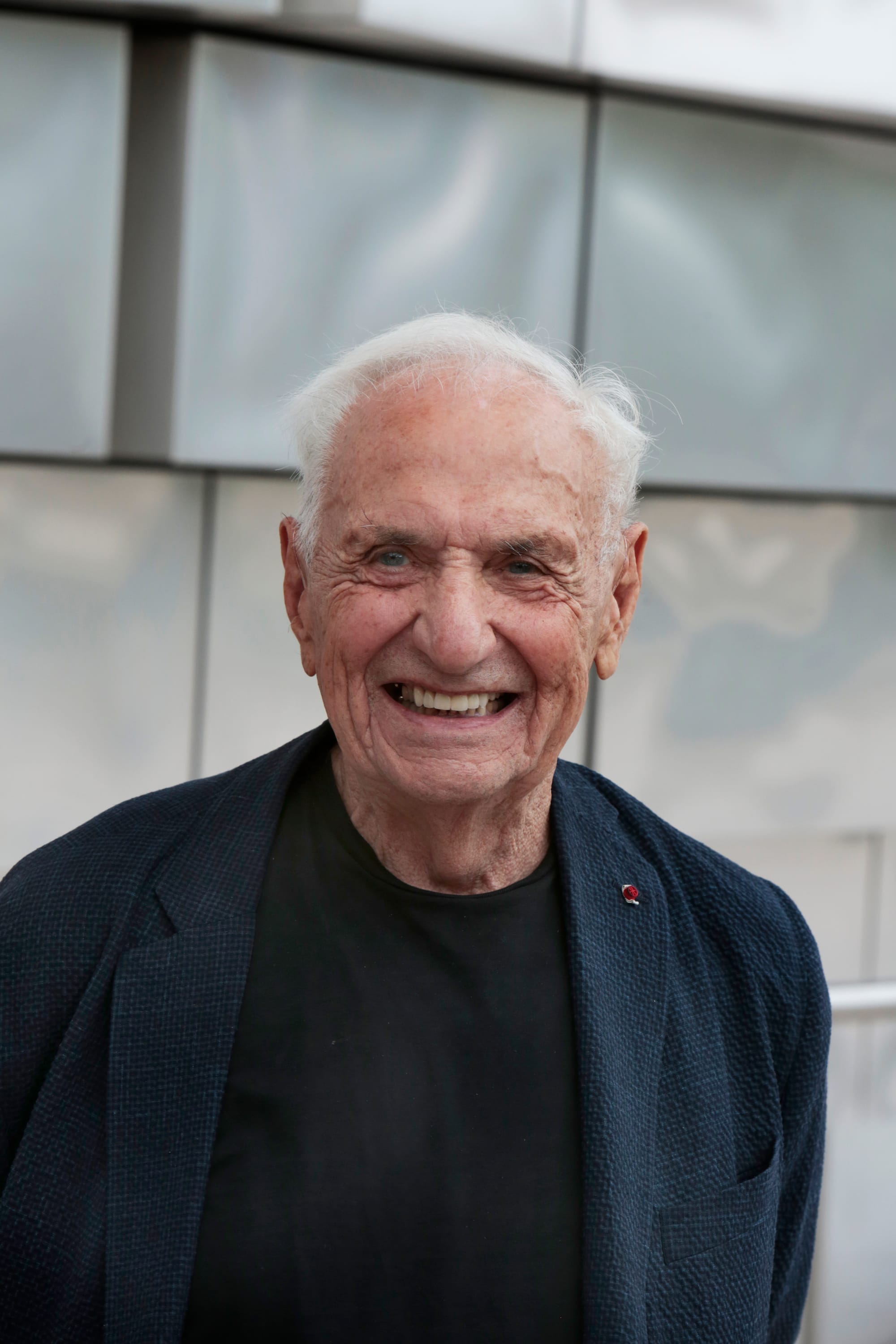
Frank Gehry, one of the world’s most celebrated architects and a towering intellect whose designs transformed the cities they inhabited, died on Friday, December 5, at the age of 96. The Pritzker Prize-winning architect suffered a respiratory illness before his death at his home in Santa Monica, California, his chief of staff told the New York Times.
A monumental figure who demystified modern architecture and an early adopter of computer-driven design, Gehry became beloved for his luminescent, curvilinear structures that appeared to defy gravity. His postmodern designs of museums, concert halls, and libraries have become destinations for tourists as much as the venues themselves.
His most revered accomplishment is arguably the Guggenheim Museum Bilbao in northern Spain, which was immediately hailed as one of the masterpieces of 20th-century architecture when it opened to the public in 1997. Philip Johnson, no postmodernist slouch himself, called the museum design “the greatest building of our time” and proclaimed Gehry as “the greatest architect we have today.”
Gehry visited the museum 25 years later and told Time magazine that he loved how vibrant the city around his building had become.
“There’s a whole feeling of life that’s different,” he said. “It makes me feel good that we contributed to that.”
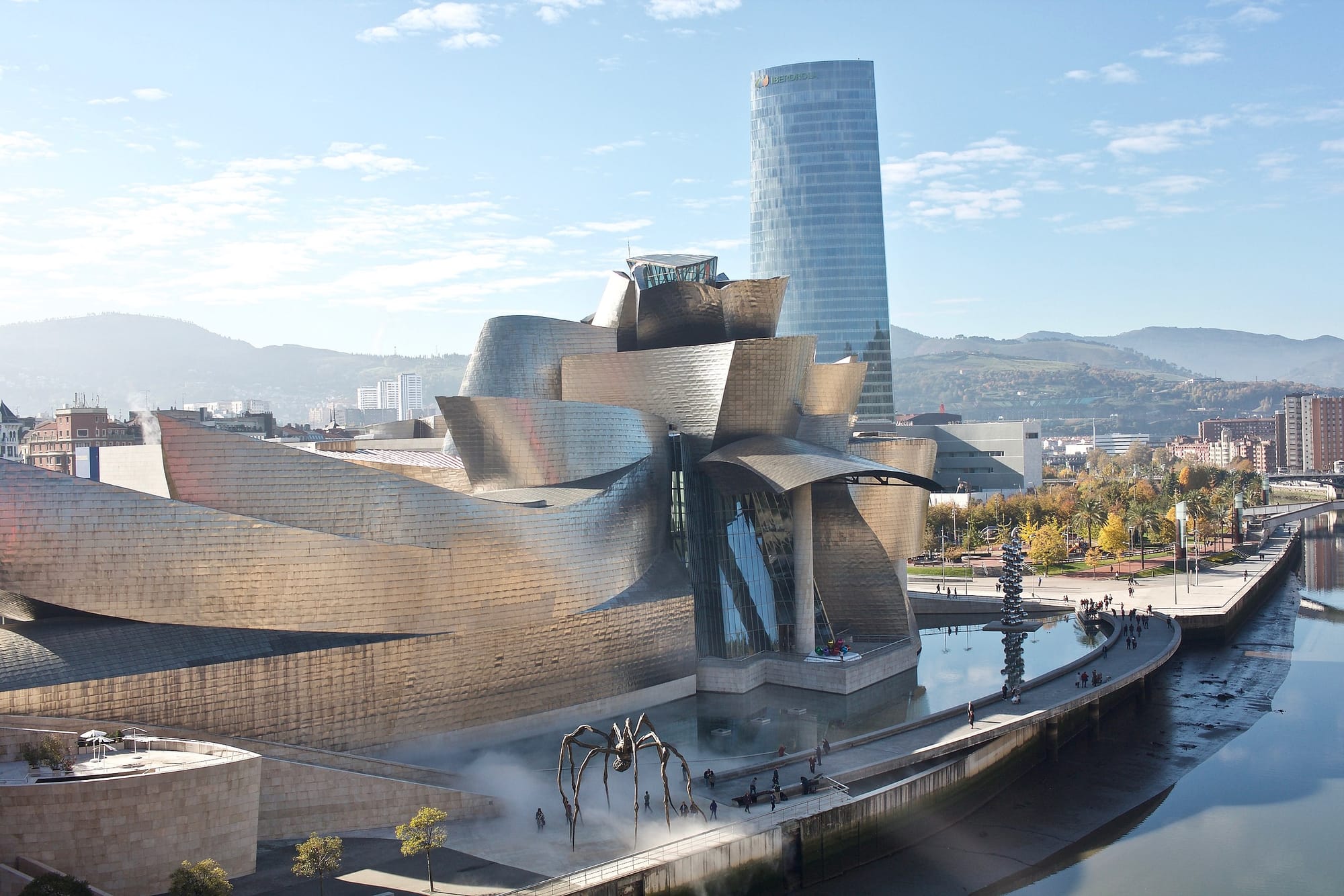
A spokesman for the Solomon Guggenheim Museum and Foundation said the organization was “deeply grateful” for his contributions to the Guggenheim’s landmark museums.
“His daring vision and design brilliance reshaped the field of architecture and our contemporary world. Gehry showed us how powerful and transformative museum architecture can be,” the Guggenheim spokesperson said in a statement to Hyperallergic. “Frank will be greatly missed, and we know that his legacy will inspire many generations to come.”
Born Frank Owen Goldberg in Toronto, Canada, in 1929, Gehry sometimes worked part-time in his grandfather’s hardware store, exposing him to the everyday materials that made houses and other buildings, while his father held several different jobs that included managing a grocery store and selling manual slot machines.
In 1947, his family immigrated to California and he got a job driving a delivery truck while attending Los Angeles City College before enrolling in the University of Southern California’s School of Architecture. He graduated in 1954 and soon moved across the country to study architecture at Harvard’s Graduate School of Design but dropped out of the program, and later began designing furniture out of cardboard and masonite.
He returned to Los Angeles in 1957 and began designing his first private residence. Five years later he started his practice, which formally became Frank Gehry and Associates in 1967. His innovative designs including the Cabrillo Marine Aquarium in San Pedro and the California Aerospace Museum dotted Southern California in the 1980s. By the end of the decade he had won the Pritzker Architecture Prize, whose jury compared him to Pablo Picasso.
“Always open to experimentation, he has as well a sureness and maturity that resists, in the same way that Picasso did, being bound either by critical acceptance or his successes,” the jury wrote. “His buildings are juxtaposed collages of spaces and materials that make users appreciative of both the theatre and the back-stage, simultaneously revealed.”
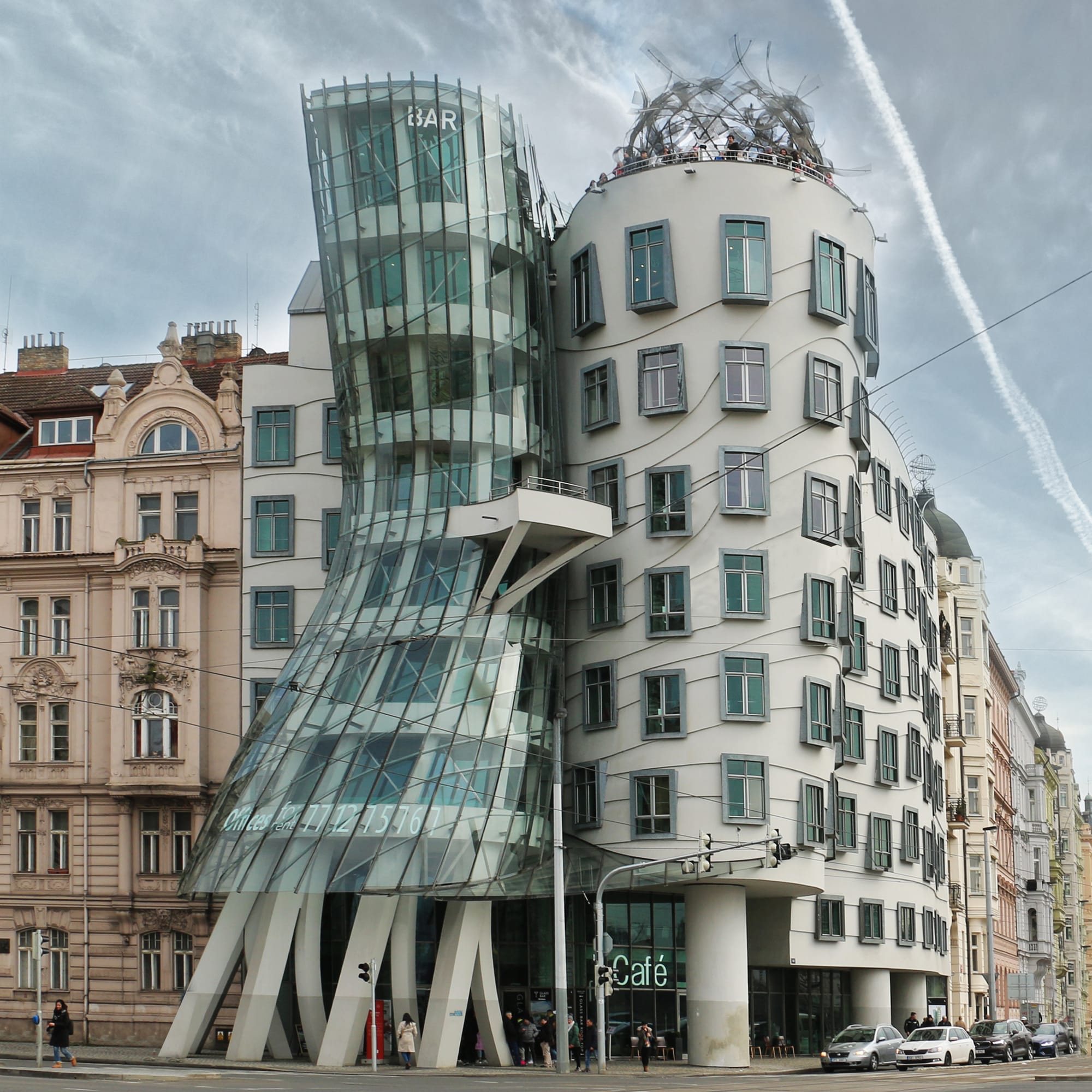
An even more esteemed collection of commissions that brought Gehry international acclaim soon followed. Gehry completed the Frederick Weisman Museum of Art in Minneapolis in 1993, the Cinemathèque Française in Paris in 1994, and Dancing House in Prague in 1996, before unveiling his Guggenheim masterpiece.
Gehry won the commission for the Walt Disney Concert Hall, one of the most beloved concert venues in the nation, in 1987, and the structure was inaugurated in 2003. By 2011, Gehry reinvigorated Manhattan’s skyline with his design of 8 Spruce Street, a 76-story skyscraper known for its distinctive undulating steel facade that resembled woven fabric.
MaryAnne Gilmartin, who worked with the architect to build 8 Spruce when she was an executive at Forest City Ratner, called Gehry “a true original — an artist, an architect, and a fearless visionary who changed the way we experience cities.”
“Frank approached every challenge with curiosity, generosity, and an unshakeable belief in the power of design to inspire people’s daily lives,” Gilmartin, founder and CEO of MAG Partners, told Hyperallergic. “He didn’t start with formulas or conventions — he started with emotion. He wanted buildings to move people, to feel alive in the city, and to create moments of unexpected beauty.”



.jpg?ref=hyperallergic.com#mw-jump-to-license)

