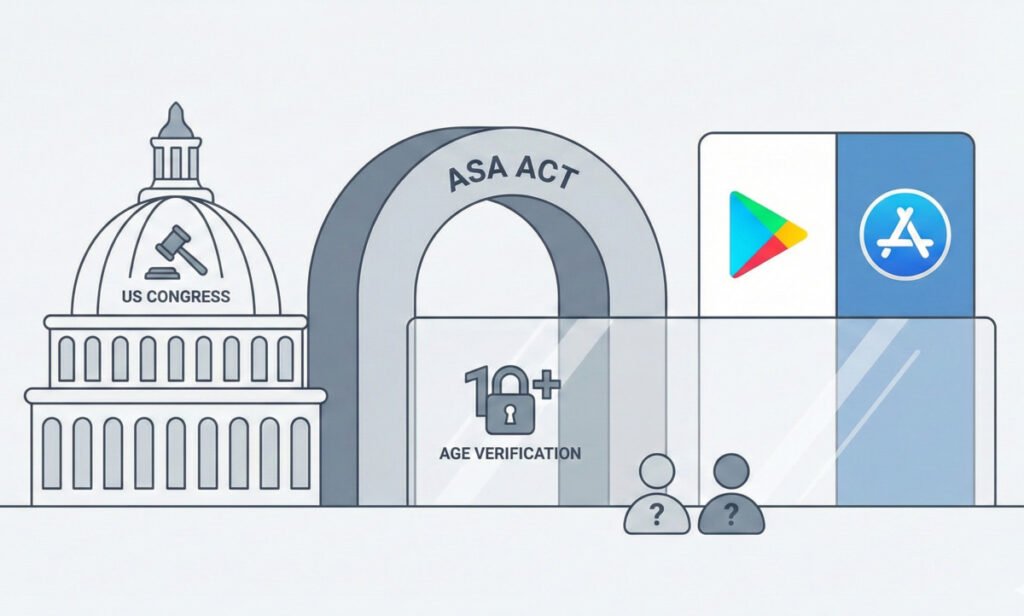

The US Congress is actively debating a package of bills aimed at strengthening child safety online, with one proposal drawing specific attention—and concern—from major technology companies. The App Store Accountability Act (ASA) seeks to create a national standard for age verification by shifting primary responsibility onto App Store operators like Apple and Google. Under the legislation, these companies would need to verify a user’s age to limit minors’ access to certain apps. Plus, they should manage this information in a privacy-preserving way.
Will app stores be forced to verify every user’s age in the US?
Proponents, including sponsors and tech companies like Pinterest and Meta, argue the ASA offers a commonsense solution. They believe establishing a single federal standard is easier for parents and avoids the current “legal mess” of state-by-state regulations. For industry supporters, placing the burden on two major gatekeepers also takes the heat off individual app developers who would otherwise need to manage complex verification protocols.
Despite this support, Apple and Google have publicly expressed deep concerns. These primarily center on privacy and culpability. They argue that requiring continuous age verification and data sharing introduces new, unnecessary risks to minors’ privacy. Furthermore, critics suggest the ASA fundamentally shifts the blame. By mandating App Stores perform the initial age check, any failure to restrict harmful content could land at the doorstep of the App Store operator, rather than the original content creators or social media platforms responsible for moderation.
This regulatory shortcut—targeting the App Store as the primary choke point—is already facing legal scrutiny. A similar age verification law passed in Texas is currently subject to legal challenges. The voices against question whether such sweeping measures violate the First Amendment by restricting access to legal speech.
International warnings and unintended consequences
Lawmakers have yet to find a perfect legislative solution. It will not be an easy job, since it should satisfy all parties without creating new issues for general users. The experience of other countries serves as a cautionary tale.
The UK’s Online Safety Act, which aimed to curb access to harmful content, required wide-ranging age verification on many websites and services. Implementation has led to significant friction. Some sites even chose to block UK users entirely. The requirements also encouraged users to employ VPNs to bypass the restrictions or led to the collection of sensitive data like IDs or credit card information. This undoubtedly increases overall security risks.
The debate over the ASA shows how difficult it is to balance between regulatory intent and practical execution. Protecting children online is a clear and laudable objective. However, creating a single federal standard that imposes new data-sharing requirements, undermines consumer privacy tools, and potentially absolves content creators of responsibility remains a complex challenge for Congress to solve.
The post US Congress Debates ASA Act to Force App Stores Age Verification appeared first on Android Headlines.