AI image generators used to be terrible at handling text. Even once the models mastered hands with five fingers, the presence of mangled, nonsensical, vaguely Cyrillic-looking text was a dead giveaway that an image was generated by AI.
Not anymore.
Today’s most advanced image generators have slowly improved their text generation. OpenAI’s image generator within ChatGPT handles basic text tasks fairly well. And design-centered models like Ideogram are great for simple, practical text tasks like creating video thumbnails.
This week, though, Google has released Nano Banana Pro, an updated version of its wildly popular AI image editing tool.
Nano Banana Pro, like its predecessor, is middling when it comes to generating realistic AI photographs. But it’s absolutely amazing at creating beautiful, informative, accurate infographics.
In fact, the model is so good that it can turn literally anything into a professional quality infographic in a matter of seconds.
Don’t Read To Me
Personally, I absorb very little of what I hear. I’m a visual learner, so if I listen to a presentation without taking physical notes or seeing some kind of visual aid, most of the information dissipates into the ether before my brain has any shot at absorbing it.
Add background noise or a presenter who mumbles, and I’m totally screwed.
I love infographics because they take complex information and lay it out in a way my brain can grok. I can glance at a graphic and absorb more information than I’d get in a two-hour lecture.
In my testing, I was therefore thrilled to see Nano Banana Pro’s remarkable ability to take pretty much anything I threw at it, and turn the data into a bespoke visual aid.
First, I started with some practical use cases. I fed Nano Banana Pro data on the recent performance of a YouTube channel I’ve been developing called California Dad Reviews.
Based on my analytics data, Nano Banana spun up an infographic showing what’s doing well on my channel, several standout videos from the last month, and its recommendations for what to shoot next.
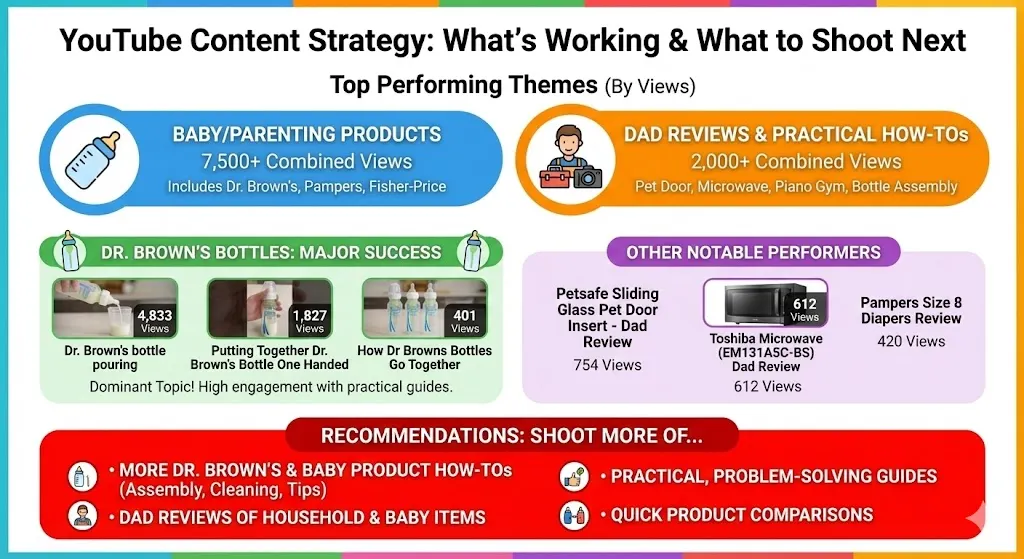
In this case, I gave the model unique data from my channel. But because Nano Banana Pro is integrated within Google’s Gemini 3 chatbot, it can also perform background research on its own.
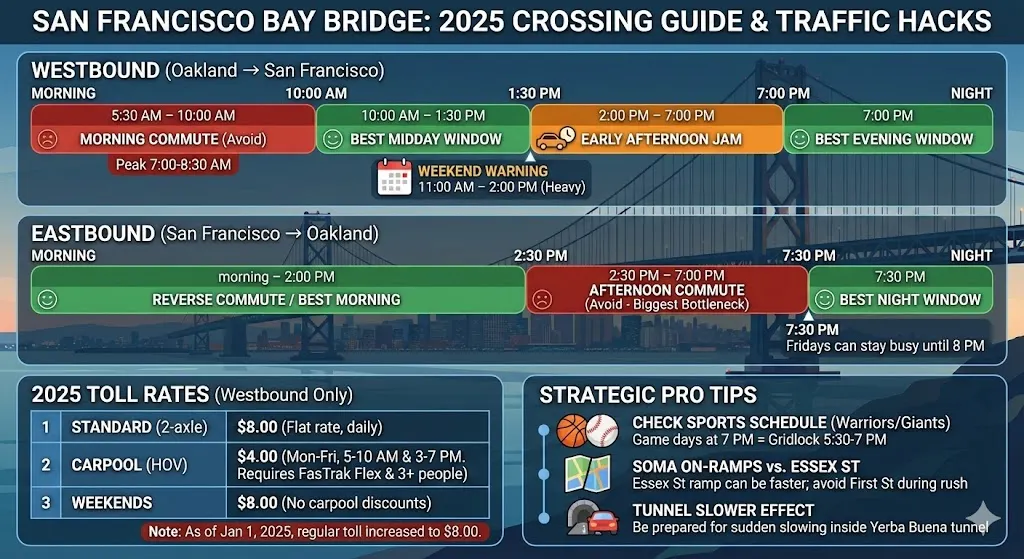
In another test, I asked the model to research the best times to cross the San Francisco Bay Bridge, and then present its results visually.
It’s impressively comprehensive and useful.
Graphics Get Personal
These kinds of informative graphics are helpful. I’m sure that bloggers will be tripping over themselves to integrate Nano Banana Pro’s infographics into their SEO optimized posts.
But in my testing, I found that the best uses for the tool’s new visual capabilities are more personal.
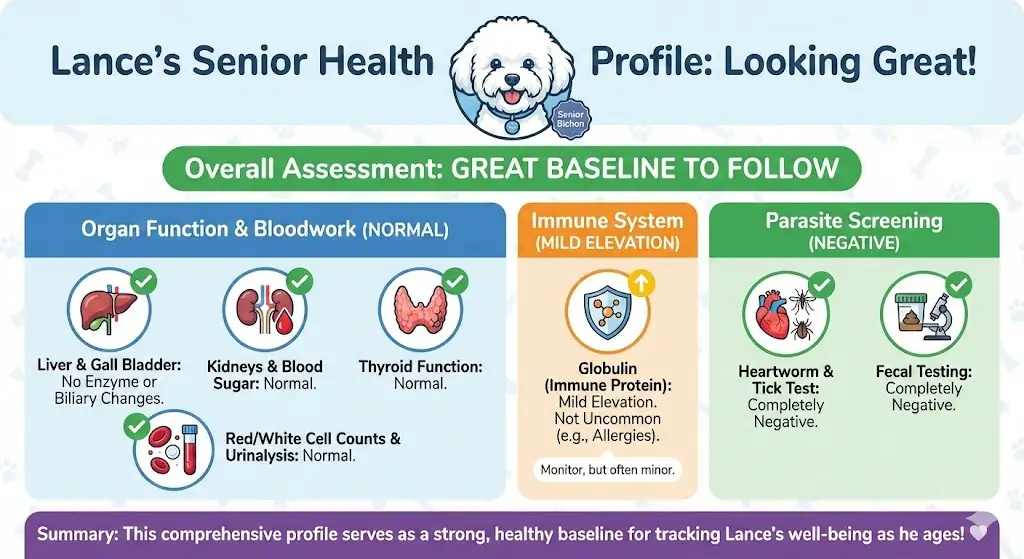
I recently took my senior dog, Lance, to the vet for his annual checkup. He got some routine bloodwork, and his vet’s report was laden with medical terms and specifics. I fed the whole thing into Nano Banana Pro, and got a clean infographic summarizing the findings.
Spoiler alert: he’s doing great!
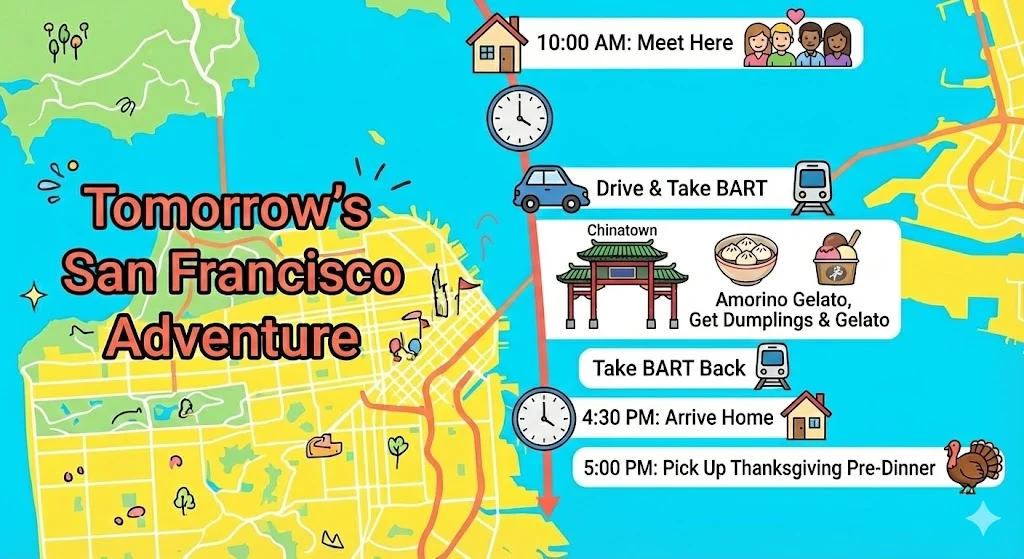
The model is especially powerful because it’s able to process nearly any kind of input data. In planning a day trip for a large group in downtown San Francisco, I copied and pasted a long WhatsApp chat with lots of logistics into the model.
It spat out a pretty graphic summarizing the day’s plans, complete with a bespoke map of the city. I shared it to the group, and people loved it.
Show me the Visuals
Again, as a visual learner, the ability to conjure up an infographic in a few seconds (and for free) from essentially any input data is incredibly valuable.
It’s also easy to do. You open the Gemini app, paste in the data you want to process, select the Create Image option, and let Nano Banana Pro plug away.
Beyond dog health visualizations, though, Google’s new model says a lot about where visual AI is going.
In the early days of image generators, creating fun, bizarre images (Ballerina Cappuccina, anyone?) was enough to hold users’ attention.
You can only generate so many AI cat photos or Hunky Jesus memes before the tech gets old, though.
In response, AI companies are increasingly specializing—creating image generators that solve bounded, real-world tasks.
Again, tools like Ideogram are tailored to designers. Adobe has a whole suit of generative tools built into its iconic Photoshop and Premiere products for photographers and videographers. And ChatGPT’s models are perfect for things like making event posters.
For Google, though, the endgame has always been about processing tons of information and summarizing it for users. We saw that in the company’s classical “10 blue links,” and more recently in its wildly popular AI Overviews.
Now, Google appears to be using its AI image generation prowess to summarize and present information visually.
That evolution means we’re almost certain to see Nano Banana generated infographic images appear within other Google tools—first AI ones like NotebookLLM, and later within live search results presented to everyday users.
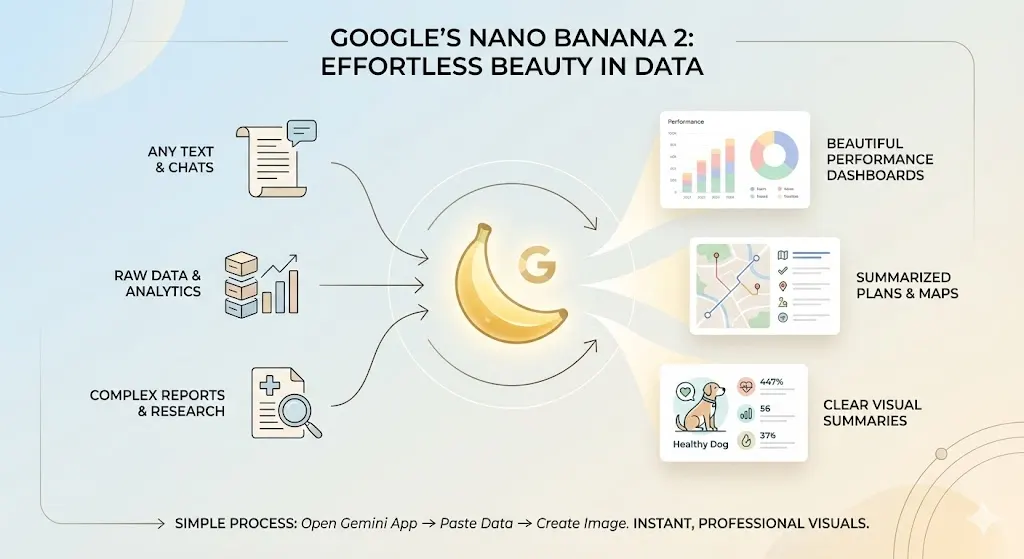
With my brain’s preference for visuals, I’m thrilled to see this new direction play out. To get the ball rolling, I fed this entire article into Nano Banana Pro.
True to form, the infographic is beautiful: