
Ferrari is marking 60 years of the Dino with a deep dive into how its first mid-engined V6 road car went from rough sketches to one of the brand’s most recognizable silhouettes.
A new feature from the official Ferrari Magazine revisits the 1965 Paris Motor Show prototype, the designers behind it and the old-school craftsmanship that shaped the car that was never meant to wear a prancing horse badge, yet now sits alongside million-dollar modern Ferraris that trade hands as quickly as rare SUVs.
A Radical Layout For a “junior” Ferrari
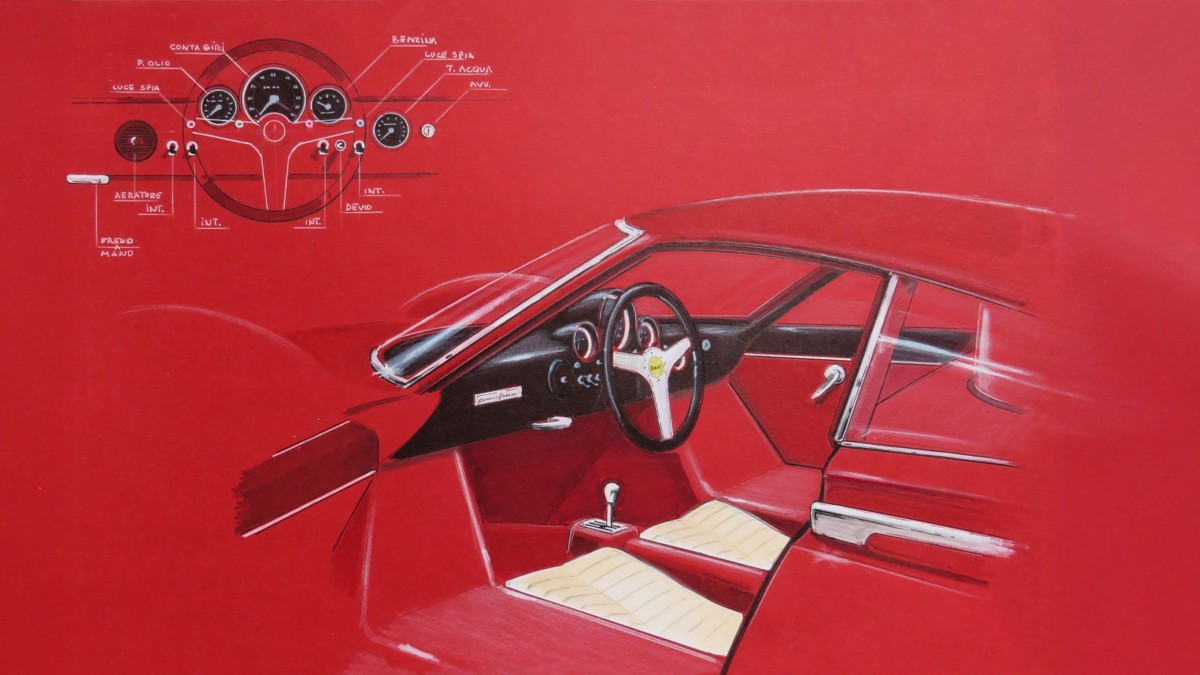
The Dino project began with a brief from Sergio Pininfarina that lasted barely half an hour but flipped Ferrari’s usual formula. Instead of a front-engined V12 GT, the team had to package a compact V6 behind the seats, with the wheels pushed to the corners and a low nose. Designer Aldo Brovarone’s proposal won out: a flowing berlinetta with rounded front fenders, a low roof and a high, cut-off tail.
Enzo Ferrari then stepped in to refine the look, vetoing an early “fish-mouth” grille as too close to existing V12 cars and pushing for a clean, grille-less nose with twin headlights under plexiglass and a concave rear window that wrapped into the flying buttresses. The resulting proportions became a template for later mid-engined Ferraris, all the way to today’s flagship plug-in hybrids like the SF90 line.
Shaping The Dino By Hand
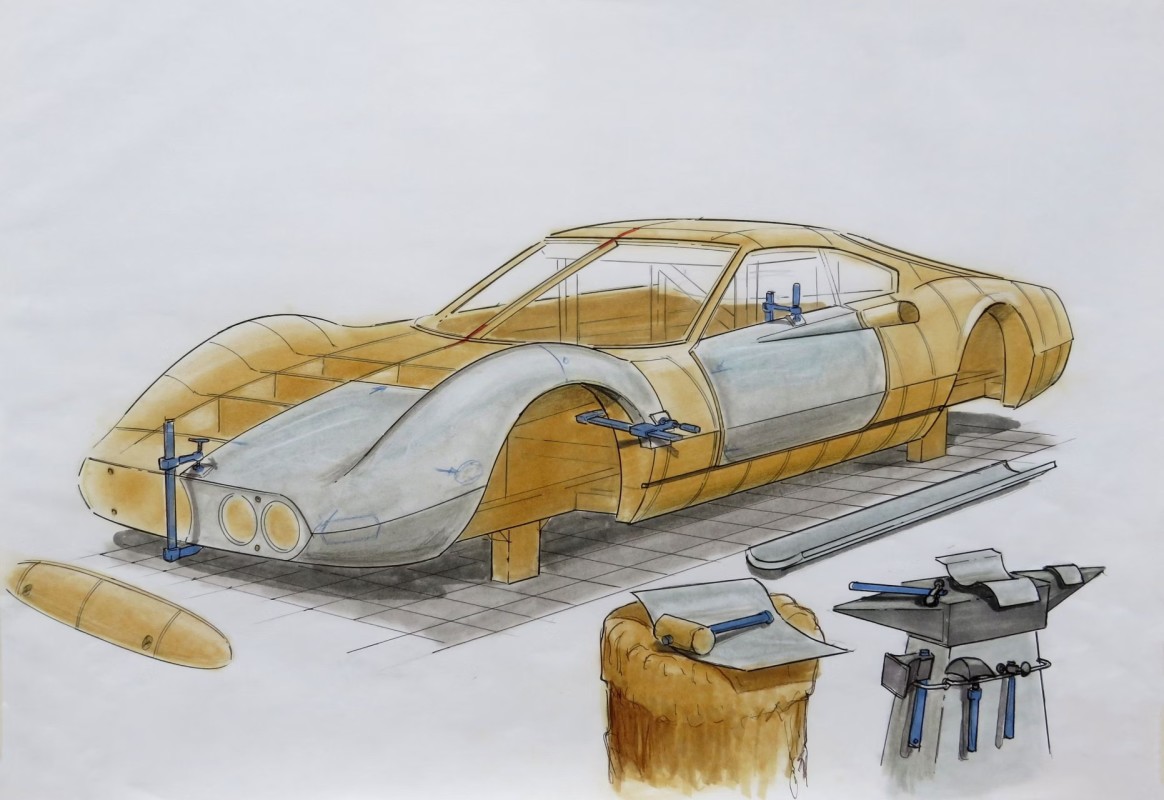
Ferrari’s anniversary piece spends as much time on process as on styling. Before any metal was formed, the Dino existed as full-scale drawings in multiple views, each overlaid with a dense measurement grid. Wooden cross-sections were then built up like slices of a loaf of bread, assembled into a skeleton and filled with resin to create the mascherone, a full-size reference buck.
Panel beaters hand-formed aluminum over this structure, while a steel cage and a perfectly flat “marble” base fixed the exact wheelbase and reference points. All of it was done pre-CAD, with slide rules and drafting tables, which helps explain why the Dino’s curves and panel lines still read as one coherent piece of sculpture.
From Junior Badge To Blue-Chip Classic
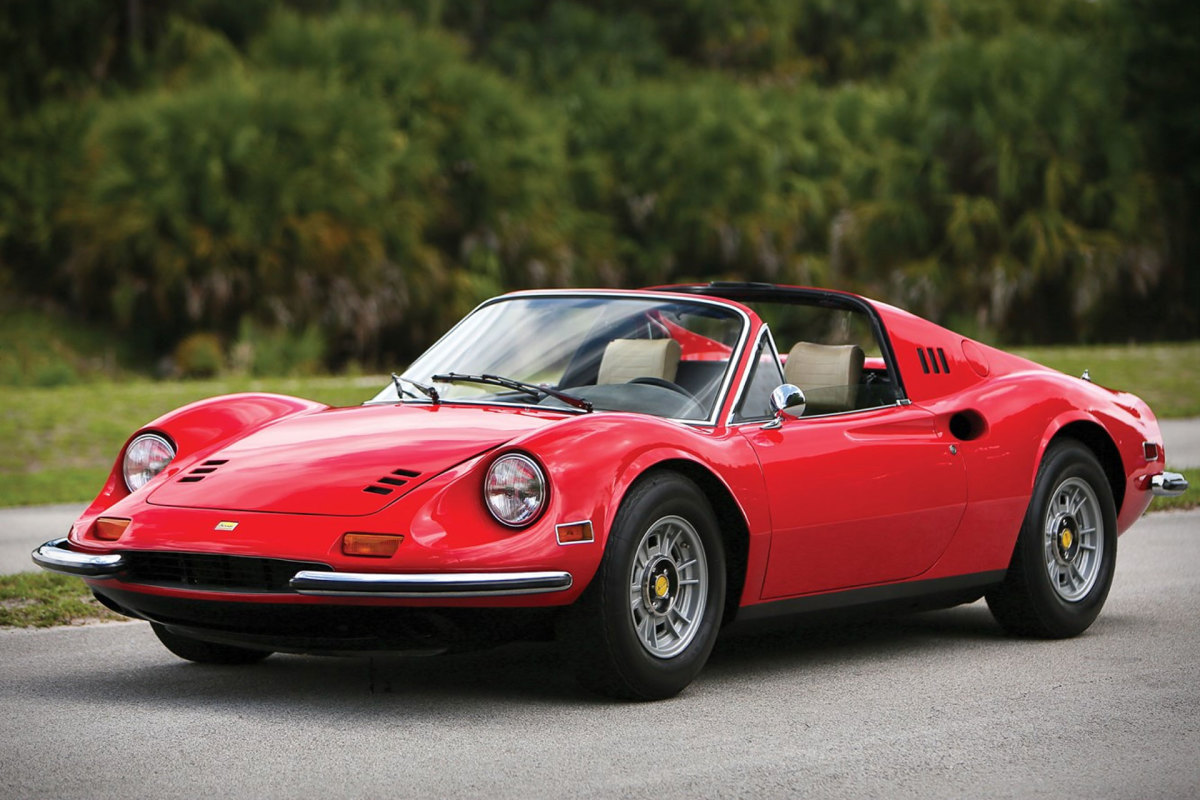
When it was new, the Dino’s V6 and separate badge marked it out as a “junior” Ferrari; today, its purity and proportions put it firmly in blue-chip territory. Auction results show top-flight 246 GTs and GTSs comfortably into six figures, and the 60th anniversary will only reinforce its status for collectors already chasing pristine analog Ferraris from later decades.
Ferrari’s own retelling of the Dino’s birth makes it clear that what started as an outsider project now sits at the core of the brand’s mid-engined identity, both in the showroom and in the collector market.


