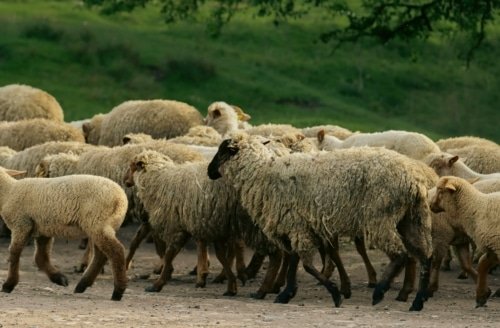

“For thus says the Lord GOD: Behold, I, I myself will search for my sheep and will seek them out. As a shepherd seeks out his flock when he is among his sheep that have been scattered, so will I seek out my sheep, and I will rescue them from all places where they have been scattered on a day of clouds and thick darkness. And I will bring them out from the peoples and gather them from the countries, and will bring them into their own land. And I will feed them on the mountains of Israel, by the ravines, and in all the inhabited places of the country.
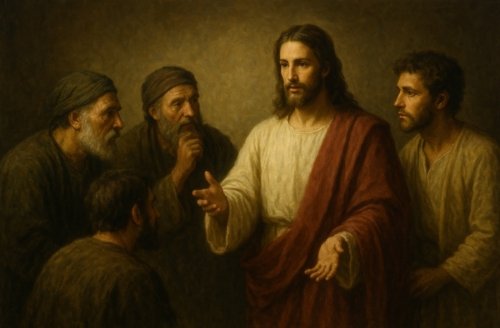
At the end of this chapter, God said that he would appoint David as a shepherd over his flock. By this time, David was long gone. This was a reference, not to a resurrected David, but to one who was of his line. One who would establish and rule over a kingdom that would last forever. I argued in an earlier post that He is the Good Shepherd of John 10:1-18.
Gathering the Sheep
But, since Jesus’ flock is more than just ethnic Israel (John 10:16), how should we understand this passage about God gathering his sheep from around the world and bringing them into their own land, feeding them on the mountains of Israel? Is this a promise made just to the physical descendants of Abraham, Isaac, and Jacob? Or is it looking forward to a gathering of all the children of Abraham (Rom. 4:9-17)?
Since the day God gave this promise through Ezekiel, a portion of Israel has twice been gathered from among the nations and returned to their land. Did either of these gatherings fulfill the promise given through Ezekiel and the other prophets? They would appear not to have, at least yet.
But could it be that the gathering referred to here is not ethnic Israel? That it is instead, the gathering of Jesus’ sheep from multiple sheep pens into one flock (John 10:16). That God’s sheep are, even now, being gathered from among the peoples and countries where they are scattered? And that the gathering is not to the ancient land of Israel, but into the kingdom of our Lord Jesus, that great shepherd of the sheep (Heb. 13:20)? I believe so!
Spiritualizing the Text?
But you might argue that this is “spiritualizing” the text, making it say something that it was not intended to say or something contrary to what its original audience believed. I would argue instead that this is a revelation of the mystery hidden in the Old Testament that was revealed to the apostles and, through them, to us (Eph. 3:4-6). That, when God gave this to Ezekiel, this was His original intent, even if its fuller meaning was initially hidden.
Reading the Old Testament through the eyes of its original audience is good. But how much better when read through the lens of Jesus and His fulfillment of the Law and Prophets.
Related Posts
The post Who Are God’s Sheep? – Ezekiel 34:11-13 appeared first on A Clay Jar.