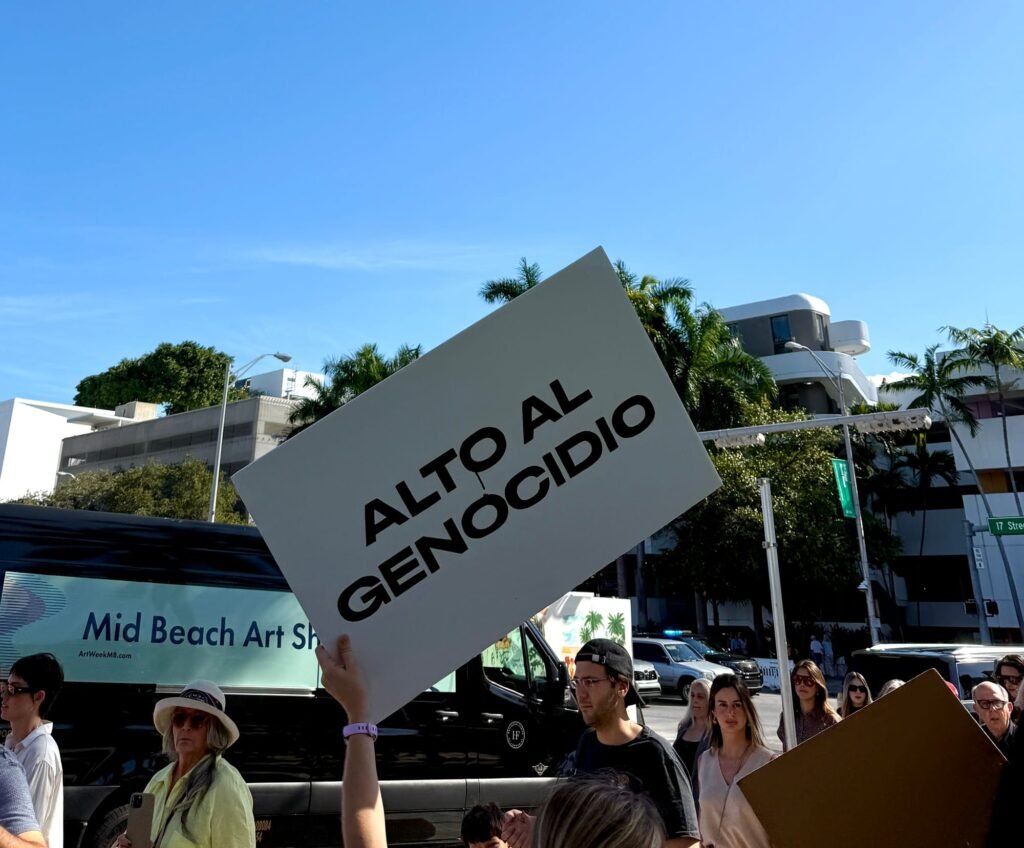
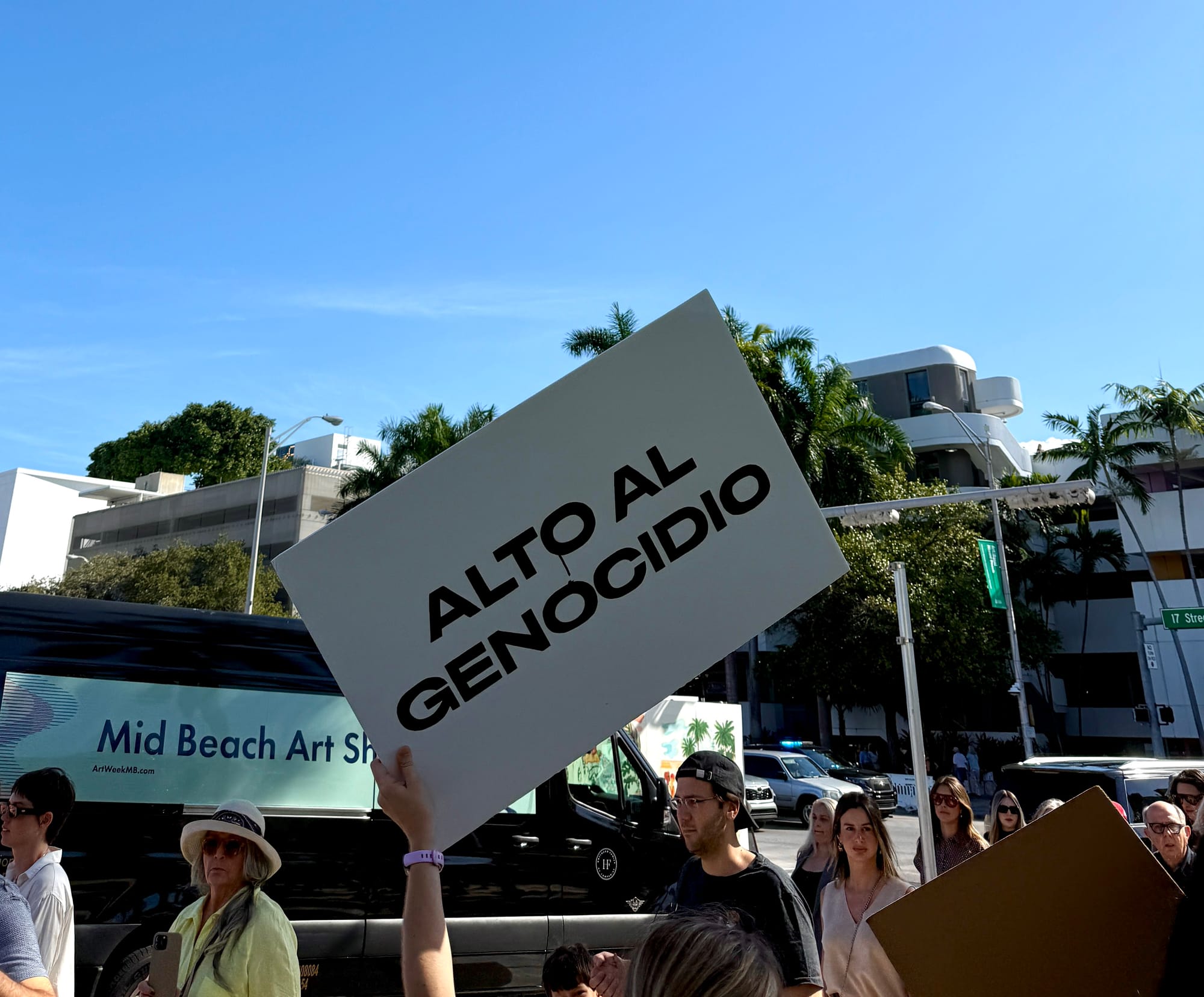
MIAMI BEACH — For the third year in a row, a coalition of Miami artists and activists met at City Hall near the Miami Beach Convention Center today, December 6, on the busy Saturday of Art Basel to raise their voices and handmade signs in protest of the event’s ties to the genocide in Gaza. This time, the advocacy group Artists 4 Artists also joined the action to call for a boycott of the next edition of the fair in 2026, citing the event’s impact on both the environment and the local arts community.
After being relocated from the front of the Convention Center last year by dozens of Miami Beach police officers, several of the organizers are involved in ongoing litigation with the city of Miami Beach over what they allege are violations of their free speech. Chanting from the grass in front of City Hall within view of the fair entrance, dozens of protestors spoke with passing fairgoers peacefully about Israel’s ongoing violence in Gaza and the Occupied West Bank despite a ceasefire.
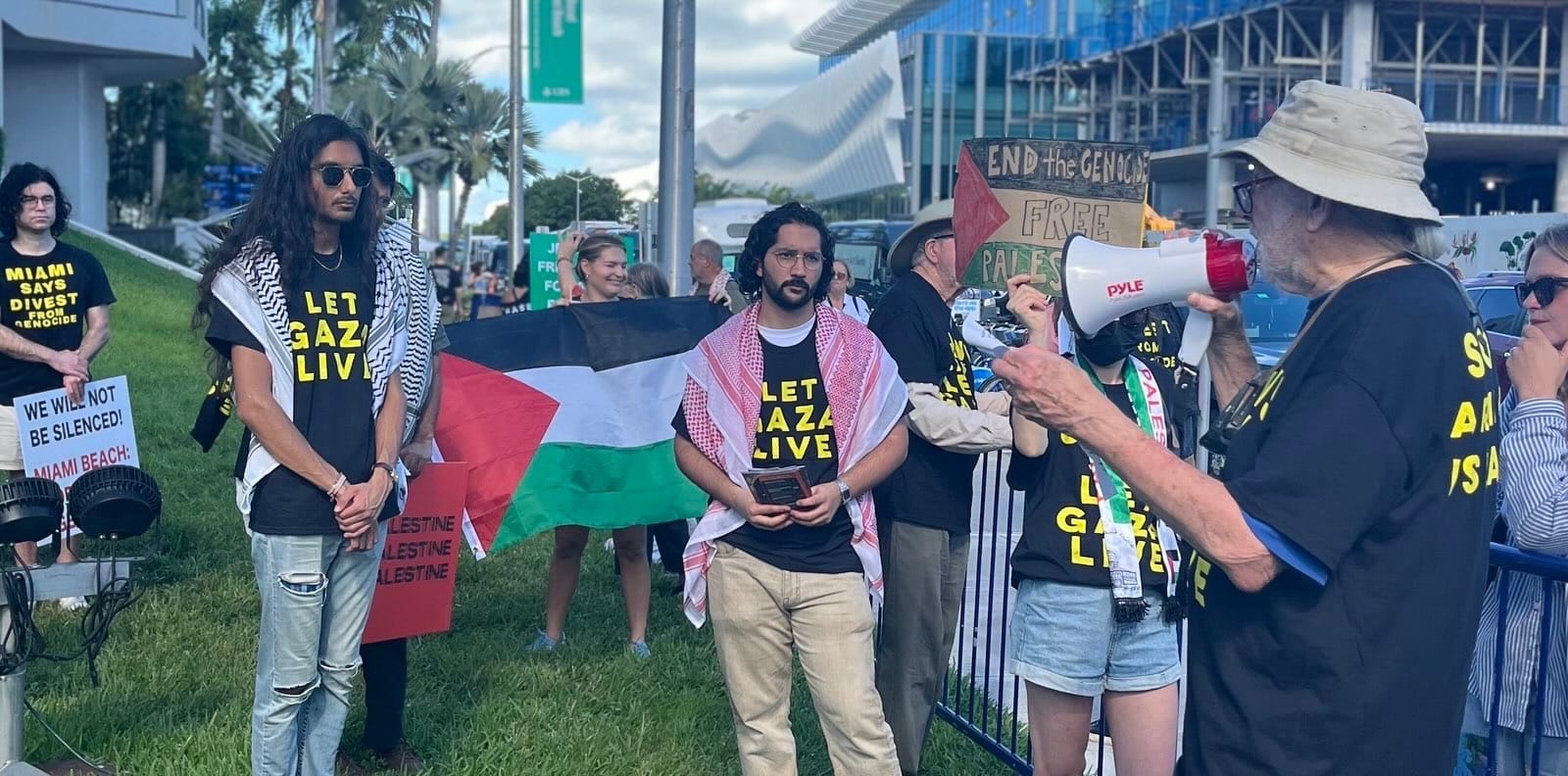
Watched by a police sniper on a nearby rooftop and three rented vans with screens on them that accused South Florida Jewish Voices for Peace (JVP) leaders of being antisemitic, organizers raised the “LET PALESTINE LIVE” banner that was sewn for Art Week in December 2023. They handed out leaflets that included QR codes linking to poetry and visual art by Mahmoud Darwish, Hazem Harb, and other Palestinian writers and artists.
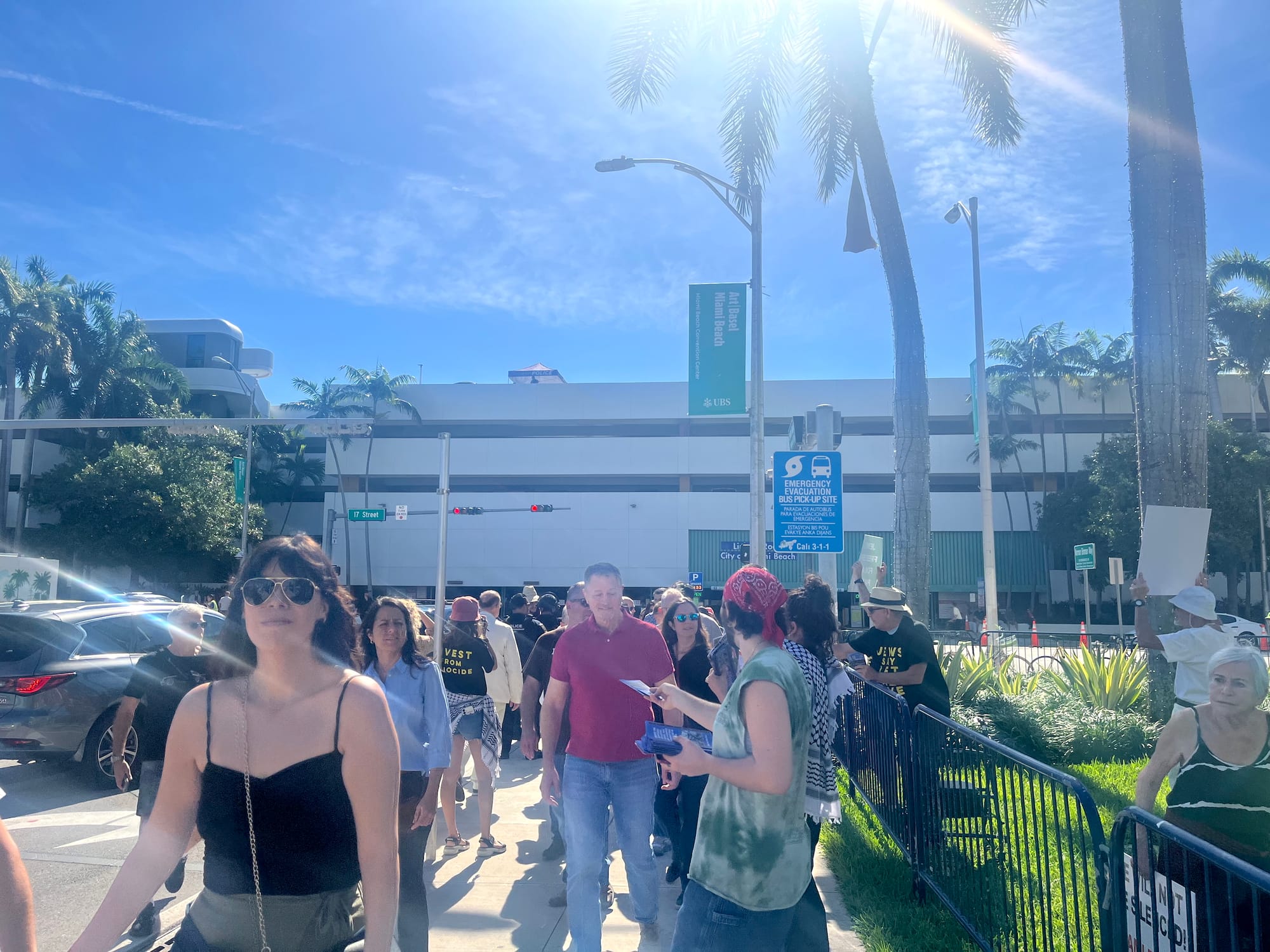
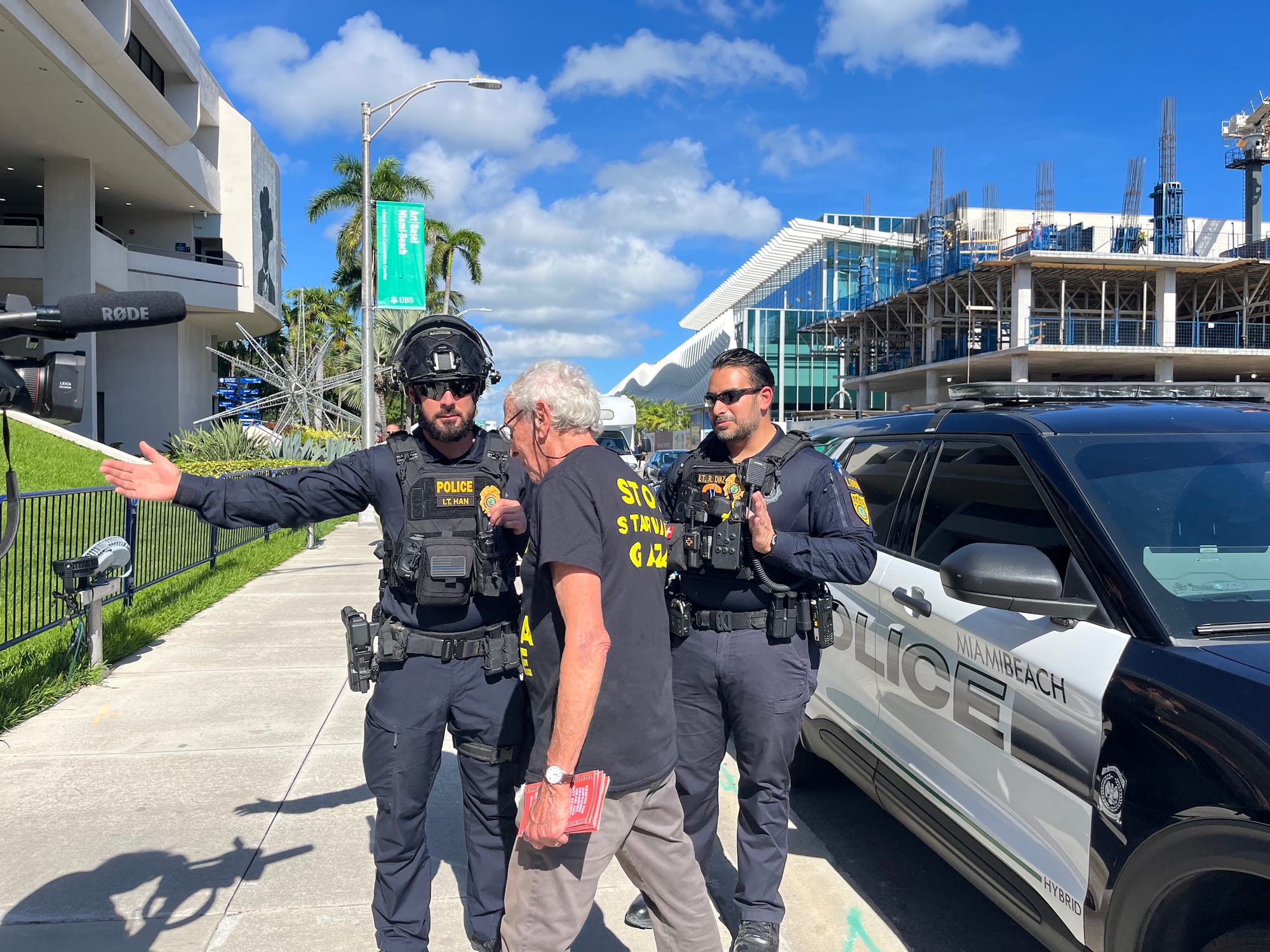
Palestinian-American artist and activist Elias Rischmawi was approached several times by police officers who claimed handing out flyers on the sidewalk was not allowed. In an interview with Hyperallergic, Rischmawi pointed to the importance of de-centering this week and Art Basel in the close-knit Miami art scene.
“It’s strange seeing our people on those trucks being vilified, because they are scared of us and we’re just coming from a place of love and commitment and trying to build bridges in our community,” Rischmawi said. “I think even just people seeing how we are happy and all together and in true community outside of a money-centered event like this is valuable.”
Rischmawi is organizing an exhibition at the Boom Box in Miami next week called Beyond Home, which will use the form of a tent to consider displacement in both a Floridian and international context and feature Palestinian and immigrant artists.
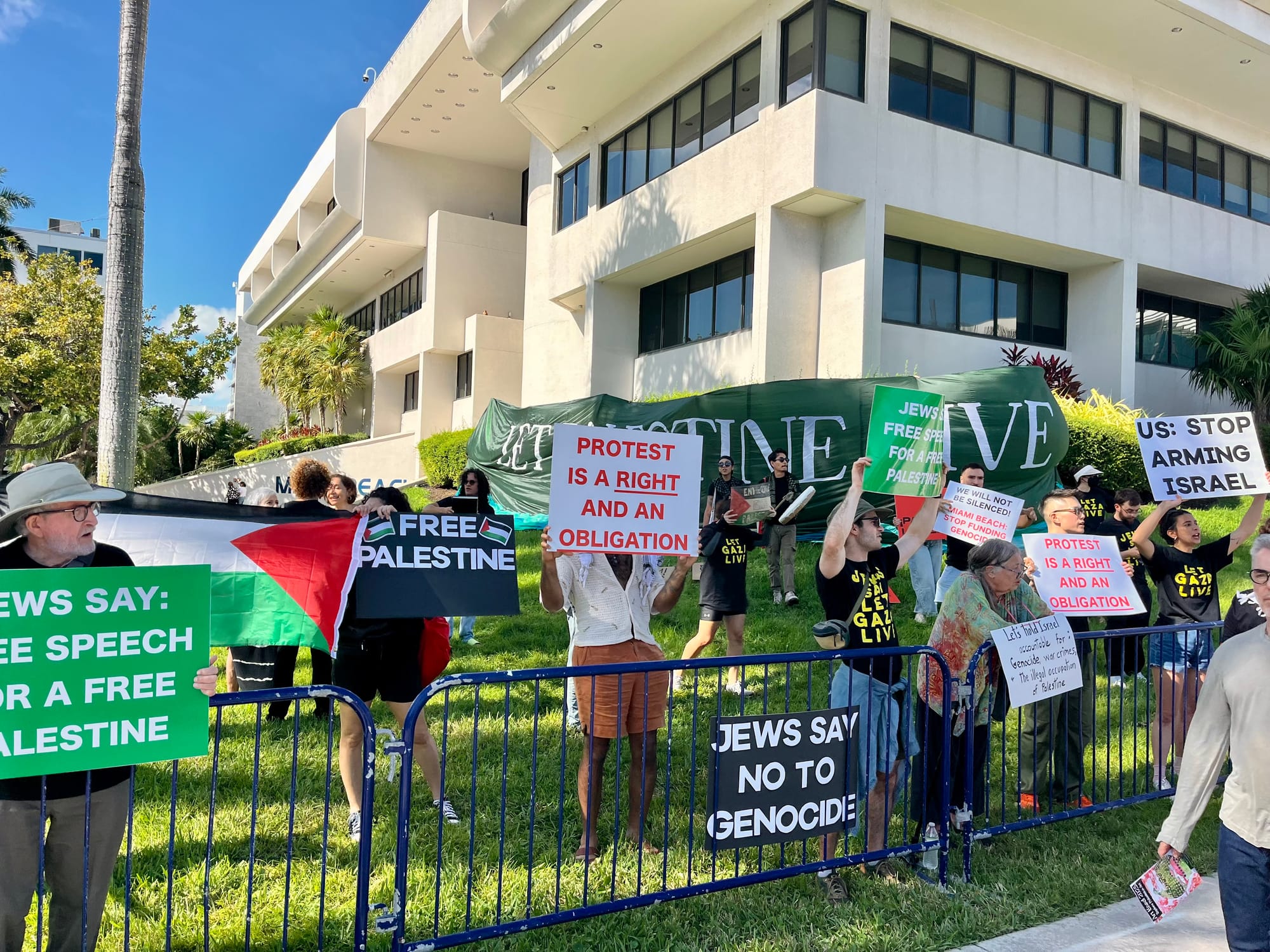
In speeches, JVP leaders pointed to Art Basel sponsor UBS’s investment in Israeli weapons manufacturer Elbit Systems as the primary reason for this year’s demonstration. Miami-Dade County has also invested a reported $151 million in Israeli bonds. Meanwhile, Miami Artists 4 Artists organizers misael soto and johann c. muñoz-tapasco urged people to boycott Art Basel and its associated events next year.
“These fairs come here and extract the labor of gig workers, extract the cultural nuances and energies that the city has to offer, and turn that into a profit that none of us see,” muñoz-tapasco explained, pointing to the intersectionality of Palestine with the larger rise of fascism and censorship in Florida under the Republican-led government.
“These institutions want our art, but they don’t want the people who make the art. They refuse to do things that will make the world safer for us, and are often complicit in the systems eroding our work,” muñoz-tabasco continued.
“We’re not just in late stage capitalism, but in a kind of cognitive capitalism, where our artwork is feeding AI programs, from image to writing,” they said. “We are in a position of advantage because we have the actual vision, which they want, but we are taught that we have to be a certain way to be anyone in the world of the arts.”
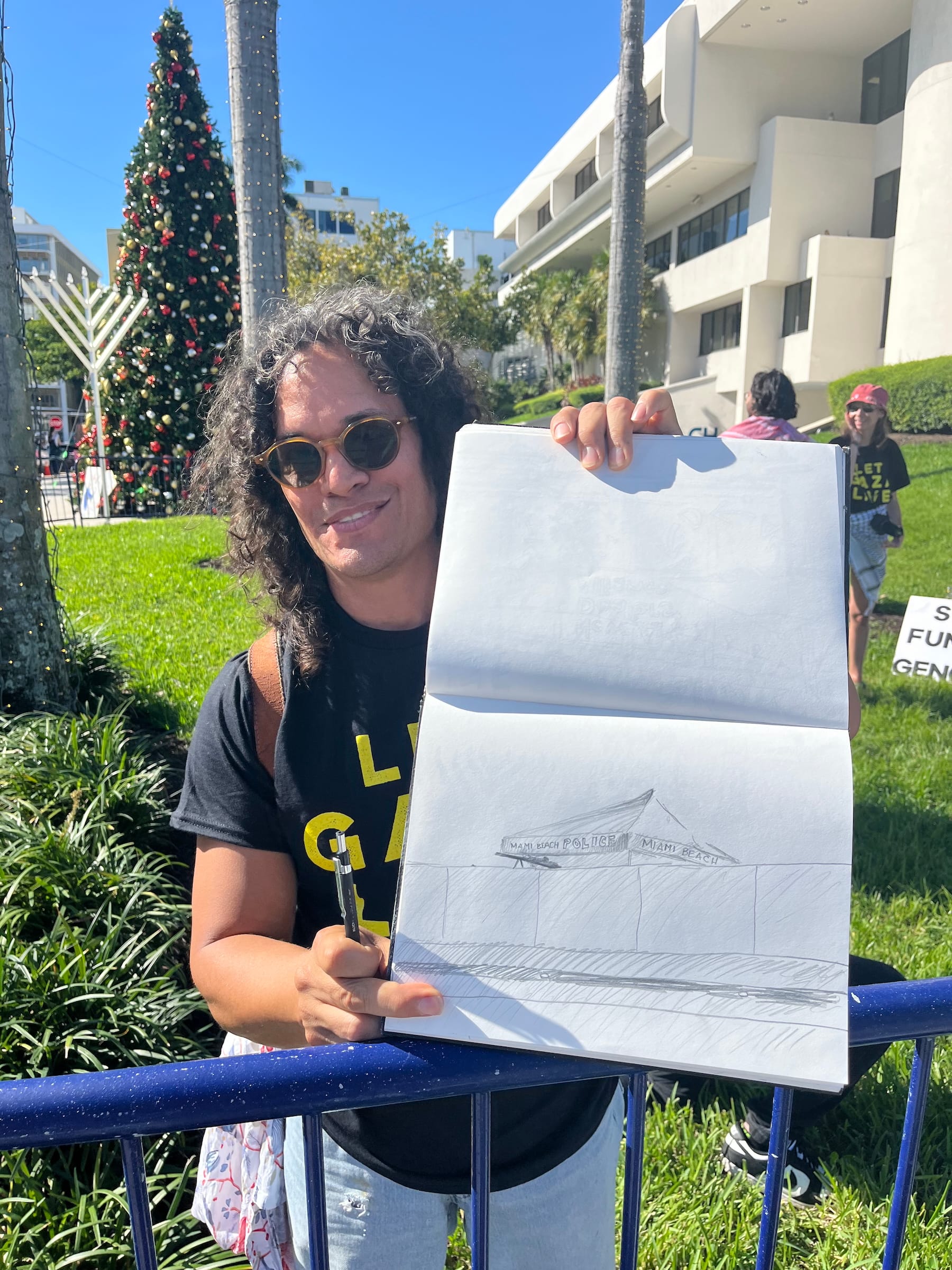
Miami Artists 4 Artists was one of the organizers of an ongoing artists’ census, as well as an exhibition earlier this year called The Artist as Activist, which protested the Alligator Alcatraz immigration detention center in the Everglades. Recognizing that this week is an important source of income for South Florida artists and culture workers, they envision the boycott as a call in to locals and visitors, with exhibitions and programming that are artist- instead of industry-centric.
As artist Eddie Arroyo sketched the police vans at the edge of the barricade, Jewish Miami resident Amanda Rose pointed to the religious resonance of looking towards the future.
“There’s a saying many of us grew up hearing around Passover: ‘Next year in Jerusalem.’ And it was a subtle way of initiating us into Zionism. But there’s something very powerful about that thought, like projecting into the next year,” she shared in an interview with Hyperallergic. “Maybe next year we won’t have to be here. Maybe if we continue to say it, Palestine will be free.”