The Trump administration and congressional Democrats are locked in a high-stakes stalemate that’s dramatically increasing the likelihood that a major government surveillance program will expire.
Democrats have coalesced behind an ultimatum: They won’t support a reauthorization of Section 702 of the Foreign Intelligence Surveillance Act as long as Bill Pulte, an ally of President Donald Trump with no national security experience, remains acting director of national intelligence. The White House is standing by Pulte, at least publicly, while accusing Democrats of holding the spy power “hostage” and putting the country’s “national security at risk.”
Congressional Republicans are largely leaving it to the administration to figure out a path forward after Trump’s decision to tap Pulte as Tulsi Gabbard’s temporary successor derailed an earlier agreement to extend the key spy authority for three years.
But they are also nudging the administration to pick a different nominee to fill the role in a permanent capacity. Speaker Mike Johnson is going to the White House Tuesday to talk about Pulte with Trump, according to two people granted anonymity to disclose a private meeting.
Unless Trump moves quickly — or one side blinks — lawmakers, aides and the administration are preparing to barrel past the June 12 deadline without an extension.
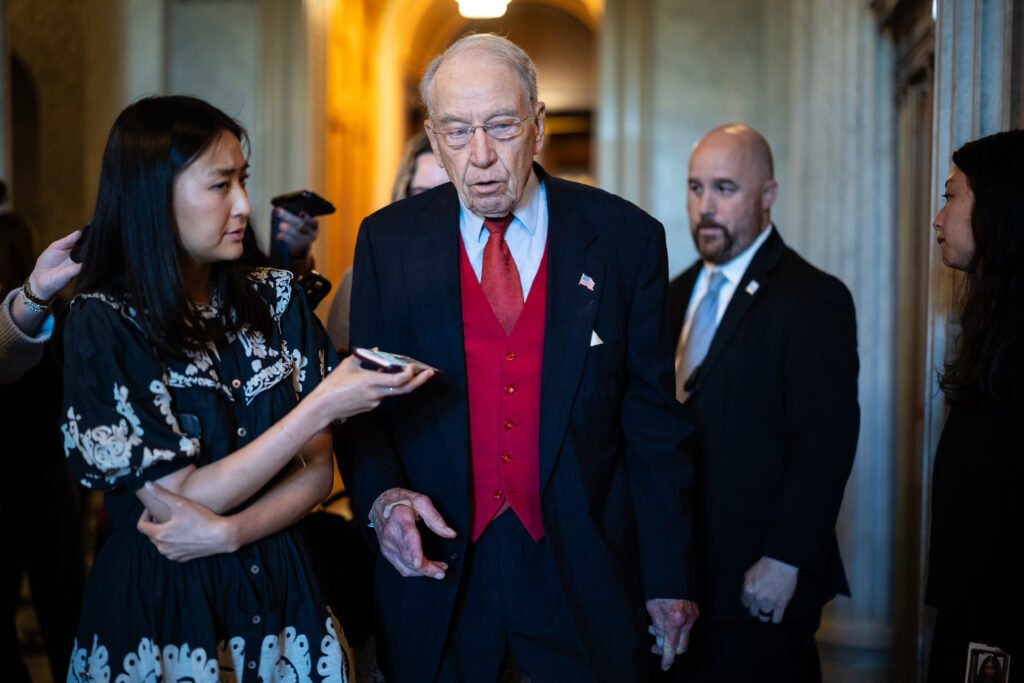
“I’d like to be involved in the middle of it, but I think it’s strictly — the way things are going — between the Democrats and the White House. It’s all got everything to do with Pulte,” Senate Judiciary Chair Chuck Grassley (R-Iowa) said in an interview Monday.
Asked if Pulte should be dropped, Grassley told reporters that he is “temporary” and “the sooner the president gets somebody nominated, the sooner we’re going to be able to get 702 through.”
Senate Majority Leader John Thune added Monday that the administration “at some point is going to have to come up with a nominee … that will be viewed by at least enough Democrats as sufficient to get their support” for reauthorizing the surveillance law.
The law allows spy agencies to target foreigners overseas, but critics of both parties believe it currently lacks sufficient guardrails to prevent U.S. citizens from being spied on, too. That has made reauthorization a complicated endeavor even before Pulte became a factor.
“I’m familiar with some of the conversations that are happening around that,” Thune said when asked about whether Pulte should go. “I think I’ll let the White House speak to whatever the next plan might be there, but we can’t pass this on the floor without Democrats.”
Trump is interviewing potential nominees to permanently fill the director of national intelligence role, according to a Republican lawmaker and a GOP congressional aide, both of whom were granted anonymity to disclose private conversations. But there’s no guarantee that the president will move quickly, and Republicans said Monday they didn’t know if he would make a decision before Friday’s reauthorization deadline.
Because of a quirk in the statute underlying Section 702, the Trump administration would still be able to operate the program for several more months if it lapses. At least some tech providers could mount legal challenges to the program if it expires, however, which national security officials fear could temporarily limit visibility into surveillance targets under the law.
Behind the scenes, national security lawyers in the Trump administration are already working on contingency plans to backfill any gap in foreign intelligence collection, said one GOP congressional aide granted anonymity to speak candidly.
The administration is also having conversations with congressional Democrats and their staff, according to two other people granted anonymity to disclose private conversations. As part of those discussions, Secretary of State Marco Rubio and CIA Director John Ratcliffe have spoken directly to Sen. Mark Warner of Virginia, the top Democrat on the Senate Intelligence Committee, according to one of the people.
Asked about talks with the administration, Warner declined to go into details but said that “we all know the time on the clock” and that “we want a path to get this done.” A spokesperson for Warner declined to comment Monday.
Spokespeople for the CIA did not immediately respond to a request for comment about ongoing conversations with Warner. And the White House did not immediately respond to a request for comment on conversations with Democrats or Warner specifically.
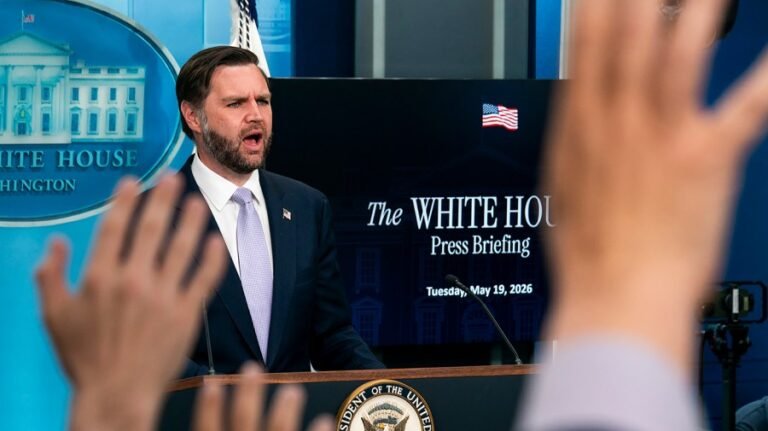
But White House spokesperson Davis Ingle defended Pulte in a statement Monday issued in response to questions about Pulte’s future and the prospects for a permanent nominee.
“Bill Pulte is a great selection and he will do a great job on behalf of the American people,” Ingle said. “Holding FISA hostage puts America’s national security at risk and it is shameful that some Democrats are threatening to put partisan politics ahead of the safety of the American people.”
Senate Democrats blocked a procedural vote Friday that would have paved the way for a three-year extension of the expiring spy power with some new transparency language and other policy changes. Seven Senate Republicans also voted against advancing the agreement, which was hashed out between Grassley and Senate Intelligence Chair Tom Cotton (R-Ark.) in coordination with Warner.
The administration will need roughly 15 Democrats, by Warner’s estimate, to get a yearslong reauthorization of Section 702 through the Senate. Congress has already punted the surveillance deadline twice since mid-April, but aides are skeptical that a bipartisan coalition of privacy hawks, who want more sweeping guardrails on the program, will agree this time to another short-term extension.
“I don’t know if there’s going to be an appetite for doing another extension or for what length,” Thune said Monday.
Johnson vowed Monday that Congress would not let the surveillance program expire. But he, too, is likely to need Democratic support given the narrow House GOP majority and the opposition in the Republican ranks.
As in the Senate, top House Democrats are warning not to count on their votes if the administration doesn’t reverse course on Pulte.
“The negotiations prior to Trump’s announcement with respect to Bill Pulte were already in a very sensitive place, and then Donald Trump, as he often does, tosses a hand grenade,” Minority Leader Hakeem Jeffries told reporters Monday.
Asked if he would let the spy authority expire, Jeffries added that there are “ongoing conversations” led by Rep. Jim Himes of Connecticut, the top Democrat on the House Intelligence Committee. He added, though, that Pulte — whom he called a “political hack” and a “malignant clown” — should first be removed from the acting position.
Himes, who has defended the Section 702 program, said he had one conversation with the White House after Trump placed Pulte in the acting role. He warned that Republicans should not expect under the circumstances to win the 42 House Democratic votes that a prior short-term extension won earlier this year.
“It’s a total mess,” Himes said. “Very sadly, I think we’re going to test this untested question about whether the program can run on a judicial certification alone.”
Meredith Lee Hill, Mia McCarthy and Riley Rogerson contributed to this report.