- New Mercedes-AMG EVs will use advanced axial flux electric motors.
- Engineers say rear brakes may shrink dramatically or even disappear.
- New in-wheel motor pairs with a compact 15 kg dual inverter unit.
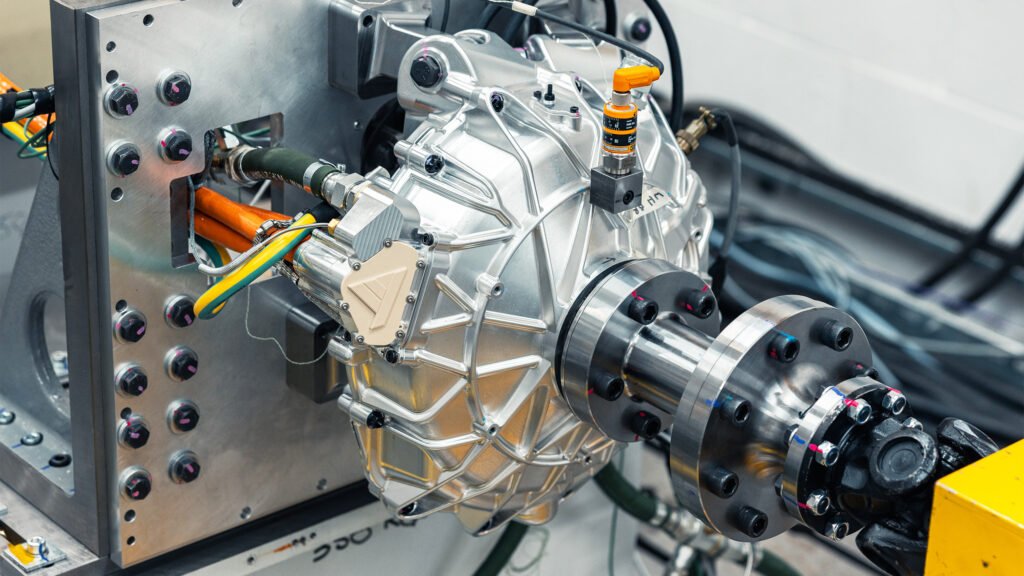
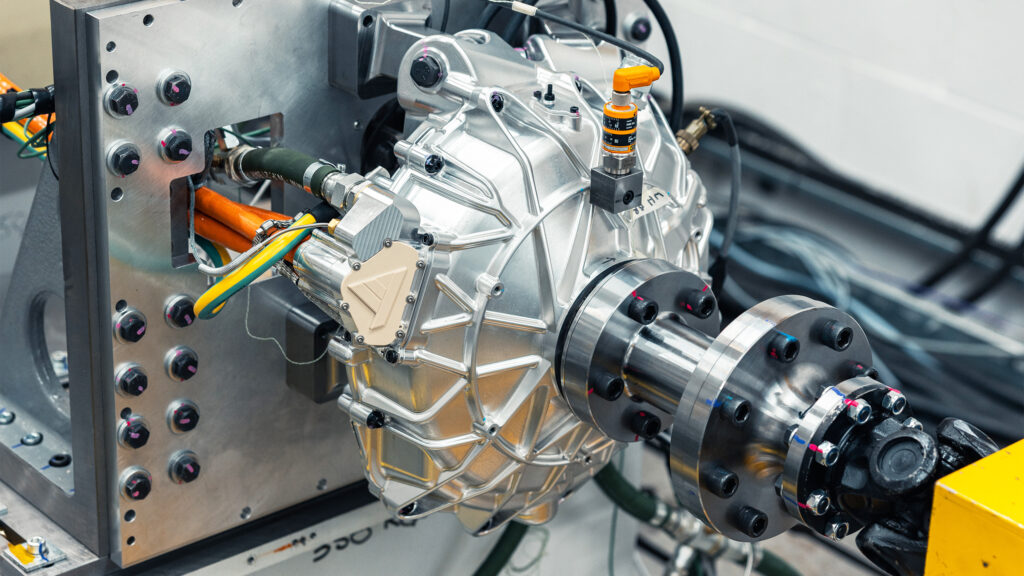
Just over a month ago, Mercedes-owned brand Yasa unveiled a record-breaking electric motor that weighs just 12.7 kg (28 lbs) and has the ability to produce up to 1,006 hp (750 kW). The company has now revealed that this axial flux motor will be used as an in-wheel unit for its next-generation EV powertrains and could even replace traditional rear wheel braking systems.
While in-wheel electric motors are nothing new, they haven’t been widely adopted in the EV market, in part because they’re heavy and generally aren’t particularly powerful. Yasa’s new motor set an unofficial electric motor power density record of 59 kW (79 hp) per kilogram, or 35 hp per pound.
Read: Mercedes’ Axial Flux Motor Weighs Less Than A Toddler And Makes Over 1,000 HP
While the motor can deliver a peak of up to 1,006 hp, the firm notes that its continuous power output ranges between 469 hp and 536 hp. It can then be paired with a 15 kg (33 lbs) dual inverter that Yasa has also developed in-house, and could prove perfect for high-powered hypercars and other performance EV applications.
Then there’s the matter of braking. Yasa says its in-wheel motor offers such “incredible regenerative performance” that the system could potentially negate the need to use traditional rear brakes.
This could allow carmakers to not only ditch important brake componentry, but also rear driveshafts, potentially saving up to 200 kg (441 lbs) from current models and as much as 500 kg (1,100 lbs) on new models developed from the ground-up.
“Thanks to its exceptional regenerative capability, this system has the potential to dramatically downsize rear brakes on an EV – or even remove them entirely in certain architectures,” Yasa chief of New Technology, Simon Odling, said.“And by capturing a much greater proportion of regenerative braking energy, this technology can also deliver a significant increase in EV range.”
“What’s more, our new in-wheel motor powertrain not only enables significantly lighter, more efficient and higher performance EVs, but also dramatically creates space within the architecture of an EV too, giving car makers unprecedented freedom to redesign and optimize the packaging, aerodynamics and kinematics of their next-generation vehicles,” he added.
Yasa’s axial flux motors will be used in the new all-electric Mercedes-AMG GT 4-Door sedan and SUV. However, these models are not expected to use these motors as an in-wheel application, and will instead have one motor at the front axle and two at the rear.
Guido ten Brink/SB-Medien – Stefan Baldauf